• Skip to primary navigation
  • Skip to main content
  • Skip to primary sidebar
  • Home
  • Recipes
  • Blog
  • About
  • Work with me

Yoko's kitchen

menu icon
go to homepage
  • Home
  • Recipes
  • Blog
  • About
  • Work with me
search icon
Homepage link
  • Home
  • Recipes
  • Blog
  • About
  • Work with me
×
Home

Blog

January 24, 2026 Japanese and Asian

Ehomaki Recipe: How to Make Futomaki Roll for Setsubun 2026

Wishing the best of luck in 2026? Make sure to try this Ehomaki Sushi Roll (恵方巻き) recipe! While Futomaki (thick sushi rolls) are enjoyed year-round, eating Ehomaki is a Japanese custom specifically for Setsubun, the day before spring begins in the lunar calendar. People eat Ehomaki facing the auspicious direction as a part of the Setsubun traditions. These thick sushi rolls are filled with 7 flavorful fillings.

Traditional Setsubun meal set featuring Ehomaki Futomaki, a Masu cup of fuku-mame (lucky beans), and a Japanese tea set.
[feast_advanced_jump_to]

When is Setsubun 2026?

Setsubun 2026 is on February 3rd, the day before spring begins in the lunar calendar. Setsubun means transitioning season, and traditionally, the winter-to-spring transition is the most important. On that day, people participate in the Setsubun ritual in Japan, eating and throwing soybeans (Mamemaki, 豆まき) to keep the Jaki (bad energy) out and invite Fuku (good fortune).

What are the Setsubun Traditions?

Mamemaki and eating Ehomaki are the family customs on Setsubun. On the day of Setsubun, you'll see Ehomaki everywhere! From convenience stores and grocery stores to speciality sushi restaurants, there are so many special Ehomaki available to take home.

Setsubun in my childhood meant two things: beans and sushi! My mom got us Ehomaki every year! We first threw roasted soy beans or in-shell peanuts (they're not beans, but it's a common choice at Setsubun) around the house.

Stores are handing out Oni (Japanese Demon, 鬼) face masks for free to customers buying beans around Setsubun season. When I was very little, my dad wore the mask, and we threw beans at him (poor Japanese dad job). Oni is the symbol for negative energy behind disasters like disease and famine in ancient Japan, and throwing soybeans are way to expel them.

Then we get to the table and eat the same number of beans as their age and Ehomaki together! When eating Ehomaki, don't forget to face the lucky direction (eho, 恵方).

Close-up look of cross sections of two Ehomaki sushi rolls served on a wooden board.

What is Ehomaki?

Ehomai (恵方巻き) is a Futomaki, a thick sushi roll, eaten on the day of Setsubun as a part of the traditions.

The 2026 Auspicious Direction (Eho)

The auspicious direction (Eho, 恵方) for Setsubun 2026 is South-Southeast(Nan-nan-tou).

Eho is the lucky direction where this year's Toshigami (the deity of the year) resides. This direction changes every year, determined by the cycle of the Japanese zodiac sign.

The Rules of Eating Ehokami

The Setsubun customs of eating Ehokaki follow the rules below.

  • Eat it in the lucky direction (Eho).
  • Eat it in silence while making a wish in your heart (to prevent the good fortune slip away from your mouth).
  • Eat the entire roll without cutting it (to avoid "cutting" your luck).

These are the basic rules! If you feel your sushi roll is too big to eat at one sitting or without talking, choose small ones or pre-cut it shorter.

The Filling of the Ehomaki

There are no specific rules on Ehomaki filling, so you can roll up what you like! But the most basic Ehomaki has 7 kinds of fillings symbolizing Shichifukujin (Seven Lucky Gods), which are:

  • Kanpyo (Dried Gourd Strips)
  • Shrimp (Ebi)
  • Cucumber (Kyuri)
  • Shiitake Mushrooms
  • Tamagoyaki (Japanese Egg Omelet)
  • Unagi or Anago (Eel)
  • Sakura Denbu (Pink Fish Flakes)

But some of the ingredients are not very common outside of Japan, especially Kanpyo and Sakura Denbu. I have certainly not seen them at my local Asian grocery store. So I modified a little bit and made it even more flavorful, while keeping it seven!

  • Sashimi-Grade Tuna - You can also use other sashimi-grade fish like salmon and yellow tail.
  • Ebi - I like using frozen prepared ebi for making sushi! You can find it in the Frozen section of the Asian grocery store.
  • Cucumber - If you can get your hands on Japanese cucumbers (Kyuri), that works the best! But if not (like me), Persian cucumbers are my favorite for tender crunch, and they're widely available.
  • Shiitake Mushrooms - Simmering shitake mushrooms with savory-sweet sauce to match the unagi flavor and nice texture.
  • Tamagoyaki - Japanese egg omelette is a home cuisine staple! This recipe is savory with light sweetness to balance with other fillings.
  • Unagi Eel - Use frozen Unagi Kabayaki. 1 fillet is enough for making 4 rolls.
  • Sushi Ginger (Gari) - Sweet and sour pickled ginger brightens up the overall flavor.
Traditional Japanese Ehomaki ingredients layered on a bamboo sushi mat for Setsubun 2026.

Ingredients

For Sushi Rice

  • Japanese short-grain rice
  • Rice vinegar
  • Sugar
  • Sea salt

For the Simmered Shiitake Mushrooms

  • Shiitake mushrooms
  • Soy sauce
  • Mirin
  • Maple syrup

For the Tamagoyaki

  • Eggs
  • Soy sauce
  • Sugar

Using homemade Shio Koji is also great, adding a deep, savory flavor. Use 1 Tablespoon of shio koji for making tamagoyaki made with 3 eggs.

For Assembly

  • Nori sheet
  • Unagi kabayaki - You can get frozen ones at grocery stores!
  • Sashimi-grade tuna
  • Persian cucumber
  • Cooked shrimp (ebi) - You can get the frozen, prepared ebi ready for sushi at stores.
  • Sushi ginger
Sushi rice in a pot and seven ehomaki filling gathered together.

Instructions

Prepare the Sushi Rice

  1. Cook the rice in a rice cooker or pot.
  2. In a small bowl, whisk together rice vinegar, sugar, and salt.
  3. While the rice is still hot, gently mix in the vinegar mixture. Let cool to room temperature before assembling.

Cook the Shiitake Mushrooms

  1. In a small saucepan, combine mushrooms and water. Cover and cook over medium heat until mushroom is tender, about 3-5 minutes. 
  2. Add soy sauce, mirin, and maple syrup. Stir to cook until most of the liquid is reduced. Remove from the heat and let cool.

Make Tamagoyaki (Japanese Omelet)

  1. Beat eggs with soy sauce and sugar.
  2. Heat the square pan over medium-high heat. Add ¼ of the egg mixture and roll into omlette. Repeat until all the egg mixture is used.
  3. Let cool and cut into ½-inch strips. 3 eggs omelette makes enough for 4 sushi rolls.

Assemble Ehomaki

  1. Place a sheet of nori on a bamboo sushi mat, shiny side down.
  2. Measure out about 200g of sushi rice. Spread a thin layer of sushi rice over the nori, leaving 1 inch at the top edge.
  3. Arrange fillings horizontally across the center: unagi, tuna, mushrooms, tamagoyaki, cucumber, shrimp, and 1 tablespoon of sushi ginger.
  4. Roll tightly using the mat, pressing gently to shape. Let it sit in the mat for 5 minutes before cutting.
  5. Slice or serve whole for traditional Ehomaki style. Enjoy in silence, facing the lucky direction of the year.

Enjoy a big bite facing the lucky direction! For the dessert, Shiratama dango and basic matcha tea are a perfect comforting combo!

Holding rolled Ehomaki in bamboo mat with two hands.

Ehomaki Ingredient Substitutions: How to Keep the "Luck" Anywhere in the World

While traditional 7 ingredients are delicious and auspicious, you can roll up your favorite filling to make your own Ehomaki!

  • Sashimi-Grade Seafood: Instead of tuna, use salmon, yellow tail, or scallops. Imitation crab sticks work well, too!
  • Caviar: Elevate your sushi rolls with fish roe. Ikura (salmon roe), tobikko (flying fish roe), or caviar to add saltiness and fun texture. Gently roll it in or dollop it over finished rolls.
  • Canned Seafoods: Canned tuna and crabs are great, affordable options! Mix with mayo to make tuna/crab salad. Great option to make kid-friendly sushi rolls!
  • Vegan Ehomaki: Use veggies and soy products to make vegan sushi rolls. Teriyaki tempeh, simmered aburaage, avocado, cabbage, takuan (Japanese pickled radish), carrots, and cucumbers are great vegan filling options.

Enjoy More Japanese Taste

  • Poke and Avocado Futomaki Sushi Rolls
  • How to make Shio Koji
  • How to use kome koji
  • Homemade Anmitsu
  • Mitarashi Dango
Traditional Setsubun meal set featuring Ehomaki Futomaki, a Masu cup of fuku-mame (lucky beans), and a Japanese tea set.

Ehomaki Sushi Rolls

Wishing the best of luck in 2026? Make sure to try this Ehomaki Sushi Roll (恵方巻き) recipe! While Futomaki (thick sushi rolls) are enjoyed year-round, eating Ehomaki is a Japanese ritual specifically for Setsubun, the day before spring begins in the lunar calendar. People eat Ehomaki facing the lucky direction as a part of the Setsubun ritual. These thick sushi rolls are filled with 7 flavorful fillings.
Print Recipe Pin Recipe
Prep Time 15 minutes mins
Cook Time 25 minutes mins
Total Time 40 minutes mins
Course Main Course
Cuisine Japanese
Servings 2 rolls
Calories 633 kcal

Ingredients
  

Sushi Rice

  • 440 g cooked Japanese short-grain rice from 1 US cup / 200g uncooked,
  • 1 piece kombu (optional) 2-inch square
  • 3 Tablespoons rice vinegar
  • 1 Tablespoon sugar
  • 1 teaspoon sea salt

For the Simmered Shiitake Mushrooms

  • 3 shiitake mushrooms sliced
  • 2 Tablespoons water
  • ½ Tablespoon soy sauce
  • ½ Tablespoon mirin
  • ½ Tablespoon maple syrup

For the Tamagoyaki (Japanese Omelette)

  • 3 eggs
  • ½ Tablespoon soy sauce
  • 1 teaspoon sugar

For Assembly

  • 2 nori sheets
  • ½ fillet frozen unagi kabayaki(grilled eel) cut incut into ½-inch strips
  • 5 oz sashimi-grade tuna cut into ½-inch strips
  • 1 Persian cucumber cut into quarters lengthwise
  • 8 cooked shrimp peeled and deveined
  • 2 Tablespoons sushi ginger drained and patted dry

Instructions
 

Prepare the Sushi Rice

  • Cook the rice with kombu in a rice cooker or pot according to the package instructions.
  • In a small bowl, whisk together rice vinegar, sugar, and salt.
  • While the rice is still hot, gently mix in the vinegar mixture. Let cool to room temperature before assembling.

Cook the Shiitake Mushrooms

  • In a small saucepan, combine mushrooms and water. Cover and cook over medium heat until mushroom is tender, about 3-5 minutes.
  • Add soy sauce, mirin, and maple syrup. Stir to cook until most of the liquid is reduced. Remove from the heat and let cool.

Make Tamagoyaki (Japanese Omelet)

  • Beat eggs with soy sauce and sugar.
  • Heat the square pan over medium-high heat. Add ¼ of the egg mixture and roll into omlette. Repeat until all the egg mixture is used.
  • Let cool and cut into ½-inch strips. 3 eggs omelette makes enough for 4 sushi rolls.

Assemble Ehomaki

  • Place a sheet of nori on a bamboo sushi mat, shiny side down.
  • Measure out about 200g of sushi rice. Spread a thin layer of sushi rice over the nori, leaving 1 inch at the top edge.
  • Arrange fillings horizontally across the center: unagi, tuna, mushrooms, tamagoyaki, cucumber, shrimp, and 1 tablespoon of sushi ginger.
  • Roll tightly using the mat, pressing gently to shape. Let it sit in the mat for 5 minutes before cutting.
  • Slice or serve whole for traditional Ehomaki style. Enjoy in silence, facing the lucky direction of the year.

Notes

If you're cooking rice in a rice cooker, use 2 rice cups (300g) instead for easy measuring, which makes enough rice for 3 rolls. In that case, season the rice with the following sushi vinegar mixture.
  • ¼ cup rice vinegar 
  • 1½ Tbsp. sugar
  • 1½ tsp. sea salt
Also try Poke Sushi Burrito as your Ehomaki!
Please note that the nutritional information provided is just an estimate, and accuracy is not guaranteed.

Nutrition

Serving: 1rollCalories: 633kcalCarbohydrates: 67gProtein: 47gFat: 18gSaturated Fat: 5gPolyunsaturated Fat: 3gMonounsaturated Fat: 8gTrans Fat: 0.03gCholesterol: 421mgSodium: 2106mgPotassium: 719mgFiber: 3gSugar: 14gVitamin A: 3958IUVitamin C: 3mgCalcium: 105mgIron: 3mg
Keyword sushi, sushi rolls
Tried this recipe?Let us know how it was!

For more recipes and updates, follow me on Instagram, TikTok, Facebook, or Pinterest!

If you enjoy the recipe, please leave a comment and ⭐️⭐️⭐️⭐️⭐️! I'd love to know what you think!

January 12, 2026 Japanese and Asian

Homemade Shio Koji: What It Is and How to Use It

Thinking fermentation is intimidating? Try making this homemade Shio Koji! This traditional Japanese fermented condiment is used as a salt substitute. It's so simple to make and requires only three ingredients: rice koji, salt, and water. Thanks to active enzymes, shio koji is a powerful flavor enhancer that boosts umami and sweetness, and naturally tenderizes proteins. Its savory, salty umami makes a perfect low-sodium salt replacement for everyday cooking.

Shio koji is fermenting in a glass jar.

If you're new to the world of koji fermentation, check out my beginner's guide to what koji is and how to use it! I explained all the tips you need to know and how the beautiful magic of koji elevates an everyday meal!

[feast_advanced_jump_to]

What is Shio Koji?

Shio koji, or salt koji, is a savory and salty Japanese fermented seasoning made from rice koji, salt, and water. It's rich in natural enzymes that enhance umami and sweetness in foods and tenderize proteins like meat and fish. Shio koji is a versatile condiment you can use as a marinade for proteins, a seasoning for soups and salad dressings, or a salt substitute to boost umami in everyday meals.

Why You Should Make Shio Koji at Home?

I know you can get premade shio koji, and they're so convenient when you want to jump right into cooking. But nothing beats homemade, and I still recommend making it yourself. So here's why!

Easy to make at home

I know fermentation can feel intimidating. But making shio koji is one of the easiest projects you can try! You only need three ingredients: rice koji, salt, and water. And daily mixing is all you need to do. Salt prevents harmful bacteria from growing!

Cost Effective

Premade shio koji usually comes in small plastic pouches or bottles and can be pricy. By buying rice koji in bulk, you can make large batches at home for a fraction of the price!

Active Enzyme for More Umami

A study published in the Journal of the Brewing Society of Japan found that some commercial brands actually lacked enzyme activity! Scientists believe this is often due to the pasteurization process or other intensive production processes.

On the other hand, your homemade shio koji is full of beneficial enzymes, creating umami and tenderizing foods! Research on shio koji at the Japan Society of Cookery Science shows that this enzymatic activity remains even after one month in the refrigerator, ensuring your last spoonful is just as powerful as the first!

Ingredients for Shio Koji

Rice koji, salt, and water is on countertop.

To make traditional shio koji, you'll need the following ingredients:

  • 100g koji rice
  • 35g salt
  • 130 ml water

You can use regular white rice koji or brown rice koji, which adds a rich, nutty flavor to your shio koji.

Use high-quality sea salt for the best flavor. My favorite is Celtic Sea Salt and Redmond Real Salt.

Salt Concentration in Shio Koji

Salt concentration is calculated as salt weight ÷ total weight(rice koji + salt + water).

Let's use my recipe as an example. The weight of the salt is 35g, and the total weight is 265g. So the salt concentration of this recipe is 35 ÷ 265 = 13.2%.

Let's say it's roughly 13% salt concentration. On average, premade ones on the market are around 11%. If you wish to make reduced-salt shio koji, you totally can!

But keep in mind that salt inhibits the growth of spoilage bacteria. I recommend keeping it above 10%. Using a salt concentration of 10% or more helps prevent the growth of foodborne bacteria, supporting a safer fermentation process.

My recipe is slightly saltier than commercial shio koji to prevent spoilage at home for beginners. It also allows for extra water needed when the dried koji expands on the 2nd day of fermentation.

How to Make Shio Koji: Step by Step

Salt and dried rice koji mixed in a jar with a spoon.
  1. If the rice koji comes in chunks or blocks, break them apart into individual grains. In a clean jar, combine koji rice and salt. Use a clean spoon to mix well.
The ingredients of the shio koji combined in a jar on the 1st day of making.
  1. Add water and thoroughly mix. Loosely cover and let it ferment at room temperature for 1-2 weeks, stirring once a day.
Shio koji on 2nd day of making with dried shio koji is expanded.
  1. After a few hours or by the next day, the dried koji will absorb the water and expand. If the grains are not submerged in the liquid, add a splash of water until they are just covered.
Matured Shio koji i a jar with a spoon.
  1. Mix the mixture daily. When it starts to smell sweet and fruity, and the rice grains are soft, it's ready. Enjoy adding to your favorite recipes! Transfer the finished shio koji in fridge to store.

Tips for Success

  • It takes about 1 week during summer, or when the room temperature is warm. And let it ferment up to about 2 weeks during winter or when the room temperature is cold.
  • Keep thelid loose to let the koji breathe.
  • The surface can collect bad mold due to oxygen. Mix the mixture daily prevent spoilage.
  • Salt can sink to the bottom. Mix well daily to even out the salt. It also prevents bad mold from growing.
  • To keep beneficial enzymes active, ensure the wateryou're using is not hotter than 60°C/140°F.
  • Dried koji will expand after rehydration. For easy mixing, use a large enough jar that the koji mixture fills up to about half full. If rice koji is not submerged in the liquid, add a splash of water and mix well to prevent spoilage bacteria from growing on the surface.
Side by side images of shio koji on the 1st day, 2nd day, and 2nd day after water added, to show how dried koji expands and need water to fully submerged.

How to Know When Shio Koji is Ready

The fermentation process usually takes 7 to 10 days at room temperature (around 20-25°C or 68-77°F). In the summer, it may be ready in as little as 5 days, while winter batches might need the full 10-14 days.

Shio koji is ready when rice koji grains are soft enough to squish easily between your fingers, and the mixture smells fruity and slightly sweet (like a banana or chestnuts!)

It might be confusing for beginners, so let me show you how my shio koji matured!

From Day 1 to Day 4

Side by side images of shio koji fermenting in a glass jar on countertop  from day 1 to 4, showing the texture changing from distinct rice grains to broken-down pieces.

The first few days are where most drastic change happens. Dried koji soaked up the water and became plump.

Sometimes, koji grains soak up so much that they become exposed to the air(see How to Make Shio Koji: Step by Step section for the image). If this happens, add a splash of water to cover them. Use just enough water to avoid diluting the mixture too much.

As it ferments, the grains get softer and are broken down into smaller pieces.

From Day 5 to the Last Day

Side by side images of shio koji fermenting in a glass jar on countertop from day 5,6,7, and 11(last day), showing the texture becoming creamier.

At this stage, change is not as drastic, but the enzymes are working hard inside! The color shifts from bright white to a creamy yellow-ish white, and the texture becomes like thick porridge.

Signs your Shio Koji is ready:

  • The grains are soft to the center.
  • Smells fruity, slightly sweet.
  • The texture is slightly thick, creamy, and porridge-like.
  • Taste slightly sweet.
  • There might be small bubbles.

I let this shio koji ferment until Day 11 (it was winter) until the mixture gets creamy. The easiest cue for me was the aroma. This shio koji starts to smell sweet like amazake!

How to Use Shio Koji in Your Kitchen

The beauty of this shio koji is that it enhances the natural flavor of your ingredients. Unlike other seasonings like mayo or ketchup that add their own unique flavor, shio koji doesn't make things taste like "shio koji." Instead, its enzymes react with the foods to bring out a savory umami and sweetness, creating a better version of itself. Because of this, you can use it every day without getting tired of it.

How to Use Shio Koji as Marinade

Most people find that a 1% salt concentration tastes best as it's close to our body's natural salinity. Since this homemade shio koji is roughly 13% salt, a good rule of thumb is to use 10% of the weight of your ingredients (about 1/10th). For example, if you are marinating 300g of tofu, use 30g of shio koji!

1 Tablespoon of Shio Koji is 20g. So for every 1 lb (454g) of food, add about 2 tablespoons of shio koji.

I recommend letting your food marinate in the refrigerator for 30-60 minutes for the tenderizing effect. This resting time allows the enzymes in the shio koji to break down the proteins, resulting in a much softer texture. If you're in a rush, marinade for 15 minutes. It will still do the job! You can also leave it marinating overnight in the fridgeto develop the deep flavor.

Shio Koji Measurement Chart

Ingredient WeightShio Koji (grams)Shio Koji (Tablespoons)
100g (Small sides)10g½ Tbsp
200g (For a single dinner)20g1 Tbsp
454g (1 lb) (Main protein)45gapprox. 2 Tbsp
900g (2 lbs) (Batch cooking)90g4 ½ Tbsp

This basic seasoning rule works for any ingredients like meat, fish, tofu, and vegetables. This is just a basic recommendation. The saltiness slightly changes depending on the brand or how much water you use. So add more or less shio koji to your taste!

How to Replace Salt with Shio Koji

The simplest way to start using shio koji is to use it in place of regular salt. If replacing salt with shio koji in an existing recipe, you usually don't need the same saltiness. With abundant umami and sweetness, shio koji makes food taste "saltier" and more satisfying than plain salt, perfect for low-sodium cooking.

When replacing, geenral recommendation is using 2 teaspoons of shio koji for every 1 teaspoon of salt called for in a recipe, which is double in volume.

Even though you are using more volume, it actually contains 75% less sodium (about ¼ the salt) than pure salt. But still, with the deep umami and complex fermented flavor, you won't miss the extra salt.

Of course, adjust the saltiness to your liking!

Recipe using Shio Koji

Either homemade or store-bought, shio koji is so versatile and easy to use! Here are a few of my favorite ways to use shio koji's irreplaceable flavor.

  • Creamy Roasted Tomato Soup with Shio Koji: The shio koji replaces regular salt beautifully, enhancing savory umami and making the sun-kissed tomatoes taste even richer and sweeter.
  • Marinade: Marinade fish, chicken, and pork, and refrigerate overnight in the fridge. Grilling the next day makes an easy weekday dinner.
  • Asazuke(Japanese Quick Pickle):
  • Deepen Your Knowledge: Curious how koji makes food taste better? Make sure to check out my What is Koji? post explaining the culinary magic behind koji.

Golden Rules of Seasoning with Shio Koji

For Shio Koji Marinade

  • Add 10% of the weight of your ingredients.
  • 1 tablespoon of Shio Koji is 20g.
  • Add 2 tablespoons of shio koji for every 1 lb (454g).
  • Refrigerate for 30 min to tenderize. Up to overnight for deep flavor.

When Replacing Salt with Shio Koji

  • Replace 1 teaspoon of salt with 2 teaspoons of shio koji (double in volume).
  • This is not a 1:1 salt replacement! 2 teaspoon of shio koji contains 75% less sodium than 1 teaspoon of pure salt.
  • With complex umami, shio koji makes food taste "saltier" and more satisfying, making it perfect for low-sodium cooking.

The conversion ratio for shio koji to salt is 2:1 by volume, which reduces total sodium by approximately 75% while maintaining flavor through fermentation-derived umami.

Storage

While the science shows enzymes stay active for at least a month, your shio koji can actually last longer if handled properly. I recommend using it within 6 months in the refrigerator. Or you can freeze up to 1 year.

  • Sight: It should be a creamy white or pale light-yellow color. If you see pink, green, or black fuzzy mold, discard the whole jar. (Note: A little liquid separation on top is normal, just stir it back in!)
  • Smell: It should have a pleasant, sweet, and slightly fruity aroma (similar to sake or amazake). If it smells sour, rancid, or 'off' like old gym socks, it's time to toss it.
  • Taste: It should be salty and sweet with a deep savory (umami) finish.

Shio koji will slowly continue to ferment in the refrigerator. So it matures and develops a mellow flavor over time. Freezing, on the other hand, stops the fermentation process, so that you can preserve the fresh flavor.

Shio Koji FAQs

How long does homemade shio koji last in the fridge?

While fermentation slowly continues, shio koji will stay delicious in the refrigerator for up to 6 months. For longer storage, you can freeze it up to 1 year to stop the fermentation process entirely.

How do I use shio koji as a salt substitute?

As a general rule, use two teaspoons of shio koji for every one teaspoon of salt called for in a recipe. Two teaspoons of shio koji actually contains 75% less sodium (about ¼ the salt) than pure salt. But the deep umami and complex fermented flavor make up the salt.

Shio koji is fermenting in a glass jar, being mixed with a spoon.

How to Make Shio Koji

Thinking fermentation is intimidating? Try making this homemade Shio Koji! This traditional Japanese fermented condiment is so simple to make, requiring only three ingredients: rice koji, salt, and water. Thanks to active enzymes, shio koji is a powerful flavor enhancer that boosts umami and sweetness, and naturally tenderizes proteins. Its savory, salty umami makes a perfect low-sodium salt replacement for everyday cooking.
Print Recipe Pin Recipe
Prep Time 5 minutes mins
Fermentation Time 7 days d
Total Time 7 days d 5 minutes mins
Course Condiment
Cuisine Japanese
Servings 1 cup

Ingredients
  

  • 100 g koji rice
  • 35 g salt
  • 130 ml water more as needed

Instructions
 

  • If the rice koji comes in chunks or blocks, break them apart into individual grains. In a clean jar, combine koji rice and salt. Use a clean spoon to mix well.
  • Add water and thoroughly mix. Loosely cover and let it ferment at room temperature for 1-2 weeks, stirring once a day.
  • After a few hours or by the next day, the dried koji will absorb the water and expand. If the grains are not submerged in the liquid, add a splash of water until they are just covered.
  • Mix the mixture daily. When it starts to smell sweet and fruity, and the rice grains are soft, it's ready. Enjoy adding to your favorite recipes!
  • Store shio koji in the refregeator.

Notes

Signs your Shio Koji is ready:
  • The grains are soft to the center.
  • Smells fruity, slightly sweet.
  • The texture is slightly thick, creamy, and porridge-like.
  • Taste slightly sweet.
  • There might be small bubbles.
 
For using Shio Koji as a Marinade
  • Add 10% of the weight of your ingredients.
  • 1 tablespoon of Shio Koji is 20g.
  • Add 2 tablespoons of shio koji for every 1 lb (454g).
  • Refrigerate for 30 min to tenderize. Up to overnight for deep flavor.
 
When Replacing Salt with Shio Koji
  • Replace 1 teaspoon of salt with 2 teaspoons of shio koji (double in volume).
  • This is not a 1:1 salt replacement! 2 teaspoon of shio koji contains 75% less sodium than 1 teaspoon of pure salt.
  • With complex umami, shio koji makes food taste "saltier" and more satisfying, making it perfect for low-sodium cooking.
Keyword koij, shio koji
Tried this recipe?Let us know how it was!

For more recipes and updates, follow me on Instagram, TikTok, Facebook, or Pinterest!

If you enjoy the recipe, please leave a comment and ⭐️⭐️⭐️⭐️⭐️! I'd love to know what you think!

January 8, 2026 Koji recipes

What is Koji? A Complete Guide to the Japanese Fermentation Culture (and How to Use It)

Koji is such a magical ingredient behind traditional Japanese foods. It creates the umami backbone of a lot of your favorite Japanese dishes. In this post, I break down what koji is and show you how to use the culinary magic of koji in your home kitchen to elevate your everyday meal.

Dried rice koji in a traditional Japanese wooden sake cup.

If you love traditional Japanese foods, you can't avoid koji! From miso soup to sushi, koji creates such an essential taste and aroma that we all love. Koji is the foundation of miso, soy sauce, and other iconic Japanese condiments. Koji creates umami and sweetness from food and tenderizes fish and meat.

There are so many simple ways to use koji and enjoy its benefits in your home kitchen! I always keep dried rice koji in my pantry and make shio koji and shoyu koji. And every winter, I make homemade miso to enjoy next year! If you love sourdough, you'll love the simple and interesting process of koji fermentation!

[feast_advanced_jump_to]

What is Koji? Definition of Japan's National Mold

Koji (麹) refers to two things: koji mold (the microorganism) and cooked grains with koji mold grown on (the ingredient).

What is Koji Mold (Koji Kin)?

Koji is a mold widely used in Japanese cuisine called Aspergillus oryzae.

Koji is actually a family of molds found in East and Southeast Asia that thrives in a high-humidity environment. If you've ever visited Japan, you know how humid the air can be, and that's actually the secret to why Koji thrives there! The type of koji that is key in Japanese cuisine is Aspergillus oryzae. But to Japanese home cooks, it's just called koji-kin (麹菌, meaning koji mold) or tane koji (種麹, meaning koji spores or seed koji).

It's the most foundational mold in Japanese cuisine and an ingredient of essential Japanese condiments like miso, soy sauce, mirin, rice vinegar, amazake, and sake. Koji is a secret ingredient behind the deep, complex umami base that defines the unique Japanese flavor profile! That's why, in 2006, the Brewing Society of Japan officially designated Aspergillus oryzae (Koji fungi, Kōji-kin) as the National Fungus of Japan. You can also read the official declaration here.

What is Rice Koji?

Koji, or rice koji, is a Japanese fermentation culture made by inoculating cooked rice with the fungus Aspergillus oryzae.

While different grains can serve as a home for the mold, the most common and widely used grain is rice. Koji-grown rice is called Kome Koji (米麹) in Japanese.

Once the koji spores develop a network, rice grains are covered with white fluffy koji mycelium. And they smell slightly sweet like chestnuts.

When making miso and sake, the process starts with making rice koji. Rice koji is not only for traditional condiments, but we can also make so many delicious sauces and dishes to enrich our fermentation life.

When home chefs refer to koji, it probably means rice koji. Because when we use koji in the kitchen, we don't start with growing koji mold (actually, you can make rice koji at home, but it's a 3-day process!). Instead, we use rice koji to kick-start the fermentation process. So in this post, I'll mainly talk about how to use rice koji in your kitchen to make your homemade meal rich in umami and

Is Koji Safe?

I know the word "mold" is a bit scary when we talk about food. But rest assured, Koji (Aspergillus oryzae) has a long history and has been enjoyed in Japanese cuisine for centuries.

The scientific debate about koji safety was heated in the 1960s, when scientists found Aspergillus oryzae looked almost identical to a wild, toxic mold called Aspergillus flavus. A. flavus is known to produce cancer-causing compounds called aflatoxin. So the global scientific community starts to see koji with deep suspicion.

But here's the very interesting part! The investigation found that A. oryzae is probably a domesticated version of wild mold, and it lost its ability to make toxins along the way. It also has a stronger starch-digesting ability than its wild ancestor.

Scientists think this change occurred because, in a safe environment, koji didn't need to produce toxins for defense. Instead, koji could focus its energy on digestion, breaking down starch and protein so it could grow, and making food delicious for us.

It's amazing to think that through history, people "tamed" the fungi to make it perfectly safe to consume and incredibly efficient at creating the delicious flavors we love today!

Also, the U.S. Food and Drug Administration (FDA) includes enzymes derived from Aspergillus oryzae on its list of substances Generally Recognized as Safe (GRAS).

Dried rice koji, salt, and dried soybeans are gathered together on a white background.

Types of Koji used in Japan

So there are several types of koji used in traditional Japanese cuisine.

  • Yellow Koji (Aspergillus oryzae, Ki-koji-kin) - The most important type of koji in Japanese cuisine, used for making sake, miso paste, and soy sauce.
  • Black Koji (Aspergillus luchuensis, Kuro-koji-kin) - It's used to make shochu (traditional distilled spirits) and Awamori (Okinawa distilled spirits). Black koji produces a large amount of citric acid, preventing spoilage and making it possible to create a stable fermentation environment in warm and humid climates in the Southern Japan region, like Kyushu and Okinawa.
  • White Koji (Aspergillus luchuensis mut. Kawachii, Shiro-koji- kin) - This variety originated as a natural mutation of Black Koji. It's widely used to make shochu.
  • Red Koji (Beni koji kin) - Used to make Tofuyo (fermented tofu).
  • Katsuobushi Mold (Eurotium herbariorum, Katsuobushi kin) - Traditional, high quality katuobushi is made by boiling, smoking, and fermenting bonito fillets. The long-aged (6 months+) Katsuobushi is rich in umami.

Yellow, black, and white koji are most widely used in Japan and are designated as the National Fungus of Japan.

This section is very niche! But this definitely deepens your understanding of Japanese fermentation, and there are so many kitchen items made with koji!

The Science of Koji: How it Creates Umami, Sweetness, and Tenderizes

So why are culinary experts obsessed with koji? How does koji convert food into a umami bomb? The secret lies in the enzymes that koji produce!

Enzymes are types of proteins in our bodies and living organisms that speed up chemical reactions, like breaking down foods into smaller molecules.

During the fermentation process, koji produces enzymes. The enzymes are what work wonders to add food complex umami flavor and tenderize protein! When koji grows on rice or beans, it releases the following three main types of enzymes that transform the ingredients into pure culinary magic.

Amylase: Digests Starch into Sugar

Amylase is the enzyme that turns starch into simple sugars such as glucose. This is why Amazake (a sweet rice drink) is naturally sugary even though no sugar is added! It's also why a long-fermented miso has a subtle, mellow sweetness. These sugars can be a base for further fermentation with yeast when brewing sake.

Protease: Digests Proteins into Amino Acids

This is a flavor powerhouse! Protease breaks down proteins into amino acids. One of the powerful amino acids produced during this process is glutamate, which is responsible for a deep, savory umami flavor we love! That's why miso and soy sauce are rich in umami. Koji creates glutamate from proteins in soybeans.

Also, when koji meets meat or fish, protease breaks down tough muscle fibers and makes them so tender even after they are cooked.

Lipase: Digests Fats into Fatty Acids

Lipase breaks down fats and oils into fatty acids. This process is involved in the aroma and flavor development of koji fermented goods. It creates the deep, complex flavor that miso paste, soy sauce, and sake have.

Note: These enzymes work not just to make foods delicious. They actually make it easier for us to digest, too, just like enzymes do naturally in our bodies. It's wellness and flavor working hand-in-hand.

Peeled raw carrot salad made with shio koji on a plate with a fork.

How to Choose Koji

If you're ready to dive into the koji fermentation journey, the first step is get the rice koji (unless you grow your koji, which requires whole another expeties and experience). When I first started, I was a bit overwhelmed by the options, but it's actually very simple once you know what to look for.

Which is better, Dried or Fresh Koji?

There's fresh and dried koji on the market. Dried koji is literally the dried version of its fresh counterpart. So here's what you need to know to choose and use each.

  • Fresh Koji (生麹, Nama Koji)
    • It has maximum enzyme activity, creating the most aromatic and delicious koji fermented foods in a shorter period compared to dried ones.
    • Use this for: Authentic amazake and homemade miso paste.
    • Storage: Up to 2-3 weeks in refrigerator or 3 months in freezer.
    • Moisture Content: 25-30%
    • Availability: Hard to find in stores and online.
  • Dried Koji (乾燥麹, Kanso Koji)
    • This is a dried variety of fresh koji, making it convenient and stable. The enzyme power is weaker than that of fresh ones. There are grain types and block types.
    • Use this for: Everyday cooking, like making shio koji and shoyu koji. Very beginner-friendly.
    • Storage: Store in a dry, cool, and dark place such as a cupboard. It's shelf-stable for months, so I always keep it in my pantry to make umami-rich meals.
    • Moisture Content: <10%
    • Availability: You can easily find one online. My favorite one is this dried rice koji!

If you are a beginner, I highy recommnd to start with dried koji! It's much easier to find and store, and the results are still absolutely delicious! I always keep a bag in my pantry so I can whip up Shio Koji whenever I almost run out.

How to Rehydrate Dried Rice Koji

While there's a little difference in fermentation power, the fresh and dried koji can be used interchangeably.

One thing you need to keep in mind is water content. When you use dried koji instead of fresh, the rule of thumb is you'll need to add about 25% of lukewarm water in weight: Swapping 100g of fresh koji with 100g of dried koji + 25g of water.

But you always need to adjust the amount of water. I usually need more water, up to 40g of water per 100g of dried koji.

Recipes like amazake work best with fresh koji. If your recipe calls for fresh koji, try the method below. But most of the time, you don't need to rehydrate the koji; you just need to add extra water. Use the golden ratio above to measure your extra water.

The Simple Method to Rehydrate Dried Koji:

  1. Measure koji and water. Break up the koji if it comes in a block.
  2. In a bowl, mix the koji with lukewarm water(40-60°C, 104-140°F).
  3. Let sit for 1-2 hours, mixing every 15 minutes, until soft to the center.

Rehydrated koji darkens fast, so use it immediately.

Where to buy Koji

  • Japanese or Asian Grocery Stores: Look in the refrigerated section (for fresh) or the dry pantry aisle (for dried).
  • Health Food Stores: Many natural food stores now carry Koji in the "fermented foods" or "macrobiotic" section.
  • Online: I always get my dried rice koji at Amazon!
Salt and dried rice koji mixed in a jar with a spoon.

How to Use Koji in Your Home Kitchen

Once you get your koji, it's time to activate its superpower! Try these simple Japanese koji recipes to elevate your everyday dish!

Shio Koji (Salt koji, 塩麹)

I have a detailed post about how to make shio koji and how to use it to boost umami.

If you're a beginner, I highly recommend making shio koji as a first step! Shio means salt in Japanese, and shio koji is a simple fermented seasoning made with rice koji, salt, and water.

  • What it is: Shio koji can be used as a sauce, a seasoning, and a marinade! Use this instead of salt to add umami and reduce salt (you don't need much shio koji to season food, as umami deepens the flavor). It also tenderizes chicken, pork, or fish when it's used as a rub or marinade.
  • How to use: Coat your protein in Shio Koji and let it marinate in the fridge for the koji magic to happen! Let it sit for at least 30 minutes, or overnight for the best results, before cooking. Also, add it to soups, stir fries, and salad dressings to add umami.

You can easily make shio koji at home. But if you want to start cooking with it right away, you can also get premade Shio Koji online. Click here for the traditional Shio Koji on Amazon.

Put it into Practice: Want to see the power of Shio Koji in action? Try my Creamy Roasted Tomato Soup with Shio Koji for a dairy-free umami boost. The koji enzymes transform simple roasted tomatoes into a umami-rich, complex bowl of comfort! And blended shio koji becomes like creamy milk without dairy.

Homemade shio koji in a jar with a spoon.

Shoyu Koji (Soy Sauce Koji, 醤油麹)

Shoyu means soy sauce in Japanese, and shoyu koji is an upgraded soy sauce condiment packed with umami and sweetness with irregistable aroma.

  • What it is: The Koji enzyme reacts with soy sauce to create umami and sweetness (more umami than shio koji). It also tenderizes meat and fish.
  • How to use: I love using this over grilled salmon or marinating chicken to make karaage (fried chicken). It also makes great dressings and is an umami-rich sauce over dumplings.
Homemade shoyu koji in a jar, scooping with a spoon.

Amazake (甘酒)

Amazake means sweet sake in Japanese, but amazake made with koji is not an alcoholic drink (Amazake made with sake lees has a little bit of alcohol). Authentic amazake is very sweet without any added sugar, making it a healthy sweetener. It's often called "drinkable IV drip" in Japan because it's so full of vitamins!

  • What it is: By fermenting rice koji and rice, the mixture turns thick, creamy, naturally sweet drink.
  • How to use: You can drink it warm, blend it into your morning smoothie, or even use it as a natural sweetener in desserts and cooking.

You can make at home or get premade amazake at Amazon!

Miso Paste (味噌)

Miso paste is just made with rice koji, soybeans, and salt. Making miso at home is surprisingly simple and easy! The complex flavor is developed during the long fermentation process.

  • What it is: Traditional Japanese seasoning paste.
  • How to use: Make miso soup, dressings, marinades, glazes, and baking.

Put it into Practice: Simple miso soup is an ultimate comfort food. Try my Kabocha Squash Miso Soup to enjoy the rich flavor of miso paste.

Mixing soybeans, rice koji, and salt by hands in a bowl to make miso paste from scratch.

Quick Pickle with Shio Koji

Shio koji instantly boosts the flavor of vegetables! Make simple Tsukemono (Japanese quick pickles) for the best gut-healthy side dish.

  • How to use: Slice up cucumbers, radishes, carrots, or avocado, toss them in a bag with a little Shio Koji, and massage gently. Let them sit for 1-2 hours. You'll have a crunchy, savory, probiotic-rich side dish ready for your lunch bowl!

Koji FAQs

Is Koji Safe?

Yes absolutely! Koji mold (Aspergillus oryzae) is a domesticated version of wild mold and lost its ability to produce toxins. The U.S. Food and Drug Administration (FDA) actually includes enzymes derived from Aspergillus oryzae on its list of substances Generally Recognized as Safe (GRAS).

Which is better, fresh vs. dried koji?

Fresh koji has more enzyme activity, but it's perishable. While dried koji is slightly less 'active' than fresh, it is much easier to find and stays fresh in your pantry for months. I recommend dried koji for beginners for its convenience and consistent results!

Jars of shio koji and shoyu koji on the counter.

I really hope I could uncover the powerful magic of koji. If you're feeling a little intimidated, I totally understand! But rice koji is a fully developed fermentation base created by professionals. It's already packed with beneficial enzymes for us to use. So fermenting koji is easier than you think!

Which koji fermented recipe are you excited to try first? Shio koji or my Creamy Roasted Tomato Soup? Please let me know any questions in the comments below!


For more recipes and updates, follow me on Instagram, TikTok, Facebook, or Pinterest!

If you enjoy the recipe, please leave a comment and ⭐️⭐️⭐️⭐️⭐️! I'd love to know what you think!

December 12, 2025 Gift Guide

Last-Minute Japanese-Inspired Holiday Gift Guide 2025

Welcome to my last-minute Japanese-inspired holiday gift guide! These fun Japanese gift ideas are perfect if you're looking for thoughtful, last-minute holiday gifts with a wellness touch!

I may earn a s mall commissions when you click on those links at no extra cost to you. As an Amazon Associate, I earn from qualifying purchases. I truly appreciate your support!

Whether you're shopping for a wellness enthusiast, a home cook, or a lover of Japanese culture, I gathered something for everyone! Matcha essentials, cute teacups, aesthetic kettles, fun pantry staples like shichimi togarashi, and my vegan Japanese cookbook!

Also, if you're getting matcha as a holiday gift, make sure to check out my matcha complete guide to learn how to choose, store, and make the best matcha!

This is my second gift guide, so don't forget to check out my first Japanese-Inspired Holiday Gift Guide 2025!

Japanese Gifts Ideas

The pictures of Japanese inspired gift items like Le Creuset pot, pink check kettle, white electric kettle, matcha, bubble tea glass, green teas, mug, extra virgin olive oil and shichimi togarashi.
  1. Le Creuset Signature Dutch Oven - I love my Le Creuset to cook a big batch of Japanese short grain rice! Also, it's great for making soups, stews, and Japanese curry! See the pot in action in my Sweet Potato Peanut Stew with Cauliflower and Kale recipe!
  2. MACKENZIE-CHILDS Enamel Tea Kettle: The cutest kettle for boiling water for tea and matcha! If you prefer an electric one, they have an Electric Kettle in the same pink check pattern!
  3. MACKENZIE-CHILDS Enamel Dipping Bowl - This is so cute for serving dipping oil for bread when entertaining! And what's even better is adding soy sauce to dip your sushi!
  4. Ippodo Ummon + Refill Matcha Bundle: Wondering how to choose the best matcha? Traditional Japanese matcha brands name their highest quality, full-bodied blends with "Mukashi". And Ummon called "Ummon no Mukashi (雲門の昔)" in the Japanese Ippodo website! If you like something a little lighter, try Sayaka! You can see how vibrant green ummon is in the Creamy Banana Milk Matcha Recipe post.
  5. Ippodo New Year's Matcha 2026 (Koma-mukashi): the best way to celebrate the New Year!
  6. La Rochere Bubble Tea Glass: When I shared my Matcha Bubble Tea recipe, I got many questions about this pretty glass with a straw! This is perfect for bubble tea, hojicha latte, and matcha smoothies!
  7. Tea Forte Cherry Blossom Organic Green Tea: These tea bags are so elegant! If you prefer to have more choices, they also have the Tea Sampler Presentation Box!
  8. Tea Forte Steeping Cup & Infuser Cherry Blossom: A cup with an infuser is so convenient to brew loose tea! This one has a cute sakura cherry blossom pattern!
  9. Simply Organic Vanilla Bean Paste: I love adding vanilla paste to cozy drinks like Vanilla Matcha Latte and Pumpkin Spice Latte with Pumpkin Cream Cold Foam.
  10. Shichimi Togarashi & Yuzu(Citron) Shichimi Togarashi Set: Shichimi Togarashi is a Japanese chili pepper based spoice blend. I love sprinkling it on udon, ramen, and rice dishes. If you're curious, check out Shichimi Togarashi Bread Dipping Oil for the recipe and learn more about it.
  11. Fellow Stagg EKG Pro Electric Gooseneck Kettle: This is a popular kettle for matcha lovers. It's temparature control and gooseneck are perfect for making matcha and coffee.
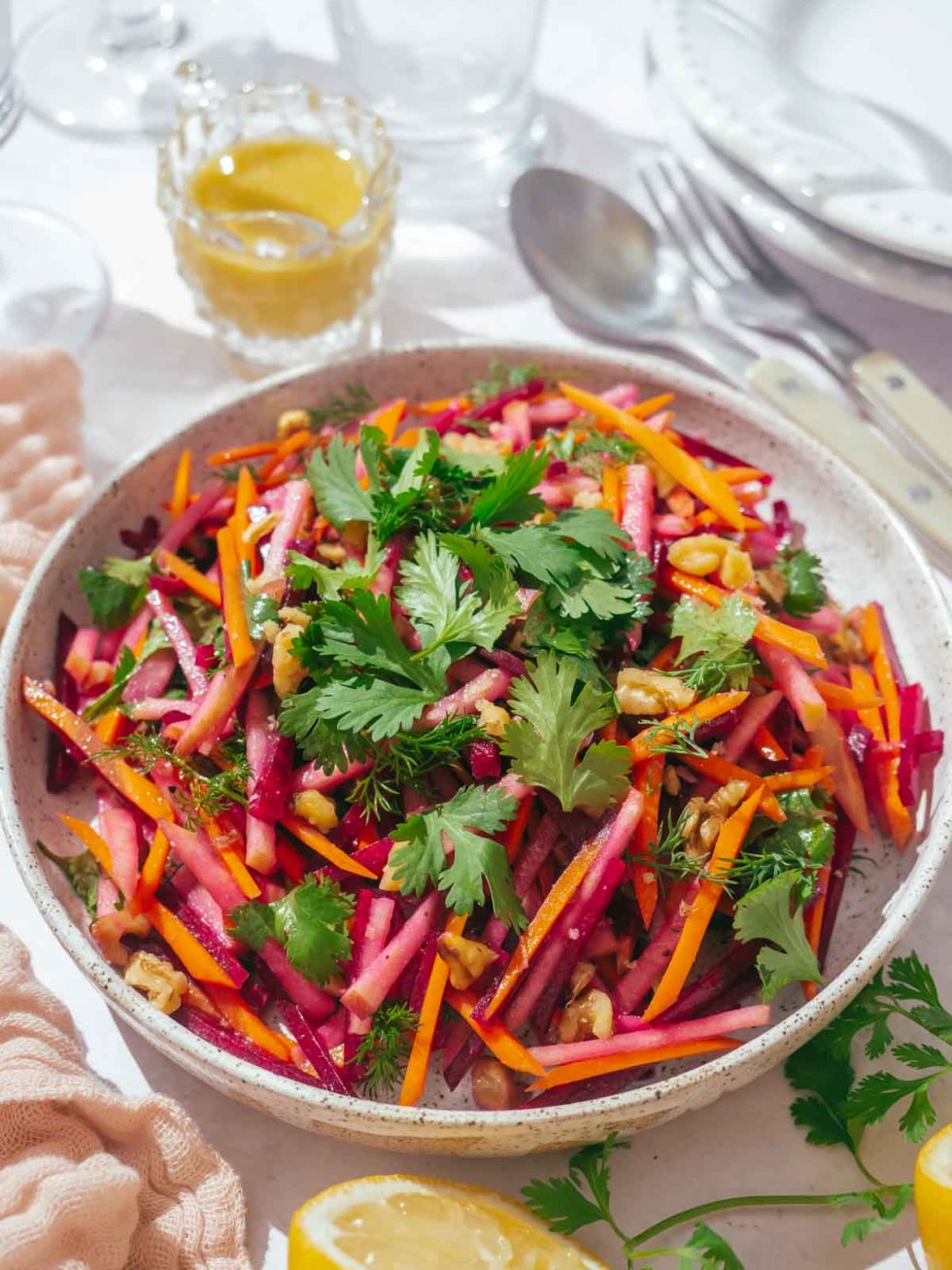
  12. Brightland Extra Virgin Olive Oil: This is a gift for wellness enthusiasts and healthy home cooks! Their beautiful bottles are perfect for gifting, and the quality is incredible. Make Olive Oil Buffalo Sauce and Beet and Carrot Salad!

Wellness Stocking Stuffers

  • Authentic Dried Bonito Flakes: Authentic ingredient to make dashi. Must have for making miso soup!
  • Ponzu Sauce: Soy sauce spiced up with yuzu citrus juice. Perfect for dipping and drizzling over veggies, fish, and meat.
  • Marukome Nama Shio Koji: If you're interested in Japanese gut healthy secret, try shio koji! Use shio koji to replace salt in cooking, adding umami and probiotics! It makes the best creamy, gut-healthy tomato soup!

Cookbooks

These cookbooks aren't exclusively Japanese, but they're too good not to include!

  • The Vegan Japanese Cookbook: 75 Favorites Made Simple - Let me present to you, my first published cookbook!! I veganized basic Japanese home cuisine.
  • The Wishbone Kitchen Cookbook: I love her taste and gorgeous recipes!
  • Eat Clean, Play Dirty: The cookbook is by the founders of Sakara Life. They make plant-based cooking so sexy, it's pretty impressive!
  • Sally's Baking 101: Beautiful baking cookbook for beginner to seasoned home cook!
  • Dessert Person: I really love Claire's YouTube channel! She is incredibly knowledgeable and inspiring!

I really hope you get some inspiration for the gift-giving season!

For more recipes and updates, follow me on Instagram, TikTok, Facebook, or Pinterest!

If you enjoy the recipe, please leave a comment and ⭐️⭐️⭐️⭐️⭐️! I'd love to know what you think!

December 10, 2025 Matcha

The Ultimate Matcha Guide for Beginners: Types, Health Benefits, and Essential Recipes

Welcome to my matcha guide! Now people are falling in love with matcha more than ever. Here's the detailed breakdown of what matcha is, how to choose matcha, traditional tools, storage, and essential recipes!

Matcha powder is whisked with hot water to make usucha in Chawan matcha bowl. Chashaku tea scoop, sifter, and Chasen bamboo whisk are placed around the bowl to make matcha.

If you love matcha latte or hojicha latte, or are genuinely curious about Japanese tea culture, this page is perfect! Matcha is not just a powdered green tea. It requires craftsmanship and thoughtful labor. Knowing the history behind matcha makes your daily teatime evenmore fulfilling.

[feast_advanced_jump_to]

Matcha in Modern Japanese Life

As I grew up in Japan, matcha is always around. It was a popular option for drink or dessert in cafes or restaurants. The most popular way people enjoy matcha in Japan is in desserts! In ice cream, cakes, baked goods, traditional wagashi, and shaved ice flavor(Japanese shaved ice culture is a huge deal!) You'll find countless matcha desserts in Japan!

It's also common to enjoy matcha with Japanese traditional desserts like Mitarashi Dango, Shiratama Dango, and Anmitsu.

A big bowl of sakura flavored Japanese shaved ice called kakigori served at Japanese cafe. This is fancy type if kakigori topped with rich cheese infused whipped cream, matcha dust, and pink monaka served with salty kombu for palate cleansing.

However, drinking matcha as tea or a latte isn't as trendy as it is in the US. That's likely because matcha is considered the premium beverage in both quality and price. So people drink more affordable tea, like green tea (Ryokucha, 緑茶) and roasted barley tea (Mugicha, 麦茶) on a daily basis. I keep a bottle of Mugicha in my fridge to drink all day. While people drink those teas for hydration, matcha is too thick and intense for frequent sipping.

Still, matcha and mactha culture hold a truly meaningful part in Japanese culture. I was in a Japanese tea ceremony club in high school. And I and girls (there were only female members) practiced the tea ceremony after school. Yes, so many schools have a Japanese tea ceremony as an extracurricular activity! The ceremony itself is not just about making tea. It is an art of hospitality. And it reflects the core cultural and spiritual values of Japan: harmony, respect, purity, and tranquility. It's also a mindful ritual that people, including me, find calm through the practice.

A bowl of matcha served with a huge bowl of Kabocha flavor kakigori (Japanese shaved ice) served in Japanese cafe.

So in this post, I'll walk through everything you need to know to enjoy matcha! I've found that not many website covers the culture and spiritual side behind matcha. But as someone who's Japanese and genuinely loves matcha, I'll share a little depth about it too.

What is Matcha? What Does Matcha Taste Like?

Matcha is finely ground green tea leaves. It has an earthy, vegetal flavor with a sweet aroma and subtle backbone of umami. When whisked with hot water, it creates a smooth tea with a creamy foam on top. It's traditionally enjoyed in the Japanese tea ceremony, known as sado (茶道).

A bowl of usucha matcha served at the restaurant. Traditional matcha making tools are placed at the background.

From Tea Leaves to the Powder

Matcha has an awakening, umami-rich flavor you just don't find from any other tea. But it just doesn't come from powdering tea leaves. The production involves thoughtful cultivation and meticulous craftsmanship. It's an art perfected through time and labor of love!

When new leaves begin to emerge from the Camellia sinensis plant, farmers cover the plants in the shade for more than 20 days. This reduction of sun exposure encourages the production of chlorophyll. That's why high-quality matcha has a vibrant green color.

The shading process also makes matcha rich in umami. Matcha is rich in a unique amino acid called L-theanine. L-Theanine contributes to matcha's signature sweetness and umami flavor. But it can be transformed into catechins when exposed to the sun. While catechins are antioxidant compounds that are beneficial for health, they are also responsible for the bitterness and astringency you find in traditional green tea. The shading process preserves L-Theanine in matcha.

Then, farmers either hand-pick or machine-pick only the young leaves. These leaves are steamed, dried without rolling, and sorted to remove stems and veins. Now, these processed tea leaves are called Tencha (碾茶).

Then, tencha is slowly ground into a fine powder using a traditional stone grinder called Ishi-usu (石臼). It's important to keep the grinding slow to prevent overheating. As heat can damage the matcha. Each Ishi-usu produces only 40g of matcha per hour.

Shaded-grown and stone-ground are what define matcha and differentiate it from other green tea products.

Producing high-quality matcha in the traditional method involves many layers of manual labor. That's why high-quality matcha comes at a premium price point. And why it's truly worth the investment!

A look from the top of matcha smoothie in a glass. Frothy matcha and smoothie mixed in a glass.

Matcha in Japanese History

People have been enjoying matcha in the tea ceremony for centuries. First, tea was brought from China more than 1000 years ago. In the 16th century, Sen no Rikyu (千利休) perfected wabicha, the foundational style of tea ceremony as we know it today. It is rooted in the spirit of wabi sabi, the philosophy of finding beauty in imperfection and simplicity, and celebrating impermanence.

Famous Samurai in Japanese history, like Oda Nobunaga, are known to love matcha and the tea ceremony. He and other leaders also used it as a political tool. Sen no Rikyu served Oda Nobunaga as a tea master. It is known that so many elite Busho (military leaders) are obsessed with the tea ceremony in the Sengoku period (戦国時代, around the 15th and 16th centuries). The Sengoku period is when civil wars took place in Japanese history.

Throughout Japanese history, you can find many samurai obsessed with the tea ceremony. So why are elites of the battlefield obsessed with a cup of ... tea?

One reason is that it was a political and social tool. Exquisite tea tools represent the authority and influence that one possesses.

The other reason is believed that samurai found calmness through tea ceremony practice, like Zen. It was an era of war, and they were the soldiers; they never knew if they could survive tomorrow. The tea ceremony was a way for them to find a piece of mind through the practice.

Now we feel like every day is a digital battlefield. Our feeds are often filled with overstimulating posts that constantly disturb our peace of mind. So it's natural for people to find peace and calmness through a personal ritual and a cup of matcha.

Matcha vs. Green Tea: Why are People Obsessed with Matcha?

Even without the science to prove the benefits of matcha during the 16th century, the Samurai instinctively knew something was right. Matcha is so calming! Scientists find the secret to why people (and samurai) are obsessed.

As we talked in What is Matcha? section, shaded-grown, and stone-ground characterized the taste and nutrition of matcha. Shaded-grown process preserves L-Theanine in tea leaves, and that's where magic happens and differentiates from regular green tea.

Caffeine and L-Theanine: The Power of Calm Focus

I love drinking my matcha instead of morning coffee. They both have caffeine to wake me up in the morning. But it hits me differently. While coffee gives me a boost of energy, matcha gives me a feeling of calm focus.

If you have the same experience as mine, that's valid! It is known that Matcha's caffeine is tempered by L‑Theanine to provide sustained, calm focus without a crash. L‑Theanine is also known to reduce stress and anxiety. It also improves sleep quality and the ability to stay focused by boosting mental clarity.

Sounds like great benefits samurai want during the era of war, right? We can also benefit from matcha to survive modern society.

Whole Leaf Consumption: More Nutrients, No Waste

The biggest difference between matcha and regular green tea (Ryokucha, 緑茶) is how people consume the tea.

When brewing green tea, you steep the tea leaves in hot water to extract the tea and discard the used leaves. This process extracts beneficial compounds and nutrients into your cup. But some of the nutrients and compounds stay in the leaves without diffusing into water.

With matcha, you are consuming the entire tea leaf, which has been finely ground into a powder. As a result, you can get higher levels of antioxidants in matcha.

While green tea and matcha share many healthy compounds and benefits, matcha is more concentrated in antioxidants like catechins, L-theanine, and Vitamin C. Green tea and matcha are both good sources of powerful antioxidants such as epigallocatechin gallate (EGCG). But matcha can have up to 3 times more antioxidants compared to high-quality green teas.

Usucha in a black Chawan matcha bowl with a Chashaku, a sifter, a Chasen bamboo whisk, a tin of matcha placed around.

How to Choose Your Matcha: Ceremonial Grade vs. Culinary Grade

This is the most important part!! As matcha gains popularity, numerous low-quality products begin to circulate on the market. Some of them even try to look like Japanese traditional brands, affecting their reputations. So we need to be smarter to support the matcha culture.

As we talked in What is Matcha? section, authentic production processes require craftsmanship. And that determines the quality.

Ceremonial Grade vs. Culinary Grade

Ceremonial-grade matcha is made for drinking. It's usually characterized by

  • Vibrant green color
  • Smooth texture (powder is very fine and silky)
  • Taste (sweetness and umami)
  • Rich aroma

They come in a premium price point, which is because producing high-quality matcha requires following authentic production processes like shade growing and stone grinding.

Culinary-grade matcha is great for baking or cooking. It's usually

  • The color might be dull and yellowish.
  • More coarse, slightly grainy.
  • You might notice more bitterness and astringency, and not much of umami and sweetness.
  • It's also less aromatic.

This matcha is produced through mass production. It simplifies the labor-intensive steps in the traditional matcha-making process. Also, leaves can be harvestd later time.

As a result, it has a stronger flavor and more bitterness. More L-Theanine is transformed into catechins, meaning less umami and more bitterness. It's not necessarily a bad thing. It actually works well in baking, because its strong flavor holds up after baking.

Actually, some confectionery-use matcha products are made or mixed with green tea (no shade-grown tea). So it's not technically matcha. Those products offer a strong green tea flavor in desserts. So check the label to see what you're buying!

These grades are not necessarily one better than the other. Rather, they just serve different purposes. It's just so wasteful to use the delicate flavor of ceremonial-grade matcha to flavor baked goods, just to be overpowered by other ingredients. So it's important to know that matcha comes in many shades of green. And you need to be intentional when picking the right one for your specific needs.

You can, of course, use ceremonial-grade matcha for baking and culinary uses. I like to use old matcha, which I left unused for a while, to make Matcha Pancakes!

Three pancakes are placed in a ceramic bowl and topped with yogurt, berries and a drizzle of maple syrup.

But, unfortunately, I don't recommend the other way around. I once tried to prepare a traditional cup of matcha tea (usucha) with culinary-grade matcha. And even as a matcha lover myself, the result was totally, meh 🙁

Oh, but wait! Grades are a great indicator to tell quality from outside of the tin. But is it the only way to tell if a matcha is good?

Stop Obsessing Over the "Ceremonial" Label

For example, my favorite matcha, Ummom from Ippodo, doesn't have a ceremonial grade label on it. None of the Ippodo products has a ceremonial grade label. Nor have I ever seen matcha specifically stated as ceremonial grade in Japan.

That's because "ceremonial grade" is a marketing term used outside of Japan. Unfortunately, there's no standard regulation on grading matcha. So what they call "ceremonial grade" depends on each matcha brand's standards and philosophy.

While "ceremonial grade" is nonexistent in Japan, I have definitely seen matcha labeled as "for culinary uses(ryori-yo, 料理用)" and "for confectionery uses (seika-yo, 製菓用)". That matcha is intended for cooking and baking, and not for being enjoyed as a tea.

So the key to finding a good matcha is learn the brand. And it's important to choose the matcha brand that follows the authentic Japanese matcha production process. Always check where matcha is from. And make sure to check the customers' feedback to ensure that the brand's claim is true.

And when trying yourself, make usucha and test your matcha's color, texture, taste (sweetness and umami), and aroma. You'll find a huge difference in taste once you experience authentic matcha!

If you tried matcha and didn't like it, it might not be because matcha is not for you. That's because the particular product is not for drinking or your preference. As we talked last section, some culinary-grade matcha is not even matcha, powdered regular green tea labeled as matcha for marketing purposes.

Also, brands blend matcha to create their signature flavor. So, try it yourself and find your favorite! It's also a fun part of the matcha journey.

A tin of matcha with a lid removed, showing vibrant green matcha inside, with a spoon of matcha on it placed on the side.

Where to Buy Matcha: Authentic Japanese Matcha Brands

Here are Japanese traditional tea brands that you can trust. They're all founded in Kyoto with a long history, and popular among US matcha lovers!

  • Ippodo Tea (1717): They're my favorite brand and always provide high-quality products! You can easily buy their products on their official website.
  • Marukyu Koyamaen (1704): They have a global website for customers outside of Japan, but it's very competitive to purchase one. Consider other sellers like Sazen and Steeping Room.
  • Yamamasa Koyamaen (1861): Unfortunately, there's no online shop for international shoppers. Try other sellers like Sazen and Steeping Room instead.
  • Nakamura Tokichi (1854): Their green tins are so iconic! Their website is usually stocked and ready to purchase!

The numbers after each brand name are the year they were founded! You'll see how historic they are!

I love Ippodo and order their matcha and green tea regularly. But since they stopped carrying small tins, I have recently been exploring new US brands like Rocky's matcha! It's really fun to try the brand's signature blend and single-origin matcha.

What does the Name of the Matcha Mean?

When you're browsing traditional Japanese matcha brands' websites, you might notice that the names look kinda similar to each other.

For example, Ippodo Ummon is called Ummon no Mukashi (雲門の昔) on the Japanese site. And Ippodo Kan is called Kan no Shiro (関の白). And next, take a look at Nakamura Tokichi's website. You'll find Hatsu-no-Mukashi (初の昔) and Seikan-no-Shiro (清閑の白). They sound similar at the ends, right?

That's because the names of the mathca are deeply tied to the tea ceremony. Mukashi and Shiro have been traditionally used to name matcha blends to reflect the traditional production process, and are only used for high-quality products. And now, Mukashi matcha blends are often used to make koicha (thick matcha) and Shiro matcha blends for ususha (thin matcha) in the tea ceremonies.

I found that Mukashi is used for bold, full-bodied blends. Shiro is used for more medium-bodied, refreshing matcha blends. So you can kinda guess the flavor from the names when you choose your matcha.

How to Make A Perfect Cup of Matcha

Essential Tools: Sifter, Bowl, and Bamboo Whisk (Chasen)

You don't need special tools to make matcha! And we'll talk about it later. But if you make matcha often, these traditional tools are very useful and even necessary to create the smoothest matcha. These tools below are essential tools to make a smooth, lump-free, and frothy matcha of your dreams!

  • Bamboo Whisk (Chasen, 茶筅): The king of making matcha! Nothing makes matcha smoother and creamier than a bamboo whisk! For making Usucha (foamy smooth matcha), you'll typically need a bamboo whisk with 80 or 100 bristles. It's a delicate tool, so be gentle while whisking and try not to scrape the bottom of the matcha bowl, which results in broken bristles. Always wash and dry your whisk thoroughly after use to keep it mold-free. When you lose several bristles, it's a clear sign that it is time for a replacement.
  • Sifter (Chakoshi, 茶漉し): Sifting before preparing matcha is an important step for a silky matcha. Since authentic matcha is a very fine powder, it tends to clump together due to static electricity.
  • Matcha Bowl (Chawan, 茶碗): While any small bowl will technically work, a traditional Chawan is the best for making matcha. When whisking matcha with a traditional bamboo whisk, you'll need a bowl with a wide and flat bottom to move your whisk efficiently. One with a spout is perfect for pouring matcha over a glass of milk to make a latte.
  • (optional) Tea Scoop (Chashaku,茶杓): Chashaku is a traditional bamboo scoop designed for scooping the perfect amount of matcha every time. Wipe with a dry cloth after use. Wetting the scoop makes it harder to clean, and exposing it to hot water can cause the bamboo to lose its curve.

If I have to choose one, I'll just start with a bamboo whisk. I've improvised with a small metal baking whisk or handheld frother in the past. Nothing compares to the velvety, clump-free matcha made with a bamboo whisk! Luckily, you can get a bamboo whisk under $10 at Amazon!

Traditional matcha tools gathered together on marble tabletop, Chawan matcha bowl, sifter, Chashaku tea scoop, Chasen bamboo whisk, and a tin of matcha powder.

Usucha vs. Koicha: The Two Traditional Styles

The most common way of preparing matcha is called Usucha (thin tea). Usucha is made by whisking together matcha powder and hot water to create a foamy, smooth tea. Traditional usucha is made with 2 Chashaku scoops of matcha (about 1.5-2g) and 60-70ml of water.

Think of Usucha like an espresso shot. You can pour this over milk to make a latte or double the recipe to make a double-shot latte. Prepare with a bamboo whisk with 80-100 thin bristles to create foam. When making the strong (double) shot of matcha for making lattes, double the matcha powder without doubling the amount of hot water. Thick usucha makes a strong matcha without diluting the milk.

I personally like 2-3g of matcha for my latte! But a lot of people prefer 4g of matcha to make a strong drink.

A bowl of Usucha I enjoyed at Ippodo store in Marunouchi, Tokyo. Light green, foamy froth is on top of the tea.

And we have another way to prepare matcha called Koicha (thick tea). It's a formal style of preparation mostly enjoyed in the tea ceremony. Koicha uses 4g of matcha powder and 30ml of water, resulting in a thick, paste-like consistency. It's not typically whisked for a creamy froth.

Unlike Usucha, Koicha is prepared by kneading matcha powder and water with a bamboo whisk with a thick bristle. Koicha requires the highest quality matcha due to its intensely concentrated flavor.

A bowl of Koicha I enjoyed at Ippodo store in Marunouchi, Tokyo. Vibrant green matcha paste in a bowl, no foam on top.

The Step-by-Step Whisking Matcha (Usucha)

So here, it's finally time to make yourself a matcha! Here are the basic steps to make usucha. You can just sip usucha to enjoy the matcha's delicate flavor, or add it to milk or soda to make fun lattes and drinks.

What You Need (Per Serving)

Ingredients:

  • 2 g of matcha (1 teaspoon or 1.5 tea scoops), use up to 4g to your taste
  • 60-70ml of hot water (80°C /176°F)

Tools:

  • Bamboo Whisk
  • Shifter
  • Matcha Bowl
  • Teaspoon or Tea Scoop

How to Make Ususha

Step 1: Sift the Matcha

Soaking a bamboo whisk in warm water in a black matcha bowl.
  1. Soak a bamboo whisk in hot water to soften the bristles. If you're using the same matcha bowl for soaking the whisk and making matcha, wipe it dry very well before adding matcha powder. This is really good for warming the bowl!
Sifting matcha powder through a fine mesh sieve into a black matcha bowl.
  1. Place a sifter over a matcha bowl, and scoop matcha into the sifter with a teaspoon or tea scoop.
Using a back of a Chashaku bamboo tea scoop to press matcha through sifter to remove any clumps.
  1. Gently press the powder through into the bowl using the back of the tea scoop or teaspoon. This helps break up any clumps for a smooth tea.

Tip: You can measure the matcha and water using a kitchen scale for precise measurement.

Step 2: Add Water (Temperature is the KEY!)

Bring water to a boil, then allow it to cool to around 80°C (176°F). If your kettle has temperature control, it works wonders.

No temperature control? Don't worry! Try the traditional cooling method called Yusamashi (湯冷まし). It's quite simple. Pour boiling water into a different cup to cool. This step slightly cools off the water. Use this water to make matcha.

Showing the process of yusamashi, pouring hot water into a cup to slightly cool, making it the best temperature for making matcha.
  1. Yusamashi (湯冷まし). Instead of pouring straight from the kettle, pour hot water into a cup to cool slightly to 80°C (176°F).
Pouring hot water from the white cup into a black bowl of matcha powder.
  1. Slowly and gently, pour the hot water into the bowl of matcha.

Step 3: Whisk

Gripping Chasen bambo whisk with three fingers and place it in matcha bowl to whisk.
  1. Hold the bowl firmly with one hand. With your other hand, lightly grip the Chasen (bamboo whisk) using the thumb, index, and middle fingers.
Whisk matcha vigorously for about 15 seconds with a bamboo whisk.
  1. Then whisk vigorously for about 15 seconds with a bamboo whisk. To start, gently mix the matcha and water. Don't forget to reach the bottom of the bowl where the powder sinks down. Then, slightly lift up the whisk from the bottom and rapidly move the whisk back and forth in "W" or "M" motion. Relax and use the snap of your wrist.
Brushing the surface of matcha with a bamboo whisk to eliminate any large air bubbles.
  1. Once mostly whisked, a thin layer of bubbles (froth) appears on the surface. Lift up the whisk to the surface of the matcha. Finish with gentle motions, brushing the surface. This step breaks large bubbles and creates smooth and creamy foam.
Gently lifting up a bamboo whisk from matcha after whisking.
  1. Slowly lift the whisk from the surface, and your perfect bowl of usucha is ready to enjoy!

Tip: Avoid pressing the whisk down too hard on the bottom of the bowl to preserve the delicate bristles.

How to Make Matcha Without the Special Tools

While the traditional whisking method provides the best result, sometimes we all have to improvise to survive no-whisk emergencies. Because even if it's not the best, good matcha is better than no matcha, right? So here are some ways to make matcha without traditional tools!

Mug and Spoon Method

Add matcha to a mug and pour a splash of hot water, about 1 tablespoon. Use a spoon to knead the powder with water to make it into a paste. Then, pour in the rest of the water. Whisk vigorously until smooth. And you just made yourself a cup of matcha!

Instead of a spoon, you can also use a fork or a small whisk.

Shaker (or Jar) Method

In a shaker or a jar with a lid, add matcha, water, and ice cubes. Seal the jar and shake well until a frothy and smooth consistency.

I like this method on the go or during vacation!

How to Store Matcha to Keep It Fresh

Here are the tips to keep your matcha fresh! It's important to keep it fresh to enjoy the flavor and its benefits to the fullest.

How Often Do You Enjoy Your Matcha?

Before buying the matcha, you need to know how frequently you'll be drinking matcha. It's important to determine the size of the tin you get. Typically, it's recommended to finish the opened tin of matcha within a month. I see brands offer 20g, 30g, 40g tins and 100g bags. And you'll need 2-4g of powder to make one cup of matcha. Based on these calculations, pick the one that best suits your lifestyle!

  • 20g (5-10 servings): best for those who enjoy 1-2 cups of matcha per week.
  • 30g (7-15 servings): best for those who enjoy 2-3 cups of matcha per week.
  • 40g (10-20 servings): best for those who enjoy 3-5 cups of matcha per week.
  • 100g (25-50 servings): best for those who enjoy matcha every day or use it beyond drinks, like baking and making desserts.

I like getting a 20g tin so that I can enjoy my matcha fresh and delicious!

How to Store Matcha

When it comes to storing, matcha needs princess treatment. It's important to keep matcha away from

  • Air: Oxygenize the matcha.
  • Heat: Matcha likes a steady temperature.
  • Humidity: You don't need clamps in sily matcha powder.
  • Odors: No food, spices, or fragrance, please!
  • Light: Sunshine is the biggest enemy.

They all contribute to damaging our precious matcha. The flavor, color, and aroma can degrade.

After the opening, keep matcha in an airtight container made with opaque material to protect from oxygen and sunlight. The matcha tin that comes with it is ideal. Most of the matcha tin comes in an inner foil bag to create a double seal. I like to keep matcha in this inner foil bag for extra protection and use a clip to seal after every time I scoop out the matcha. But you can transfer your matcha into the tin for convenience and aesthetics. Just minimize the time of opening the tin to reduce light exposure.

Then keep the tightly sealed matcha tin in a dark, dry, cold place like a cupboard. But just make sure you store your matcha away from the spices to avoid odors. You don't need to refrigerate, as the fridge is filled with food smells. Room temperature is fine, especially if you're using it regularly.

If you wish to store it longer, you can freeze an unopened bag/tin of matcha. When using, thaw completely before opening to avoid condensation.

Matcha Recipes Beyond Latte

So here comes the fun part! Once you master the basic technique to make usucha, you can use any drink your heart desires! I love making a matcha latte with seasonal fruits. Making homemade fruit syrup is so easy.

And if your matcha gets a little old (you'll notice when the color gets dull when the matcha gets forgotten at the back of the cabinet), you can save it by making a tasty dessert!

Creamy & Classic Matcha Lattes (Hot, Iced, and something special)

Matcha lattes are a great recipe for starting to explore the world of matcha drinks! Lattes provide the perfect balance of focused energy and sweet, creamy comfort. These recipes combine the traditional usucha with milk, spices, and syrups for café-quality results at home. Using seasonal fruit syrup and jam is also a great way to enjoy matcha year-round!

  • Start your day with the comforting flavor of our Creamy Vanilla Matcha Latte with Oat Milk.
  • When berries are in season, try our Easy Blueberry Matcha Latte (Hot or Iced).
  • Skip the coffee shop line and try our ultra-popular Healthy Iced Strawberry Matcha Latte (Starbucks Copycat!).
  • Get a taste of a viral sensation with the light and frothy Easy Viral Coconut Matcha Cloud (Matcha Cold Foam Coconut Water). This is really groundbreaking and opens your matcha horizon!
  • Learn how to make the chewy, refreshing classic drink at home: How to Make Matcha Bubble Tea at Home.
  • Need a quick pick-me-up? This simple and creamy Banana Matcha Latte is ready in minutes and so energizing!

Adding a dollop of jam or preserve to your daily matcha latte is the easiest way to add seasonal flair to your routine! Try Strawberry Rhubarb Jam in early summer to capture the season in a glass.

The blueberry matcha latte in a glass, topped with blueberry cold foam.

Fruity and Refreshing Matcha Drinks (Smoothies, Mocktails, and Sodas)

Matcha's bright, grassy notes pair beautifully with refreshing, sweet fruit flavor, creating complex and refreshing beverages. And bubbly matcha is surprisingly delicious! These recipes are perfect for hydration, entertaining, a powerful pre-workout boost, or starting your morning energized.

  • Did you know matcha soda is a thing? For a bubbly sip, try this Easy Sparkling Matcha Green Tea Soda Recipe.
  • Matcha makes great mocktails! Try Matcha Mojito Mocktail.
  • Make a tropical twist on a classic soda with Sparkling Lychee Matcha Mocktail.
  • This Refreshing Iced Blueberry Matcha Lemonade with Lavender is the ultimate summer cooler!
  • Blend your favorite flavors into a chilled breakfast with the Healthy and Easy Matcha Banana Smoothie.
  • Power up your breakfast blender with the Quick 5-Ingredient Mango Matcha Smoothie.
  • Blend your favorite flavors into a fulfilling breakfast with the Nourishing Strawberry Matcha Latte Smoothie.
  • Make the Connecting with the Earth Smoothie on Earth Day to admire the beautiful swirl of blue butterfly pea smoothie and vibrant green matcha.
Matcha banana smoothie in a glass, topped with sliced banana.

Matcha Desserts, Breakfasts, and More

I need all my desserts in matcha flavor! You can use either ceremonial-grade matcha or culinary-grade powder for these recipes.

  • Make your breakfast extra green with the Fluffy Matcha Green Tea Pancakes.
  • Enjoy a fun summer treat with the beautiful layers of Mango Matcha Latte Popsicles.
  • For an easy grab-and-go breakfast, meal prep the Strawberry and Cream Overnight Oats with Matcha Yogurt.
  • Combine classic dessert with matcha in Matcha Affogato with Homemade Strawberry Topping.
  • For something truly fun and unique, check out our Unique Halloween Matcha Frankenstein Onigiri (perfect for themed parties!).
Mango Matcha Latte Popsicles are placed on parchment paper and surrounded by flowers and ingredients like mango chunks and matcha.

Matcha FAQs and Troubleshooting

What Does Matcha Taste Like?

Matcha has an earthy, vegetal flavor with a sweet aroma and subtle backbone of umami. When whisked with hot water, it creates a smooth tea with a creamy foam on top. It's finely ground green tea powder, but bitterness and astringency are reduced during the shaded-grown process.

Why is my matcha bitter, and how can I fix it?

If you're using fresh, high-quality matcha and still taste the bitterness, the water temperature could be a problem. Boiling water (100°C/212°F) draws bitterness and astringency compounds called catechins from the tea. So slightly cool the water to 80°C (176°F) before adding to matcha.
Another possible reason is clumps in matcha. The clumps trap the aroma and feel bitter. So sift the powder before use.

How to Store Matcha to Keep It Fresh

Matcha is very sensitive to oxygen, heat, moisture, odors, and light. They all quickly degrade the matcha's precious color and flavor. After the opening, keep matcha in an airtight container made with opaque material, like the tin it comes with. Then keep the tightly sealed matcha tin in a dark, dry, cold place like a cupboard. Matcha won't last long. Enjoy opened matcha within one month.

Does Matcha Expire and How Long Does It Last?

Matcha does not exactly "expire" in the way fresh food does, but it does lose its flavor, color, and nutrients over time. Once the tin is opened, the general recommendation is to use it up within one month

Is Matcha Safe to Drink Every Day?

Yes! Matcha is generally safe to drink every day in moderation! Matcha is beneficial for daily life, like reducing stress and promoting a sense of calm and clarity. But matcha is so powerful and concentrated with beneficial and potentially harmful compounds, it's not generally recommended to drink more than 2 cups per day.

Are Matcha and Green Tea the Same?

Technically, no. While both matcha and green tea come from the same plant (Camellia sinensis), they are grown, processed, and consumed differently.
Green tea is enjoyed by steeping dried tea leaves in water, just like we do with black tea. Matcha is made from the same tea leaves, but they are shaded for 20+ days before harvest to increase umami and reduce bitterness. These leaves are then ground into a fine powder that you whisk directly into your drink. Because you drink the whole leaf with matcha, instead of steeping and then discarding, you get more antioxidants and caffeine.

Phew, that was a lot! I really hope I could answer some of the questions you have. I'm still leaning and love every process! Please let me know what you think, and enjoy a cup of matcha together!

Matcha powder is whisked with hot water to make usucha in Chawan matcha bowl. Chashaku tea scoop, sifter, and Chasen bamboo whisk are placed around the bowl to make matcha.

How to make Matcha (Usucha)

Usucha is a traditional and basic way to enjoy matcha! It's made by whisking together matcha powder and hot water to create a foamy, smooth tea. You can enjoy usucha as is to taste the rich umami, or add it to milk to make a latte!
Print Recipe Pin Recipe
Prep Time 5 minutes mins
Total Time 5 minutes mins
Course Drinks
Cuisine Japanese
Servings 1 bowl
Calories 6 kcal

Ingredients
  

  • 2 g matcha (about 1 teaspoon or 1.5 Chashaku tea scoops) use up to 4g to your taste *see note
  • 60-70 ml hot water 80°C (176°F)

Instructions
 

Sift the Matcha

  • Soak a bamboo whisk in hot water to soften the bristles.
  • Place a sifter over a matcha bowl, and scoop matcha into the sifter with a teaspoon or tea scoop. Gently press the powder through into the bowl using the back of the tea scoop or teaspoon. This helps break up any clumps for a smooth tea.
  • Tip: You can measure the matcha and water using a kitchen scale for precise measurement.

Add Water (Temperature is the KEY!)

  • Bring water to a boil, then allow it to cool to around 80°C (176°F). If your kettle has temperature control, it works wonders.
  • No temperature control? Don't worry! Try the traditional cooling method called Yusamashi (湯冷まし). It's quite simple. Pour boiling water into a different cup to cool. This step slightly cools off the water. Use this water to make matcha.
  • Then slowly and gently, pour the hot water into the bowl of matcha.

Whisk

  • Hold the bowl firmly with one hand. With your other hand, lightly grip the Chasen (bamboo whisk) using the thumb, index, and middle fingers.
  • Then whisk vigorously for about 15 seconds. Begin by gently mixing the matcha and water, making sure to reach the bottom of the bowl. Then, slightly lift up the whisk from the bottom and rapidly move the whisk back and forth in a quick "W" or "M" motion. Use the snap of your wrist.
  • Avoid pressing the whisk down too hard on the bottom of the bowl to preserve the delicate bristles.
  • Once mostly whisked, and thin layer of bubbles (froth) appears on the surface, lift up the whisk to the surface of the matcha. Finish with a few gentle circular motions. This step breaks large bubbles and creates smooth and creamy foam.
  • Slowly lift the whisk from the surface, and your perfect bowl of usucha is ready to enjoy!

Notes

Traditional usucha is made with 2 Chashaku scoops of matcha (about 1.5-2g) and 60-70ml of water.
Think of Usucha like an espresso shot. You can pour this over milk to make a latte or double the recipe to make a double-shot latte. Prepare with a bamboo whisk with 80-100 thin bristles to create foam. When making the strong (double) shot of matcha for making lattes, double the matcha powder without doubling the amount of hot water. Thick usucha makes a strong matcha without diluting the milk.

Nutrition

Serving: 1servingCalories: 6kcalProtein: 1gSodium: 3mgVitamin A: 100IUCalcium: 2mgIron: 0.4mg
Keyword matcha, usucha
Tried this recipe?Let us know how it was!

For more recipes and updates, follow me on Instagram, TikTok, Facebook, or Pinterest!

If you enjoy the recipe, please leave a comment and ⭐️⭐️⭐️⭐️⭐️! I'd love to know what you think!

November 25, 2025 Appetizers

Brie and Cranberry Puff Pastry Bites with Kabocha Squash

These Brie and Cranberry Puff Pastry Bites are the perfect savory-sweet appetizer for fall and holiday gatherings. Creamy kabocha squash, tart cranberry sauce, and rich brie cheeseare wrapped in buttery golden puff pastry. These pumpkin-shaped puff pastry hand pies are a fun appetizer to welcome guests during the Thanksgiving holiday season!

Pumpkin shaped Brie and cranberry puff pastry bites on the baking sheet with fresh cranberries and rosemary sprig around them.

Cramberry and brie are classic flavor combinations, so festive and irresistible. And puff pasty bites are so easy to make and impressive!

So this year, I decided to make it even more festive with Kabocha squash and wrap it into a pumpkin (or kabocha) shape! It takes a bit of effort, but it's totally worth it!

New to kabocha squash? Definitely check out How to Cut Kabocha Squash for the basics!

Pumpkin shaped Brie and cranberry puff pastry bites on the baking sheet and some of them are broke in half, showing the filling inside.

Brie and cranberry puff pastry bite Ingredients

  • Kabocha Squash - Add cozy sweetness to these puff pastry bites! You can also use sweet potato or prepared chestnuts. Or use mashed potatoes if you want to whip these up with Thanksgiving ingredients!
  • Cranberries - The refreshingly sweet sauce made from fresh cranberries is the best! But, of course, you can use store-bought or canned cranberry sauce!
  • Orange Juice and Zest - Brighten up the homemade cranberry sauce.
  • Maple Syrup - Naturally sweeten the syrup. You can swap this with regular sugar or agave syrup.
  • Frozen Puff Pastry - Great shortcut for an easy appetizer.
  • Brie Cheese Bites- These mini Brie wheels are the perfect size for cute little pumpkin-shaped hand pies.
  • Egg - For the egg wash.
  • Cinnamon Sticks - For pumpkin stem decoration
  • All-Purpose Flour - For dusting when rolling out the puff pastry.

If you get a whole kabocha and have some leftover, Kabocha Squash Miso Soup is an easy recipe to use it up! Also, Kabocha freezes well! I wrote a detailed how-to in How to Store Kabocha Squash section of How to Cut Kabocha Squash post!

Instructions

Steaming Kabocha squash chunks in a pot with a splash of water.
  1. Preheat the oven to 400°F/200°C. Line a sheet pan with parchment paper. Cut 27 pieces of kitchen twine, each 10 inches long. 
  2. In a pot, add ¼ cup of water and kabocha squash. Cover and cook over medium heat until tender, for about 10 minutes. Once they're cooked, uncover and cook off the liquid.
Mashing cooked Kabocha squash with a fork in a bowl.
  1. Transfer the cooked kabocha to a bowl and mash with a fork until creamy with some texture left. The kabocha skin should mash easily with a fork. Let it aside to cool while preparing other ingredients.
Cranberries, orange juice, orange zest, and maple syrup in a saucepan.
  1. While kabocha is cooking, start preparing cranberries. In a saucepan, combine cranberries, orange juice, and maple syrup. Bring a mixture to a simmer over medium heat and cook until cranberries burst and the sauce is thickened, for about 15 minutes. Stirring occasionally. Reduce the heat to low if necessary to maintain the gentle simmer.
The cranberry sauce is thickened in a saucepan.
  1. Remove from the heat and let cool.
Cutting a mini Brie cheese bite into thirds.
  1. Cut the Brie wheel into three equal wedges.
Cutting puff pastry into 9 squares.
  1. Dust your work surface with all-purpose flour. Roll out the thawed puff pastry into a slightly bigger square, about 10 inches by 10 inches. Then cut into 9 squares.
A piece of Brie cheese, cranberry sauce, and mashed Kabocha squash on a piece of puff pastry square.
  1. In the center of one piece of puff pastry square, place a one-third piece of brie cheese, about ½ tablespoon of cranberry sauce, and about 1 Tablespoon of kabocha mash. Carefully gather the edges of the puff pastry to wrap the filling and pinch them together to seal. Repeat with remaining ingredients.
Each little puff-pastry hand pie is wrapped and tied with kitchen twine.
  1. Arrange 3 pieces of kitchen twine in a criss-cross pattern and place one puff pastry ball on top, with smooth side down. Tie each string around the ball just tight enough. Repeat with the remaining balls. 
Brushing each puff pastry balls with egg wash.
  1. On the prepared baking sheet, place puff pastry balls with the knot side down. Beat an egg and 1 Tablespoon of water together to make egg wash. Brush egg wash over each ball.
Cinnamon sticks are placed on top of the pumpkin shaped hand pie, looking like pumpkin stem.
  1. Bake until golden, for 15 to 20 minutes. The filling can start to leak, but that's ok, it'll set after cooling.
  2. Once the balls are out of the oven, let them cool slightly until they're comfortable enough to touch. Remove all the kitchen twine. Stick a halved cinnamon stick in the center, so they look like little pumpkins.

Serve warm and enjoy at your holiday gatherings or fall dinner parties. While holiday spirits are high, it's a perfect time to peek at my Japanese Inspired Holiday Gift Guide for gift inspirations!

Try More Appetizer Recipes

  • Shichimi Togarashi Bread Dipping Oil
  • Simple Stuffed Fig Bites with Whipped Ricotta and Pistachios
  • Roasted Beets with Whipped Feta and Balsamic Glaze

FAQ

How to Make this Puff Pastry Recipe Vegan/Dairy Free?

Great news! While dairy-free puff pastry options are available(like Dufour plant-based pastry dough), a lot of regular frozen puff pastries on the market are also accidentally vegan, like the one from Pepperridge Farm!
And for the vegan Brie substitute, use vegan cream cheese, vegan Brie-style cheese, or vegan Goat-style cheese.

Pumpkin shaped Brie and cranberry puff pastry bites on the baking sheet with fresh cranberries and rosemary sprig around them.

Brie and Cranberry Puff Pastry Bites with Kabocha Squash

Nutty and Sweet Kabocha squash elevate the festive Brie and Cranberry Puff Pastry Bites, making them a cute pumpkin-shaped appetizer! Tart cranberry sauce, rich brie, and creamy kabocha squash are wrapped in buttery puff pastry. These pretty little hand pies are a fun appetizer to welcome guests during the holiday season!
Print Recipe Pin Recipe
Prep Time 10 minutes mins
Cook Time 40 minutes mins
Total Time 50 minutes mins
Course Appetizer
Servings 9 pumpkins
Calories 220 kcal

Ingredients


  • 200 g Kabocha squash (about ¼ medium kabocha squash) chopped
  • 1 cup cramberries 114g 4oz
  • ¼ cup orange juice and zest about ½ orange juiced and zested
  • 2 Tablespoons maple syrup
  • 1 sheet frozen puff pastry thawed
  • 3 mini Brie cheese bites cut each into thirds
  • 1 egg
  • 3 sticks cinnamon cut in half (see note), for decoration
  • all-purpose flour for dusting
  • sea salt

Instructions
 

  • Preheat the oven to 400°F/200°C. Line a sheet pan with parchment paper. Cut 27 pieces of kitchen twine, each 10 inches long.
  • In a pot, add ¼ cup of water and kabocha squash. Cover and cook over medium heat until tender, for about 10 minutes. Once they're cooked, uncover and cook off the liquid.
  • Transfer the cooked kabocha to a bowl and mash with a fork until creamy with some texture left. The kabocha skin should mash easily with a fork. Let it aside to cool while preparing other ingredients.
  • While kabocha is cooking, start preparing cranberries. In a saucepan, combine cranberries, orange juice, and maple syrup. Bring a mixture to a simmer over medium heat and cook until cranberries burst and the sauce is thickened, for 10 to 15 minutes. Stirring occasionally. Reduce the heat to low if necessary to maintain the gentle simmer.
  • Remove from the heat and let cool.
  • Cut the Brie wheel into three equal wedges.
  • Dust your work surface with all-purpose flour. Roll out the thawed puff pastry into a slightly bigger square, about 10 inches by 10 inches. Then cut into 9 squares.
  • In the center of one piece of puff pastry square, place a one-third piece of brie cheese, about ½ tablespoon of cranberry sauce, and about 1 Tablespoon of kabocha mash. Carefully gather the edges of the puff pastry to wrap the filling and pinch them together to seal. Repeat with remaining ingredients.
  • Arrange 3 pieces of kitchen twine in a criss-cross pattern and place one puff pastry ball on top, with smooth side down. Tie each string around the ball just tight enough. Repeat with the remaining balls.
  • On the prepared baking sheet, place puff pastry balls with the knot side down. Beat an egg and 1 Tablespoon of water together to make egg wash. Brush egg wash over each ball.
  • Bake until golden, for 15 to 20 minutes. The filling can start to leak, but that's ok, it'll set after cooling.
  • Once the balls are out of the oven, let them cool slightly until they're comfortable enough to touch. Remove all the kitchen twine. Stick a halved cinnamon stick in the center, so they look like little pumpkins. Serve warm and enjoy!

Notes

How to cut cinnamon sticks in half: Place the cinnamon stick on a cutting board. Position a sharp knife across the center and press down, rocking gently. Keep your fingers away from the blade as the stick cracks in half. Roll the cinnamon stick around, if necessary, until it cracks. Once the knife makes a cut, you can simply snap the stick the rest of the way by hand.
 
Please note that the nutritional information provided is just an estimate, and accuracy is not guaranteed.

Nutrition

Serving: 1pumpkinCalories: 220kcalCarbohydrates: 21gProtein: 5gFat: 13gSaturated Fat: 4gPolyunsaturated Fat: 2gMonounsaturated Fat: 7gTrans Fat: 0.002gCholesterol: 29mgSodium: 135mgPotassium: 154mgFiber: 2gSugar: 4gVitamin A: 408IUVitamin C: 8mgCalcium: 46mgIron: 1mg
Keyword brie, cranberry, kabocha squash
Tried this recipe?Let us know how it was!

For more recipes and updates, follow me on Instagram, TikTok, Facebook, or Pinterest!

If you enjoy the recipe, please leave a comment and ⭐️⭐️⭐️⭐️⭐️! I'd love to know what you think!

November 23, 2025 Gift Guide

Japanese Inspired Holiday Gift Guide 2025

Here are gift ideas for the holiday season with a Japanese twist! They're perfect for both a Japanese food curious or an expert foodie. High-quality pots and pans make beautiful investment gifts that last for years, supporting your loved ones' healthy cooking. And a little foot items like matcha and furikake make such fun stocking stuffers.

I may earn a s mall commissions when you click on those links at no extra cost to you. As an Amazon Associate I earn from qualifying purchases. I truly appreciate your support!

If you want to buy matcha and don't know where to start, check out my matcha guide to learn how to choose, buy, and make the best matcha for you!

If you need more inspo, I have another holiday gift guide. Check out the Last-Minute Japanese-Inspired Holiday Gift Guide 2025!

Pictures of a pot, pan, glassware, and food items are gathered, Handwritten bow around the edge.
  • STAUB Cast Iron Dutch Oven 4-qt - This is a very versatile pot, both durable and makes anything delicious! This size is perfect for making a generous batch for meal prepping in one household or comfortably feeding a family of 4. This is perfect for baking sourdough, too.
  • Our Place Always Pan - Ceramic-coated pans are a great alternative to conventional non-stick if you're looking for a PFAS-free option. I like Always Pan for its versatility, and the steamer basket is great for quick steaming of dumplings and veggies. Ceramic coating is perfect for cooking Matcha Pancakes!
  • Glass Matcha Bowl - This glass bowl is so simple and beautiful! You can check from the bottom to see if there are no lumps left in your matcha. See how I use this bowl to make matcha in the Strawberry Matcha Latte Smoothie recipe.
  • La Rochere Bee Glass Coffee Cups - These cups are perfect for pouring one cup of tea! I use these for my green tea and genmaicha, and you can enjoy the beautiful color of your tea. I made a Hojicha Latte in this mug, and the size is perfect!
  • Le Creuset Stoneware Mini Round Cocotte 8 oz - These little cocottes are not just so cute! They're perfect for making chawanmushi or individual desserts like purin. I made the Cinnamon Roll Overnight Oats in these, and oh, they're just so cute!
  • Dried Rice Koji - Koji is the key fermentation ingredient in Japanese cooking! Making shio koji or shoyu koji at home is so easy, and if your loved one wants to begin a gut-friendly journey the Japanese way, this is a perfect start! Make shio koji and use it in Creamy Roasted Tomato Soup with Shio Koji!
  • Shiratamako - Japanese sweets lover? This is a must-have for making Shiratama Dango.
  • Pure Artisan Japanese Soy Sauce - Not all soy sauce is made equal. And high-quality soy sauce makes any Japanese meal you make at home better! This one is aged in the traditional method using wooden barrels. Perfect for making the Spicy Asian Spiral Cucumber Salad!
  • Ippodo Matcha Ummon - I feel like matcha is the drink of 2025! More people are falling in love with matcha more than ever. I love Ippodo, and the Ummon blend has a bold and rich flavor. Enjoy sipping and making a latte! See how vibrant green this matcha is in the Banana Matcha Latte post.
  • Ippodo Matcha Sayaka - I know the recent matcha price increase has hit all of us so hard. I love Ummom, but I just can't justify the price sometimes. Sayaka is more affordable than Ummon but not any less! It's bright, smooth, and slightly sweet, making a great latte. Perfect for making a Blueberry Matcha Latte.
  • Ippodo Hojicha - Hojicha is the next matcha! It's roasted green tea and has a deep toasty flavor, and is perfect for making a latte. Enjoy a cozy cup of Hojicha Latte.
  • Furikake - Furikake is a versatile Japanese seasoning for seasoning rice and making onigiri.
  • Japanese Clay Pot - This is perfect for making nabe and yudofu!

For more recipes and updates, follow me on Instagram or TikTok!

If you enjoy the recipe, please leave a comment and ⭐️⭐️⭐️⭐️⭐️! I'd love to know what you think!

November 22, 2025 Coffee and Tea

Hojicha Latte Recipe

If you're a matcha lover and looking for a next wellness drink to try for your morning ritual, try Hojicha Latte! Hojicha is a roasted green tea that has a mellow toasty flavor and rich caramel-like aroma. With creamy frothed milk, it makes a satisfying latte. You can use loose tea or powder to make this simple yet cozy tea latte.

Hojicha latte with creamy frothed milk foam on top in a glass cup with handle.

Hojicha tastes so toasty and cozy! Pair it with Mitarashi Dango, Shiratama Dango, Anmitsu, and Strawberry Chocolate Mochi for a fun Japanese-inspired tea time!

[feast_advanced_jump_to]

What Is Hojicha? What Does Hojicha Taste Like?

Hojicha is a traditional Japanese green tea made by roasting the tea leaves. Green tea, like Sencha and Bancha, is made by steaming the tea leaves to preserve their green color and natural qualities. Green tea is then roasted until golden brown to create Hojicha.

Hojicha has a mellow, nutty flavor with a rich, toasty aroma. It's also slightly sweet and smoky. Green tea is vegetal and refreshing, while hojicha has a more cozy and comforting flavor profile.

Memo: Matcha, green tea, hojicha, and tea are all made from the same plant! If you're curious about matcha, I have a dedicated post about everything you need to know about matcha!

Is Hojicha Better Than Matcha?

Well, it depends on what you're looking for! They're both made from the same plant, but flavor, antioxidant content, caffeine, and price are different because of the production process.

Matcha is a finely ground green tea leaf powder, so it has more caffeine than regular green tea and hojicha. It's packed with antioxidants and Vitamin C, and has an earthy flavor with umami. Tea leaves are grown in shade, then stone-ground, so it's more expensive than regular green tea and hojicha. Banana Milk Matcha, Matcha Boba Milk Tea, and Lychee Matcha Soda are great recipes to enjoy rich matcha.

I get deep into matcha in The Ultimate Matcha Guide for Beginners for how to choose, store, and make the best matcha!

If you're wondering what does matcha taste like compared to Hojicha, it's a completely different experience.

Hojicha comes in loose leaves and powder form, so you can prepare it by steeping like black tea or whisking like matcha. It has a nutty and toasty flavor and sweet caramel-like aroma, and has lower caffeine and antioxidants. And it's much cheaper than matcha.

If you feel devastated by the recent price increase of matcha (including me!), hojicha is definitely a fun Japanese tea to try next!

Matcha vs Hojicha

  • Matcha: Specialty green tea powder. More caffeine, rich in antioxidants, more caffeine, and expensive.
  • Hojicha: Roasted green tea. Less caffeine, loses some antioxidants during the roasting process, less caffeine, and is affordable.

Hojicha Leaves vs Powder

To make the hojicha, you can either use tea leaves or powder. They each offer a slightly different flavor and experience.

Hojicha Leaves

You can steep loose hojicha tea like classic black tea. While they need straining after steeping, they offer a more delicate taste and a rich toasty aroma. The best part of hojicha tea leaves is that you can make 2-3 cups of tea! Save the steeped tea leaves and make your second and third tea.

  • Best for: steeped tea
  • Texture: light and smooth
  • Flavor: mellow and slightly sweet, with a rich toasty caramel aroma
  • Prep: steeping

Hojicha Powder

Finely ground roasted green tea powder is whisked into water to create a smooth latte, as you would do with a matcha latte! Since the drink made with powder has real leaves in it, the flavor is bold and strong.

  • Best for: lattes
  • Texture: creamy
  • Flavor: bold and full-bodied
  • Prep: whisking

Which Should I Use?

It depends on your preference! If you want a cafe-style drink with bold flavor, go with the powder. If you want a cozy cup of tea latte with a toasty aroma, the loose tea is a great option. Loose tea is my personal favorite!

Hojicha green tea and frothed milk is poured in a glass with a small bowl of hojicha roasted green tea leaves on the side.

Ingredients for Hojicha Latte

  • Hojicha - Use loose tea leaves or powder depending on the vibe and mood you're feeling.
  • Milk - I like oat milk in my hojicha latte, but you can use any milk, like whole milk, almond, cashew, or soy.
  • Maple Syrup - or other sweetener like honey and agave syrup.

Instructions

For the Loose Leaf Tea Method

Simmering hojicha loose  tea leaves and water in a saucepan to steep strong hojicha tea to make a latte.
  1. In a saucepan, bring the water to a boil over medium heat. Add tea leaves and simmer for 3 minutes. Place a fine mesh strainer over a cup and strain the tea. Stir in maple syrup.
Frothed milk in a glass cup with spout to add strongly brewed hojicha tea.
  1. Warm up the milk in a saucepan over medium heat or in the microwave. Froth until foamy on top. Use a countertop milk frother or a handheld frother.
Hojicha green tea and frothed oat milk is poured in a glass.
  1. Pour milk over hojicha. Top with cinnamon(optional).

For Hojicha Powder Method

Soak a bamboo whisk in warm water to soften the bristles.

In a matcha bowl or small bowl, sift in hojicha powder. Add hot water and whisk until smooth.

Combine milk and maple syrup in a saucepan and warm up on the stovetop. You can also add both to a microwave-safe cup and warm up in the microwave. Froth until foamy on top.

Pour warmed milk into a cup and top with hojicha. Top with cinnamon(optional). Mix and enjoy. 

More Japanese Tea Recipes

  • Matcha Boba Milk Tea
  • Blueberry Matcha Latte
  • Vanilla Matcha Latte
  • Coconut Matcha Cloud
  • Matcha Banana Smoothie

Hungry For More?

  • Matcha powder is whisked with hot water to make usucha in Chawan matcha bowl. Chashaku tea scoop, sifter, and Chasen bamboo whisk are placed around the bowl to make matcha.
    The Ultimate Matcha Guide for Beginners: Types, Health Benefits, and Essential Recipes
  • Brown sugar tapioca pearls, oat milk, whisked matcha, and ice cubes are layered in a glass and served with a glass straw.
    Matcha Boba Milk Tea: How to Make Matcha Bubble Tea at Home
  • The blueberry matcha latte in a glass, topped with blueberry cold foam.
    Blueberry Matcha Latte (How to Make the Iced or Hot)
  • Matcha cold foam layered on pink coconut water in a glass
    Easy Matcha Cold Foam Coconut Water (Viral Coconut Matcha Cloud!)

For more recipes and updates, follow me on Instagram or TikTok!

If you enjoy the recipe, please leave a comment and ⭐️⭐️⭐️⭐️⭐️! I'd love to know what you think!

Hojicha latte with creamy frothed milk foam on top in a glass cup with handle.

Hojicha Latte Recipe (Using Roasted Green Tea Leaves or Powder)

If you're a matcha lover and looking for a next wellness drink to try for your morning ritual, try Hojicha Latte! Hojicha is a roasted green tea that has a mellow toasty flavor and rich caramel-like aroma. With creamy frothed milk, it makes a satisfying latte. You can use loose tea or powder to make this simple yet cozy tea latte.
Print Recipe Pin Recipe
Prep Time 5 minutes mins
Cook Time 3 minutes mins
Total Time 8 minutes mins
Course Drinks
Cuisine Japanese
Servings 1 glass
Calories 80 kcal

Ingredients
  

For the Loose Leaf Tea Method

  • 10 g hojicha tea leaves about 4 tablespoons
  • 4 oz water about ½ cup
  • 4 oz oat milk any milk works
  • 1 teaspoon maple syrup (optional)

For Hojicha Powder Method

  • 3 g hojicha powder about 1½ teaspoon
  • 2 oz freshly boiled hot water
  • 6 oz oat milk any milk works
  • 1 teaspoon maple syrup (optional)

Optional

  • Ground cinnamon for garnish

Instructions
 

For the Loose Leaf Tea Method

  • In a saucepan, bring the water to a boil over medium heat. Add tea leaves and simmer for 3 minutes. Place a fine mesh strainer over a cup and strain the tea. Stir in maple syrup.
  • Warm up the milk in a saucepan over medium heat or in the microwave. Froth until foamy on top.
  • Pour milk over hojicha. Top with cinnamon(optional).

For Hojicha Powder Method

  • Soak a bamboo whisk in warm water to soften the bristles.
  • In a matcha bowl or small bowl, sift in hojicha powder. Add hot water and whisk until smooth.
  • Combine milk and maple syrup in a saucepan and warm up on the stovetop. You can also add both to a microwave-safe cup and warm up in the microwave. Froth until foamy on top.
  • Pour warmed milk into a cup and top with hojicha. Top with cinnamon(optional). Mix and enjoy.

Notes

Please note that the nutritional information provided is just an estimate, and accuracy is not guaranteed.

Nutrition

Serving: 1glassCalories: 80kcalCarbohydrates: 16gProtein: 2gFat: 1gSodium: 61mgPotassium: 76mgFiber: 1gSugar: 13gVitamin A: 236IUCalcium: 176mgIron: 1mg
Keyword green tea, Hojicha, Hojicha latte
Tried this recipe?Let us know how it was!

November 11, 2025 Drink

Matcha Boba Milk Tea: How to Make Matcha Bubble Tea at Home

Matcha Boba Milk Tea is an elevated matcha latte with sweet and chewy brown sugar tapioca pearls! Making bubble tea at home is so easy and only needs a handful of ingredients. Naturally gluten-free and vegan.

Brown sugar tapioca pearls, oat milk, whisked matcha, and ice cubes are layered in a glass and served with a glass straw.

Matcha boba tea, green tea bubble tea, or matcha milk tea, whatever you call this popular drink, the creamy matcha milk and chewy brown sugar matcha combo is so irresistible!

Once you learn how to whisk matcha and cook pearls at home, you can make your own boba tea and save money! If you're interested in regular matcha, also try the Vanilla Matcha Latte Recipe!

If you're curious about matcha, I go deep into it in my matcha guide, explaining about types of matcha, how to choose, store, and tips to make the best matcha!

[feast_advanced_jump_to]

What Does Matcha Taste Like?

Matcha tastes rich, earthy, and vegetal, with a sweet, refreshing aroma and subtle backbone of umami. Its very complex, grassy flavor is pleasantly balanced in a good way. It's made by grinding green tea leaves into a fine powder. Matcha has a vibrant green color and creates a silky, frothy texture when whisked with hot water.

Which do I need, Ceremonial vs. Culinary Matcha?

Ceremonial-grade matcha is high-quality matcha powder made for sipping. It offers the best flavor and sweet aroma, so I always recommend ceremonial-grade matcha when making drinks. High-quality matcha has a vibrant green color because tea leaves are covered from the sun before harvesting to increase the chlorophyll content and umami. Whisking with just hot water and sipping is the best way to enjoy matcha's delicate, complex flavor.

Culinary-grade matcha is affordable but lower-quality matcha. You can find a big bag of culinary-grade matcha at a much lower price compared to a small tin of ceremonial-grade matcha. The flavor is bitter and grassy for sipping, but great for baking as its strong flavor holds well after baking. No aroma, and the color is usually dull and yellowish-green.

Not all matcha is created equal, and it matters! The flavor varies among ceremonial-grade matcha powders. So, try yourself and find your favorite blend. My favorite is Ippodo Ummon.

And remember, matcha oxidizes so quickly and loses its precious flavor and aroma! So keep matcha in an airtight container and store it in a dark, cool, and dry place. Enjoy within 1-2 months.

Check out my Ultimate Matcha Guide for Beginners for detailed tips for choosing matcha and storing it.

Ceremonial vs. Culinary Matcha Takeaway

  • Ceremonial Matcha: Vibrant, smooth, and rich in umami, providing the best flavor. High quality but expensive. For sipping and making a latte.
  • Culinary Matcha: Budget-friendly and available in bulk. It could be bitter and dull in color. For baking and smoothies.
  • Matcha oxidizes quickly! Keep in an airtight container and store it in a dark, cool, and dry place. Enjoy within 1-2 months.

Ingredients for Iced Matcha Boba Tea

Once you have good matcha, making matcha babble tea is so easy! You only need a handful of ingredients.

  • Frozen Instant Brown Sugar Tapioca Pearls - This makes making boba tea at home so easy! And the brown sugar syrup sweetened the matcha perfectly. You can also use dried tapioca pearls (available at Amazon and Asian grocery stores) and boil them at home. In that case, make sure to soak the cooked boba brown sugar syrup.
  • Matcha Powder - Use ceremonial-grade matcha for the best result. My favorite is Ippodo Ummon (I'm crying because of the recent price increase).
  • Hot water - Boiling water can kill matcha's delicate flavor. Use about 176°F (80°C) water for the best taste. For the old-fashioned way to do it without a thermometer, pour boiling water into a different cup before mixing with matcha. Transferring once before use brings down the temperature slightly to achieve the perfect hot water for matcha.
  • Oat milk - I love oat milk, but any milk works. Use your favorite milk, like whole milk, skim milk, almond, macadamia, cashew, or coconut milk.
  • Ice cubes - chill the drink.
  • (optional) sweetener like maple syrup if you like extra sweetness to your drink.

Tapioca pearls are naturally vegan and gluten-free. But if you're sensitive, check the label to make sure they're made without additives like honey, gelatin, or wheat starch, and processed in a certified gluten-free facility.

How to Make Matcha Bubble Milk Tea

1. Cook the tapioca pearls

Cook the tapioca pearls according to the package instructions. If you're using instant frozen tapioca pearls, it should be so easy. Just snip the corner of the pouch to create a vent, place it in a microwave-safe bowl, and cook it in the microwave.

How to cook dried boba tapioca pearls at home for boba tea

If you can't find instant frozen boba, you can use dried tapioca pearls instead! Simply boil in plenty of water according to the package instructions. Some products are quick cooking, require only 5 minutes of boiling. But some boba pearls require a cooking time of 30 to 60 minutes. Soaking beforehand can reduce the cooking time.

After they're cooked, drain and rinse under the running water to remove starch around the pearls.

Then most importantly, sweeten the tapioca pearls! Place boba back in the pot along with an equal part of brown sugar and water (you can save cooking water for this), just enough to cover the pearls. You can also use maple syrup to steep pearls in. Then cook for about 3 minutes to dissolve the sugar. Remove from the heat and let steep for 30 minutes. Once they're cooled to room temperature after 30 minutes, they're ready for making boba tea!

2. Make the Matcha

Soak a bamboo whisk in warm water for a few minutes to bloom (softening the bristles).

In a small bowl, sift the matcha powder. Shifting is important for preventing cramps. Add hot water and use a bamboo whisk to whisk vigorously until smooth and foamy on the surface.

3. Assemble Matcha Boba Milk Tea

Add the cooked boba to a glass. Fill a glass with ice cubes and add the milk. Pour matcha over it and stir to enjoy! Make sure to use a thick boba straw to sip little boba pearls!

Matcha bubble tea in a glass with thick straw.

Variations and Substitutions

  • Dairy Free Milk - While oat milk creates creamy matcha milk, other milk alternatives, like almond, coconut, and macadamia, each add fun flavor to the drink.
  • Vanilla - Do you want Vanilla Matcha vibes? Add a touch of vanilla paste for layered flavor.
  • Fruit Puree or Jam - Pureed fresh fruits or jam of strawberry, blueberry, and mango will be a fun addition to the drink!

Storage

This drink is meant to be enjoyed immediately for the chewy texture. The boba tastes the best when they're made fresh, and best enjoyed within a few hours, and up to 4 hours of cooking. Unfortunately, the ice will melt to dilute the matcha milk, and the boba will harden after that.

But if you have leftover boba that you cooked and decide to store in the refrigerator for the next day, there's still a way to bring them back to life. Place tapioca pearls with syrup in a microwave-safe bowl and microwave them to revive the texture. Depending on the amount of boba, microwave for 30 seconds to a couple of minutes.

Top Tips and Tricks

  • To avoid grainy matcha, sift matcha powder with a sifter and whisk with a bamboo whisk.
  • Let tapioca pearls cool slightly before adding to the drink to prevent ice from melting and dilute the drink.
  • Sweeten the tapioca pearls, not the milk! If you're boiling tapioca pearls at home, add cooked and rinsed pearls to a pot with 1 part brown sugar and 1 part water, cook for 3 minutes to dissolve, and remove from the heat. Let cool and use in your drinks.

FAQ

How long do cooked boba stay chewy at room temperature?

If stored in syrup, boba pearls remain chewy for up to 4 hours. But they taste best when made fresh, so I recommend enjoying them immediately.

More Matcha For You

  • Blueberry Matcha Latte
  • Banana Matcha Green Tea Latte
  • Matcha Banana Smoothie
  • Sparkling Matcha Green Tea Soda

Related

  • Traditional Setsubun meal set featuring Ehomaki Futomaki, a Masu cup of fuku-mame (lucky beans), and a Japanese tea set.
    Ehomaki Recipe: How to Make Futomaki Roll for Setsubun 2026
  • Shio koji is fermenting in a glass jar, being mixed with a spoon.
    Homemade Shio Koji: What It Is and How to Use It
  • Dried rice koji in a traditional Japanese wooden sake cup.
    What is Koji? A Complete Guide to the Japanese Fermentation Culture (and How to Use It)
  • The pictures of Japanese inspired gift items like Le Creuset pot, pink check kettle, white electric kettle, matcha, bubble tea glass, green teas, mug, and shichimi togarashi.
    Last-Minute Japanese-Inspired Holiday Gift Guide 2025

For more recipes and updates, follow me on Instagram or TikTok!

If you enjoy the recipe, please leave a comment and ⭐️⭐️⭐️⭐️⭐️! I'd love to know what you think!

Brown sugar tapioca pearls, oat milk, whisked matcha, and ice cubes are layered in a glass and served with a glass straw.

Matcha Boba Milk Tea: How to Make Matcha Bubble Tea at Home

Matcha Boba Milk Tea is an elevated matcha latte with sweet and chewy brown sugar tapioca pearls! Making bubble tea at home is so easy and only needs a handful of ingredients.
Print Recipe Pin Recipe
Prep Time 5 minutes mins
Cook Time 5 minutes mins
Total Time 10 minutes mins
Course Drinks
Cuisine Asian
Servings 1 glass
Calories 198 kcal

Ingredients
  

  • 1 packet frozen instant brown sugar tapioca pearls See note if you're using the dried tapioca pearls
  • 2 teaspoons ceremonial grade matcha powder
  • ⅓ cup hot water use about 176°F/80°C hot water for the best taste
  • ½ cup oat (or any) milk
  • Ice cubes

Instructions
 

  • Cook the tapioca pearls according to the package instructions.
  • In a small bowl, sift the matcha powder. Add hot water and use a bamboo whisk to whisk vigorously until smooth and foamy on the surface.
  • Add the cooked boba to a glass. Fill a glass with ice cubes and add the milk. Pour matcha over it and stir to enjoy.

Video

Notes

How to cook dried boba tapioca pearls at home for boba tea
If you can't find instant frozen boba, you can use dried tapioca pearls instead! Simply boil in plenty of water according to the package instructions. Some products are quick cooking, require only 5 minutes of boiling. But some boba pearls require a cooking time of 30 to 60 minutes. Soaking beforehand can reduce the cooking time.
After they're cooked, drain and rinse under the running water to remove starch around the pearls.
Then most importantly, sweeten the tapioca pearls! Place boba back in the pot along with an equal part of brown sugar and water (you can save cooking water for this), just enough to cover the pearls. You can also use maple syrup to steep pearls in. Then cook for about 3 minutes to dissolve the sugar. Remove from the heat and let steep for 30 minutes. Once they're cooled to room temperature after 30 minutes, they're ready for making boba tea!
Please note that the nutritional information provided is just an estimate, and accuracy is not guaranteed.

Nutrition

Serving: 1glassCalories: 198kcalCarbohydrates: 40gProtein: 6gFat: 1gSodium: 63mgPotassium: 59mgFiber: 1gSugar: 9gVitamin A: 646IUCalcium: 177mgIron: 2mg
Keyword boba, bubble tea, matcha, matcha latte, milk tea
Tried this recipe?Let us know how it was!

November 8, 2025 Dessert

Easy Apple Tarte Tatin with Maple Syrup and Puff Pastry

Golden and buttery Apple Tarte Tatin is the perfect dessert for fall baking! Apples are baked in a rich caramel and baked with puff pastry on top. This classic French upside-down tart is made healthier with the naturally sweetened caramel made with maple syrup. Refined sugar free and vegan-friendly.

A whole apple tarte tatin is baked golden and served on a white plate.

I am actually excited at the end of the summer, because fall is just upon us! Leaves turning red, a warm cup of coffee on a chilly morning, my fall is filled with a cozy itinerary, and staying cozy inside and baking a dessert are one of them!

Baking Pumpkin Apple Bread or this Apple Tarte Tatin is the best way to embrace autumn! Grab some apples from the farmer's market, or even pick your own at your local apple farm, to get your kitchen ready for the apple treat!

[feast_advanced_jump_to]

Why You'll Love this Easy Healthy Apple Tarte Tatin

Apple Tarte Tatin is a French upside-down tart with puff pastry. My easy, wellness‑friendly version is made with simple maple syrup caramel, fresh seasonal apples, and puff pastry crust. What I love about making tarte tatin is that it requires minimal hands-on time, and using maple syrup makes it even simpler and more flavorful with a caramely-nutty note.

My rules for the dessert are: no refined sugar and simple to make! So naturally, I was looking for an alternative sugar-free way to make caramel in tarte tatin, preferably to swap with my go-to natural sweetener, maple syrup. And store-bought puff pastry largely simplifies the process.

I was inspired by this Pear-Maple Tarte Tatin recipe to create all maple syrup tarte tatin! The maple syrup is caramelized and blended with butter to create a rich, glossy sauce. This recipe is perfect if you're looking for an indulgent treat once in a while or during the holiday season, while maintaining your healthy, clean eating habits.

This recipe is easily made vegan and dairy-free by using dairy-free butter and puff pastry.

Takeaway

  • Sugar-free caramel made with maple syrup and butter.
  • Store-bought puff pastry to speed up the process.
  • Made with wholesome ingredients, great indulgence while clean-eating.
  • Perfect for fall baking season!
The close-up look of apple tarte tatin.

Ingredients

  • Apples - Best apples for tarte tatin are: Granny Smith and Honeycrisp! Choose varieties that are tart and hold their shape well after baking.
  • Puff Pastry - I use frozen premade puff pastry for this recipe. Surprisingly, most of the premade puff pastry on the market (like one from Pepperidge Farm ) is accidentally vegan and dairy-free, because they're made with vegetable oil like palm and soybean. If you're looking for classic all-butter frozen puff pastry, try Dufour Puff Pastry dough.
  • Maple Syrup - Add a natural sweetener to the caramel.
  • Butter - Use vegan butter to make this tart dairy-free and vegan.
  • Lemon Juice and Cinnamon - Brighten up the flavor of the apples.

Instructions

  1. Preheat the oven to 375°F (190°C). Lightly flour a surface and roll out the puff pastry to slightly larger than your skillet or tart pan. Cut it into a round to fit the skillet. Chill until ready to use.
  2. Prepare the apples. In a large bowl, place the apples and drizzle lemon juice over them. Add the cinnamon and toss everything together. Set aside.
  3. Prepare the maple caramel. In a 9-10 inch oven-safe skillet, add maple syrup and bring it to a boil over medium heat. Stir while bubbling and cook until slightly thickened, about 3 minutes. Add butter and a pinch of salt. Stir until the caramel begins to bubble. Stir to cook for 1 minute and remove from the heat.
Add butter to the bubbling maple syrup.
  1. Arrange the apples. Place apple quarters in the caramel, fitting them snugly in a circular pattern.
In a skillet, quartered apples are arranged in the maple caramel.
  1. Add the pastry. Carefully place the puff pastry over the apples, tucking the edges down around the fruit with a fork. Prick the top lightly with a fork to vent.
  2. Bake. Transfer the skillet to the oven and bake for 25-30 minutes, or until the pastry is golden and crisp on top.
Puff pastry is baked golden on top of the apples in a skillet.
  1. Rest and flip. Let the tart rest for 5 minutes to allow the caramel to settle. Once bubbling on the edge stops, run a knife around the edge. Place a plate on the skillet and carefully flip to place the tart on the plate. Serve warm as is or with a scoop of vanilla ice cream.

Variations and Customization Ideas

This tarte tatin is so simple to make! So add your own spin to elevate the flavor.

Tarte Tatin Beyond Apples

  • Pears, quince, persimmon, pineapple, rhubarb, and stone fruits like plums, peach, and nectarine.
  • Small fruits like blueberries and cranberries add a nice touch! Combine them with bigger fruit like apples.

Flavor Variations

  • Add vanilla extract for layered flavor.
  • Spice up your tart with a dash of cardamom, nutmeg, ginger, or cloves.
  • Stir in miso to your caramel to add rich umami.
  • Add orange juice for an extra citrus kick.
  • Deepen the flavor with liquor like rum brandy

Serving Suggestions

  • Serve warm with a scoop of vanilla ice cream or a dollop of whipped cream. Drizzle maple syrup for extra sweetness.
  • Garnish with fresh thyme, lemon or orange zest, or a sprinkle of flaky sea salt for a finishing touch.
  • Brew yourself a cup of tea or green tea for a relaxing tea time.
  • Feeling extra? Serve with Champagne or sparkling wine.

More Fall Treats?

  • Sweet Potato Oat Cookies with Marshmallows
  • Pumpkin Pudding with Pecan Crumble Topping
  • Pumpkin Apple Bread with Pecan Crumble Topping
  • Sweet Potato Truffles

Related

Looking for other recipes like this? Try these:

  • Pumpkin shaped Brie and cranberry puff pastry bites on the baking sheet with fresh cranberries and rosemary sprig around them.
    Brie and Cranberry Puff Pastry Bites with Kabocha Squash
  • Pictures of a pot, pan, glassware, and food items are gathered, Handwritten bow around the edge.
    Japanese Inspired Holiday Gift Guide 2025
  • Hojicha latte with creamy foam on top in a glass cup.
    Hojicha Latte Recipe
  • A whole apple tarte tatin is baked golden and served on a white plate.
    Easy Apple Tarte Tatin with Maple Syrup and Puff Pastry

For more recipes and updates, follow me on Instagram or TikTok!

If you enjoy the recipe, please leave a comment and ⭐️⭐️⭐️⭐️⭐️! I'd love to know what you think!

A whole apple tarte tatin is baked golden and served on a white plate.

Easy Apple Tarte Tatin with Maple Syrup and Puff Pastry

Golden and buttery Apple Tarte Tatin is the perfect dessert for fall baking! Apples are baked in a rich caramel and baked with puff pastry on top. This classic French upside-down tart is made healthier with the naturally sweetened caramel made with maple syrup. Refined sugar free and vegan-friendly.
Print Recipe Pin Recipe
Prep Time 15 minutes mins
Cook Time 40 minutes mins
Total Time 55 minutes mins
Course Dessert
Cuisine French
Servings 6 people
Calories 359 kcal

Ingredients
  

  • 4-5 firm apples peeled, cored, and quartered
  • ½ lemon juiced
  • 1 sheet puff pastry thawed
  • ¼ cup maple syrup
  • 2 tablespoons unsalted butter
  • Dash cinnamon
  • A pinch salt
  • (optional) vanilla ice cream for serving

Instructions
 

  • Preheat the oven to 375°F (190°C). Lightly flour a surface and roll out the puff pastry to slightly larger than your skillet or tart pan. Cut it into a round to fit the skillet. Chill until ready to use.
  • Prepare the apples. In a large bowl, place the apples and drizzle lemon juice over them. Add the cinnamon and toss everything together. Set aside.
  • Prepare the maple caramel. In a 9-10 inch oven-safe skillet, add maple syrup and bring it to a boil over medium heat. Stir while bubbling and cook until slightly thickened, about 3 minutes. Add butter and a pinch of salt. Stir until the caramel begins to bubble. Stir to cook for 1 minute and remove from the heat.
  • Arrange the apples. Place apple quarters in the caramel, fitting them snugly in a circular pattern.
  • Add the pastry. Carefully place the puff pastry over the apples, tucking the edges down around the fruit with a fork. Prick the top lightly with a fork to vent.
  • Bake. Transfer the skillet to the oven and bake for 25-30 minutes, or until the pastry is golden and crisp on top.
  • Rest and flip. Let the tart rest for 5 minutes to allow the caramel to settle. Once bubbling on the edge stops, run a knife around the edge. Place a plate on the skillet and carefully flip to place the tart on the plate. Serve warm as is or with a scoop of vanilla ice cream.

Notes

Please note that the nutritional information provided is just an estimate, and accuracy is not guaranteed. Vanilla ice cream is not included in the calculation.

Nutrition

Serving: 1servingCalories: 359kcalCarbohydrates: 45gProtein: 3gFat: 20gSaturated Fat: 6gPolyunsaturated Fat: 2gMonounsaturated Fat: 10gTrans Fat: 0.2gCholesterol: 10mgSodium: 111mgPotassium: 190mgFiber: 4gSugar: 21gVitamin A: 183IUVitamin C: 7mgCalcium: 28mgIron: 1mg
Keyword apple, apple tarte tatin, easy dessert, fall apple recipes, puff pastry
Tried this recipe?Let us know how it was!

October 29, 2025 Fall

Easy Kabocha Squash Miso Soup (Traditional & Vegan Option)

If you need an easy and hearty bowl of soup for a chilly day, try this kabocha squash miso soup! Sweet and nutritious kabocha squash pairs beautifully with creamy white miso and umami-rich dashi, and silken tofu makes it extra satiating. This basic Japanese recipe is ready in under 30 minutes!

The kabocha squash miso soup topped with thinly sliced scallions in a wooden bowl with a pot of soup on the side. Served with chopsticks.

This warm bowl of kabocha squash soup is so comforting! With a hint of sweetness from kabocha squash, it's perfect for getting warm during fall and winter!

If you're unsure about prep, see How to Cut Kabocha Squash Easily & Safely (step by step).

Miso is a fermented seasoning adding savory umami to this soup. I deep dive more into Japanese fermentation culture in What is Koji? (an ingredient of miso) and Homemade Shio Koji (savory, salty fermented seasoning).

[feast_advanced_jump_to]

What Is Kabocha Squash Miso Soup?

Kabocha squash miso soup is a basic Japanese soup made with kabocha squash, savory white miso, and umami-packed dashi for a cozy bowl of soup. It's as easy as making regular miso soup, but Kabocha squash adds wholesome sweetness and extra Vitamins.

With tofu and other vegetables, this soup is so satiating! Great soup to try during fall and winter, when you can find kabocha squash at farmers' markets or local grocery stores.

You can customize the vegetables and dashi to your liking. This recipe is also vegan-friendly. Classic Japanese dashi contains bonito flakes. So for a vegan version, use vegetable broth or kombu-shiitake vegan dashi, which delivers clear, mushroomy umami with no fish.

Kabocha squash soup with miso and todu served in a bowl from the pot.

What is in a Dashi Packet?

A dashi packet is a pre-portioned sachet (like a tea bag!) filled with classic Japanese soup-stock ingredients, typically kombu (kelp), and katsuobushi (bonito flakes). In some blends, dried sardines, dried flying fish, mushrooms, and vegetables are also mixed to deepen the flavor. It's a savory umami base of miso soups, noodle broths, and simmered dishes.

Vegan option: Many brands also offer vegan packets made with kombu + dried shiitake (sometimes with dried vegetables or mushrooms for extra depth).

How to use a dashi packet?

You add the packet to water and boil to create umami-rich dashi, Japanese broth. Do not open the sachet! While it's edible, it's meant to be steeped, not eaten. Discard the packet after use.

How it differs from instant powder

  • Packets are made with whole ingredients broken into powders. So you can create authentic, rich flavors easily. It can be pricey compared to the powders.
  • Powders/granules dissolve like bouillon, faster and easier (just sprinkle it in!). It can be highly processed.

Ingredients

  • Kabocha Squash - Use kabocha with skin on for extra nutrition and texture. New to kabocha? See How to Cut Kabocha Squash Easily & Safely for the step-by-step instructions. Making Brie and Cranberry Puff Pastry Bites with Kabocha Squash with leftover kabocha is also fun!
  • Dashi Packet - Dashi packet makes dashi so easily! If you can't find one, use vegetable broth instead. Do not open the sachet!
  • Onion and Shiitake Mushrooms - I like the onion and mushroom combo, but you can use any vegetables you have in your kitchen! Daikon radish, carrots, okra, and spinach are also good.
  • Silken Tofu - soft and delicate silken tofu is perfect for making a Japanese dish.
  • White Miso - Light and sweet white miso is great with sweet and creamy kabocha! Regular miso also works, making a richer miso soup. The flavor and saltiness of miso slightly differ from brand to brand, so adjust the amount to taste.
  • Scallions - Adds refreshing spiciness that complements the sweetness of the kabocha squash so well! Important garnish, do not skip. Sprinkle generously.

Garnish variations: In addition to the scallions, sesame seeds, sesame oil, chili crisp, and shichimi togarashi are great options.

Kabocha miso soup is topped with sliced scallions.

How to Make Kabocha Miso Soup

Kabocha squash takes longer to cook compared to the other ingredients in the soup. Instead of microwaving or boiling, I like steaming/boiling it with a pinch of salt and a splash of water in a pot before adding dashi. In this way, water is extracted from kabocha and flavor is condensed.

  1. In a medium pot, add ¼ cup of water, the kabocha, and a pinch of salt. Cover and cook over medium-low heat until the kabocha is tender, 5-10 minutes. If the pan looks dry, add a splash of water to prevent burning on the bottom..
  2. Add 3 cups of water and the dashi packet. Bring to a boil, then add the onion and mushrooms. Simmer until tender, for about 3-5 minutes.
  3. Add the tofu and return to a gentle simmer to warm through. Remove from heat.
  4. Use a small sieve and chopsticks to stir miso into the soup. Taste and add more miso for your liking. Rewarm gently if necessary. Do not boil after adding miso.

Tip: This soup is so flavorful from the vegetables and miso. But if you want to make it an umami bomb soup, add 2 dashi packets!

Cutting a whole kabocha squash in half, into wedges, then cubes.
Cooking kabocha squash soup in a white pot with miso.

Serving Ideas & Seasonal Pairings

  • Fall Japanese Table (cozy + abundant): Ladle into warm bowls and finish with toasted sesame seeds and thinly sliced scallions. Serve alongside Spicy Asian Spiral Cucumber Salad, and steamed rice. Sip genmaicha for a nutty, toasty counterpoint.
  • Holiday Starter (elegant + make-ahead): Pour into small cups and swirl a drop of toasted sesame oil. Pair with roasted kabocha wedges and Beet and Carrot Salad for brightness.
  • Weeknight Comfort (balanced bowl): Serve with Futomaki Sushi Roll or onigiri (nori rice balls). Finish with shichimi togarashi! Brew hojicha for a mug of comfort.
  • Hearty Dinner Pairing: Drizzle chili crisp for the heat. Make it rustic with tamagoyaki (Japanese rolled omelette) and a side of multigrain rice (zakkokumai). Brew sencha for a clean, grassy lift.

More Soups for Your Soul

  • Roasted Delicata Squash Soup with Bone Broth
  • Ginger Coconut White Bean Soup
  • Creamy Roasted Tomato Soup with Shio Koji

Related

Looking for other recipes like this? Try these:

  • The kabocha squash miso soup topped with thinly sliced scallions in a wooden bowl with a pot of soup on the side. Served with chopsticks.
    Easy Kabocha Squash Miso Soup (Traditional & Vegan Option)
  • Kabocha squash cut into halves, slices, wedges, and chunks.
    How to Cut Kabocha Squash Easily & Safely (without Microwave)
  • Beet and carrot salad on a plate with a fork and a knife.
    Beet and Carrot Salad with Lemon Maple Dijon Dressing
  • Pumpkin whipped tofu piped on a toast with pumpkin seeds and sliced blackberries on top.
    Pumpkin Whipped Tofu Toast (Vegan High Protein Breakfast)

For more recipes and updates, follow me on Instagram or TikTok!

If you enjoy the recipe, please leave a comment and ⭐️⭐️⭐️⭐️⭐️! I'd love to know what you think!

The kabocha squash miso soup topped with thinly sliced scallions in a wooden bowl with a pot of soup on the side. Served with chopsticks.

Kabocha Squash Miso Soup (Traditional & Vegan Option)

If you need an easy and hearty bowl of soup for a chilly day, try this kabocha squash miso soup! Sweet and nutritious kabocha squash pairs beautifully with creamy white miso and umami-rich dashi, and silken tofu makes it extra satiating. This basic Japanese recipe is ready in under 30 minutes!
Print Recipe Pin Recipe
Prep Time 5 minutes mins
Cook Time 20 minutes mins
Total Time 25 minutes mins
Course Soup
Cuisine Japanese
Servings 4 servings
Calories 109 kcal

Ingredients
  

  • ⅓ small kabocha squash cubed (about 200g or ¼ medium kabocha squash)
  • 1 dashi packet use traditional or vegan blend. Add 2 of them for extra flavor.
  • ½ onion sliced
  • 3 shiitake mushrooms sliced (about ½ cup)
  • ½ lb. silken tofu cubed
  • 2 tablespoons white miso add more for your taste, up to 4 tablespoons
  • 4 scallions thinly sliced

Instructions
 

  • In a medium pot, add ¼ cup of water, the kabocha, and a pinch of salt. Cover and cook over medium-low heat until the kabocha is tender, 5-10 minutes. If the pan looks dry, add a splash of water to prevent burning on the bottom..
  • Add 3 cups of water and the dashi packet. Bring to a boil, then add the onion and mushrooms. Simmer until tender, for about 3-5 minutes.
  • Add the tofu and return to a gentle simmer to warm through. Remove from heat.
  • Use a small sieve and chopsticks to stir miso into the soup. Taste and add more miso for your liking. Rewarm gently if necessary. Do not boil after adding miso.

Notes

Please note that the nutritional information provided is just an estimate, and accuracy is not guaranteed.

Nutrition

Serving: 1servingCalories: 109kcalCarbohydrates: 12gProtein: 9gFat: 3gSaturated Fat: 1gPolyunsaturated Fat: 2gMonounsaturated Fat: 1gSodium: 908mgPotassium: 557mgFiber: 2gSugar: 4gVitamin A: 848IUVitamin C: 10mgCalcium: 106mgIron: 2mg
Keyword Kabocha squash soup, miso soup, vegan dashi
Tried this recipe?Let us know how it was!

October 19, 2025 Fall

How to Cut Kabocha Squash Easily & Safely (without Microwave)

Kabocha squash is a sweet and nutty Japanese Pumpkin, and cutting it is easier than you think! Just master a few techniques, and you'll easily cut them open safely without an arm workout. Microwaving or cooking is not needed before cutting. Whether you're roasting, steaming, or adding it to a curry, knowing how to handle it properly makes a huge difference!

Kabocha squash cut into halves, slices, wedges, and chunks.

When fall comes around, you'll see kabocha squash pop up in the grocery store! If you're intimidated by the rock-hard kabocha squash to use in your favorite fall recipes, try a few tips to make it easy! Here, I'll cover how to cut a kabocha squash in half, peel, slice, and store it.

[feast_advanced_jump_to]

What is Kabocha Squash

Kabocha squash, also known as Japanese pumpkin, is a winter squash with a deep green skin and vibrant orange flesh. The flavor is mildly sweet and nutty, with a dense, starchy, and creamy texture similar to a cross between Japanese sweet potato and pumpkin. It's a popular ingredient in Japanese dishes during fall and winter, and is used in soups, stews, tempura, and simmered vegetable dishes.

Kabocha Squash Recipe Ideas

Kabocha Squash is so versatile and adds satisfying sweetness. Use it like potatoes to 'kabocha-fy' classic dishes for the fall and winter season.

  • Kabocha Squash Miso Soup - kabocha squash, dashi, and miso make a mildly sweet miso soup, and it tastes so cozy!
  • Curry - Add kabocha to your favorite curry recipe. The sweetness and spice pair really well together.
  • Soup and Stew - use like potatoes! My Ginger Coconut White Bean Soup and Sweet Potato Peanut Stew are great places to throw some kabocha cubes in.
  • Tempura - tempura is not a fried food, but a steamed food! The kabocha squash is steamed in a deep-fried tempura butter shell, making it extra sweet.
  • Gnocchi - Swap potato for kabocha to make cute yellow gnocchi.
  • Kabocha squash salad - toss steamed kabocha and mayonnaise to make an easy salad.
  • Kabocha squash pie - Make homemade kabocha squash puree to make Japanese pumpkin pie!
  • Pairing with cheese - Salty cheese goes well with sweet kabocha! I paired it with Brie cheese in Brie and Cranberry Puff Pastry Bites with Kabocha Squash recipe to make a fun appetizer.
  • Vegan recipes - Kabocha adds body and structure to eggless or vegan recipes. I used it in the Vegan Datemaki recipe, a plant-based take on the traditional egg omelet roll.

Can You Eat Kabocha Squash Skin?

Yes, kabocha squash skin is edible and so nutritious! When cooked, the dark green rind softens and becomes tender, especially in stews and simmered dishes. Many Japanese recipes leave the skin on for the texture and extra nutrients, and it also creates a beautiful color contrast. But, if you're making a bright yellow purée or prefer a smooth texture, you can peel it before or after cooking. I prefer slicing skin off before cooking.

How to Cut Kabocha Squash in Half

Before starting to cut, wash the kabocha squash under running water to clean thoroughly.

1) Pick a Sharp Knife

A sharp knife is the key to safety! A dull blade is actually more dangerous because it requires extra force and is more likely to slip. Make sure your cutting board is stable (place a damp towel underneath if needed) to prevent movement while cutting through the dense squash. I love my santoku, but I use an everyday knife that fits your hand comfortably.

2) Remove the Stem and Blossom End

Scoring around the top stem of kabocha.

Use the tip or the heel of your knife to score around the top stem. Begin with shallow cuts around it. Then, insert the knife and gently rock it back and forth to deepen the cut.

The top stem pop out of the kabocha.

Continue working around the stem until it loosens, and eventually it pops out!

Cutting out the blossom end from the bottom of kabocha.

I recommend removing the bottom end as well (this is called the blossom end) to cut it in half easily. Use the same technique to score around the bottom end until it pops out.

This Kabocha squash I used somehow has a ring around the blossom end. But usually, Kabocha squash doesn't have one. Either way, this method works!

3) Cut in Half

Place kabocha on a wooden cutting board.

Set the kabocha squash on a cutting board, making sure it stands firmly and steadily. Kabocha squash has ridges on the outside, which can help guide your knife. It's a little easier to cut along these lines.

Cutting one side of kabocha in half.

Start by cutting the right half (or left if you're left-handed). Begin at the top where the stem was. Place the blade along the ridge and use a rocking motion. There's no need to push. Just let the knife sink into the squash.

If the blade gets stuck in the flesh, remove it carefully and start again.

A kabocha squash cut in half.

Once one side is cut through, rotate the squash and do the same on the other side to finish cutting it in half.

4) Remove the Seeds

Scooping seeds out of halved kabocha squash.

Use a spoon to completely scoop out the seeds and stringy pulp. Scrape the cavity clean to prepare for slicing or chunking.

Discard or compost the seeds and pulp.

Seeds scraped out of kabocha squash.

Most of the time, molding starts with this area because of the moisture. So even if you're only using half the squash, it's best to remove all the seeds completely before storing the rest.

How to Peel the Skin of Kabocha

If you decide to peel the skin of kabocha squash, I like to do it at this point. Peeling each individual piece later can be quite tedious.

Since the skin and flesh of Kabocha are quite tough, you cannot peel it like an apple. Instead, place the squash half flat-side down, and slice off a small section of skin from the flesh, starting at the edge and working your way up. Always cut away from yourself to stay safe.

How to Cut Kabocha Squash into Thin Slices and Wedges

Slicing kabocha squash.

Place cleaned squash half flat-side down and slice into ½-inch wedges or ¼-inch thin slices. You don't need to follow the ridges anymore, but use the same rocking motion to cut it more easily.

Wedges are perfect for roasting and grilling. For recipes like tempura or sautéed dishes, go thinner for faster cooking.

How to cut Kabocha Squash into Cubes

Cutting kabocha squash wedges into chunks.

To cut cubes, first slice the squash into wedges. Then cut each wedge crosswise into even cubes. Adjust the thickness depending on your recipe.

Tip: Flesh is softer than the rind, so actually it's easier to cut from the inside. The challenge is that Kabocha squash can be unstable if you place the flesh-side up. So I like to start slicing from the rind side first by rocking the blade, then once the piece is small, I flip it over to cut from the flesh side. Always be careful and go slowly and gently.

How to Store Kabocha Squash

Whole kabocha squash can be stored in a cool, dark place for up to 1-2 months.

Once cut, pat dry the leftover squash with a paper towel and place it in an airtight container (like a Ziploc bag) or tightly wrap with plastic wrap. Store in the refrigerator for up to 3-4 days.

If you've sliced or cubed it, you can also freeze it: divide the kabocha into single-use portions and wrap each portion tightly in plastic wrap. Then place the wrapped kabocha in a freezer-safe storage bag and store it in the freezer as individual chunks. If you've cubed it, you can simply store the pieces in a freezer-safe storage bag. The cubes usually won't stick together (just give the bag a shake if needed). Use within 3-4 weeks for the best flavor and texture.

When using frozen kabocha, you don't need to thaw it. Unwrap from the plastic wrap and simply add frozen kabocha to the soups, stir-frys, and simmers.

You can also freeze cooked kabocha. Frozen puree is also convenient if you're making kabocha squash soup.

Love Japanese Recipes? Try This!

  • Classic Mitarashi Dango
  • How to Make Anmitsu at Home
  • Vegan Datemaki: Plant-Based Osechi Ryori for New Year Celebration
  • Kabocha Squash Miso Soup

More Recipes to Try

  • Iced Pumpkin Spice Latte with Pumpkin Cream Cold Foam in a pumpkin icon glass with glass straw.
    Iced Pumpkin Spice Latte with Pumpkin Cream Cold Foam
  • Homemade Japanese cough syrup made with honey and daikon in a jar.
    Homemade Cough Syrup Recipe with Honey and Daikon Radish
  • Air-fried sweet potatoes, taco seasoned ground beef, cottage cheese, and avocado in a bowl with a drizzle of hot honey on top.
    Viral Hot Honey Sweet Potato Beef Bowl with Cottage Cheese
  • Brown sugar shaken espresso is topped with pumpkin cream cold brew in a pumpkin icon glass.
    Brown Sugar Shaken Espresso with Pumpkin Cream Cold Foam

For more recipes and updates, follow me on Instagram, TikTok, Facebook, or Pinterest!

If you enjoy the recipe, please leave a comment and ⭐️⭐️⭐️⭐️⭐️! I'd love to know what you think!

Kabocha squash cut into halves, slices, wedges, and chunks.

How to Cut Kabocha Squash Easily & Safely

Kabocha squash is a sweet and nutty Japanese Pumpkin, and cutting it is easier than you think! Just master a few techniques, and you'll easily cut them open safely without an arm workout. Microwaving or cooking is not needed before cutting.
Print Recipe Pin Recipe

Equipment

  • Sharp santoku knife or chef's knife
  • Sturdy cutting board
  • Damp kitchen towel for board stability
  • Spoon for removing seeds

Ingredients
  

  • 1 whole kabocha squash

Instructions
 

  • Wash the Squash: Rinse the whole kabocha squash under running water to remove dirt or debris. Pat dry.
  • Pick a Sharp Knife: Use a sharp chef's knife or santoku for better control. A dull knife is more dangerous as it requires more pressure and can slip. Place a damp towel under your cutting board to keep it from sliding.
  • Remove the Stem and Blossom End: Use the tip or the heel of your knife to score around the top stem. Begin with shallow cuts around it. Then, insert the knife and gently rock it back and forth to deepen the cut until the stem loosens and pops out.
  • Repeat this process with the blossom end (the bottom of the squash).
  • Cut the Squash in Half: Use a gentle rocking motion along a ridge to cut down one side. Don't force the knife, let it sink in gradually. If the blade gets stuck, remove it and start again. Once one side is cut, rotate the squash and finish the cut on the other side.
  • Remove the Seeds: Scoop out the seeds and stringy pulp with a spoon. Scrape the inside clean. Discard or compost the seeds, or save and roast them.
  • Tip: Molding starts around seeds because of the moisture. So even if you're only using half the squash, it's best to remove all the seeds completely before storing the rest.
  • (Optional) Peel the Skin: It's easier to peel before cutting into smaller pieces. Place the squash half flat-side down. Starting at the edge, slice off the skin section by section, working upward. Always cut away from yourself for your safety.
  • Cut into Wedges or Thin Slices: Place the squash half flat-side down and slice into ½-inch wedges or ¼-inch thin slices. Wedges are great for roasting, and thinner slices work well in tempura or sautés.
  • Cut into Cubes: First, cut the squash into wedges, then slice each wedge crosswise into even pieces. Adjust cube size depending on your recipe (smaller for soup, larger for roasting).
  • Tip: The flesh is softer than the rind. Once the piece is small, flip it over and cut from the inside.

Notes

Storage Tips:
  • Whole kabocha squash can be stored in a cool, dark place for up to 1-2 months.
  • Cut squash should be patted dry and stored in an airtight container (like a Ziploc bag) and/or tightly wrapped in plastic wrap. Keep refrigerated and use within 3-4 days.
  • To freeze sliced or cubed kabocha: Divide into single-use portions and wrap each tightly in plastic wrap. Place wrapped portions into a freezer-safe bag and store as individual chunks.
  • If already cubed, you can skip the wrap and freeze them directly in a freezer-safe bag. The cubes usually don't stick together, just shake the bag gently if needed.
  • Use frozen squash within 3-4 weeks for the best flavor and texture.
  • No need to thaw before cooking, just unwrap and add directly to soups, stir-fries, or simmered dishes.
  • Cooked or puréed kabocha can also be frozen and is especially handy for making soups!
Keyword kabocha, kabocha squash
Tried this recipe?Let us know how it was!

September 25, 2025 Meal Prep

Beet and Carrot Salad with Lemon Maple Dijon Dressing

Beet and Carrot Salad is a vibrant, satisfyingly crunchy salad made with apples, walnuts, and a lot of fresh herbs. Natural sweetness from raw beets and carrots complements beautifully with tangy Lemon Maple Dijon Dressing, and you never taste bitterness from the raw beets. Perfect for a healthy side, or add protein to enjoy as a meal.

Beet and carrot salad on a plate, topped with fresh cilantro.
[feast_advanced_jump_to]

How to Stop Beets from staining?

  • Wear food-safe gloves.
  • Coat one hand(the one that touches the beets) and a cutting board with oil or cooking spray. Just be careful.
  • Line cutting boards with parchment.
  • Rinse utensils promptly.
  • Golden or candy stripe beets are less staining alternatives

Cutting raw beets can be tricky. But once you use some of the techniques above, you'll find it fun and less staining. Just be careful and stay safe, especially you're using oil method!

Beets are peeled, sliced, and cut into matchsticks on a wooden board.

Why You'll Love this Recipe

  • Simple yet irresistible flavor combination
  • Naturally vegan and gluten-free.
  • Perfect balance of earthy, sweet, and tangy flavors.
  • Keep well for meal prep.
  • Gorgeous color makes it perfect for entertaining while keeping it healthy.

Ingredients

For the Salad

  • Beets
  • Carrots
  • Walnut
  • Fresh dill and cilantro 

For the Lemon Maple Dijon Dressing

  • Extra virgin olive oil
  • Freshly squeezed lemon juice
  • Dijon mustard 
  • Maple syrup 

Need to substitute an ingredient?

Ask ChatGPT for suggestions on how to substitute the particular ingredient.

ChatGPT
Beet and carrot salad on a plate with a fork and a knife.

Instructions

Wash, Peel, and Prep Beets & Carrots

Scrub well, trim off the green tops, and peel the beets and carrots. Slice them and cut into matchsticks.

Tip: When cutting the veggies, you can alternatively shred them with a box grater or a food processor with a shredding blade.

Core and Slice Apple to Avoid Browning

Cut the apple just before tossing with dressing to prevent browning. Alternatively, you can prevent oxidation by tossing in lemon juice or submerging in salted water.

Make the Lemon Maple Dijon Dressing

Combine extra virgin olive oil, freshly squeezed lemon juice, maple syrup, Dijon, salt, and pepper. Whisk or shake in a jar until emulsified.

Assemble the Salad

Toast the walnuts in a dry pan or oven until golden brown. Let cool and roughly chop.

In a large bowl, toss all the salad ingredients. Drizzle the dressing and toss. Taste and season with salt and pepper if necessary.

Beets, carrots, and apples are cut into matchsticks and added to a bowl.

Flavor Variations

  • Herbs - Have fun with fresh herbs, like adding mint and parsley.
  • Fruit - instead of apples, try pears or oranges.
  • Spice - Add cumin and/or coriander to spice it up.
  • Nuts and seeds - Instead of walnuts, use almonds, pine nuts, or pumpkin seeds.

Can You Make This Salad Ahead & How Long Does It Last?

Refrigerate leftovers in an airtight container for up to 2-3 days. Avoid freezing.

This salad tastes amazing after a few hours or even overnight in the fridge. The flavors meld beautifully together!

Salad Lover? Try This!

  • Grilled peach salad with Arugula and Stracciatella
  • Crispy Smashed Potato Salad with Lemon Dill Yogurt Dressing
  • Crispy Rice Salad Bowl with Avocado, Cucumber, and Edamame
  • Mango Cucumber Salad with Blueberries and Avocado

More Deliciousness on the Way

  • The pumpkin spice coffee syrup in a glass jar, with a paper tag attached saying pumpkin.
    How to Make Pumpkin Spice Coffee Syrup (Refined Sugar Free)
  • The pumpkin cream cold foam cold brew coffee in a pumpkin icon glass with straw, topped with cinnamon powder.
    Homemade Pumpkin Cream Cold Foam Cold Brew Coffee (Refined Sugar Free)
  • Iced blueberry latte in a weck jar topped with blueberry cold foam.
    Blueberry Latte (Homemade Blueberry Coffee Drink)
  • Blueberry syrup in a small bottle with air tight seal, and the attached tag saying "blueberry".
    How to Make Blueberry Coffee Syrup for Drinks (Naturally Sweetened)

For more recipes and updates, follow me on Instagram or TikTok!

If you enjoy the recipe, please leave a comment and ⭐️⭐️⭐️⭐️⭐️! I'd love to know what you think!

Beet and carrot salad on a plate, topped with fresh cilantro.

Beet and Carrot Salad with Lemon Maple Dijon Dressing

Beet and Carrot Salad is a vibrant, satisfyingly crunchy salad made with apples, walnuts, and a lot of fresh herbs. Natural sweetness from raw beets and carrots complements beautifully with tangy Lemon Maple Dijon Dressing, and you never taste bitterness from the raw beets. Perfect for a healthy side, or add protein to enjoy as a meal.
Print Recipe Pin Recipe
Prep Time 15 minutes mins
Total Time 15 minutes mins
Course Salad
Servings 4 servings
Calories 225 kcal

Ingredients
  

For the Lemon Maple Dijon Dressing

  • ¼ cup extra virgin olive oil
  • 1 lemon juiced (3-4 tablespoon of juice)
  • 2 teaspoon Dijon mustard
  • 2 teaspoon maple syrup
  • salt and pepper to taste

For the salad

  • 1½ cups beets julienned
  • 1 cup carrot julienned
  • ½ apple julienned
  • ¼ cup walnut toasted and chopped
  • ¼ cup fresh dill chopped
  • ¼ cup fresh cilantro chopped

Instructions
 

  • Whisk together all the dressing ingredients.
  • In a large bowl, toss the salad ingredients with the dressing. Taste and season with salt and pepper if necessary.

Notes

Please note that the nutritional information provided is just an estimate, and accuracy is not guaranteed.

Nutrition

Serving: 1servingCalories: 225kcalCarbohydrates: 15gProtein: 3gFat: 19gSaturated Fat: 2gPolyunsaturated Fat: 5gMonounsaturated Fat: 11gSodium: 102mgPotassium: 368mgFiber: 3gSugar: 9gVitamin A: 5669IUVitamin C: 13mgCalcium: 40mgIron: 1mg
Keyword apple, beets, carrots
Tried this recipe?Let us know how it was!

September 21, 2025 Breakfast

Pumpkin Whipped Tofu Toast (Vegan High Protein Breakfast)

Start your fall morning with this high-protein and vegan Pumpkin Whipped Tofu Toast, your new favorite pumpkin breakfast! Packed with plant protein, creamy whipped tofu is a light, dairy-free alternative to whipped ricotta. It's combined with pumpkin puree, warm spice, maple syrup, and sweet-tart blackberry jam to create a beautiful swirl that tastes like a pumpkin pie on toast. This cozy breakfast toast is perfect for fall mornings or as a nourishing snack during the pumpkin season.

Pumpkin whipped tofu piped on a toast with pumpkin seeds and sliced blackberries on top.

During the spring season, also try whipped tofu toast with strawberry rhubarb jam!

For another healthy, plant-forward breakfast with a calm energy boost, try adding high-quality matcha to your morning routine. Serve with the Blueberry Matcha Latte, Banana Matcha Latte, or Vanilla Matcha Latte to start your morning energized!

[feast_advanced_jump_to]

What is Pumpkin Whipped Tofu?

Whipped tofu is a creamy vegan spread made with tofu. It's a great vegan alternative to whipped ricotta or cream cheese, perfect for spreading on your breakfast toast or bagel.

The pumpkin whipped tofu is an autumn twist of plain whipped tofu. Pumpkin puree and cinnamon add cozy flavor. I added blackberry preserve to make a deep purple swirl, perfect for a Halloween-themed breakfast or brunch.

This recipe uses firm tofu instead of soft tofu for its high protein content. While it takes a bit more effort to blend firm tofu until smooth, the result is a thick, creamy spread that's totally worth the extra hassle.

Ingredients

A block of tofu and other pumpkin whipped tofu ingredients are gathered.
  • Firm Tofu - Press well before use to drain excess water.
  • Pumpkin Puree - Use canned or homemade.
  • Maple Syrup - Alternatively, you can use other sweeteners, such as honey, agave syrup, and date syrup.
  • Vanilla Paste and Cinnamon - Adds cozy flavor. You can also use pumpkin pie spice.
  • Blackberry Jam - Add refreshing sweetness and tartness.
  • Sourdough Bread - Or any rustic bread.
  • Blackberries, Pumpkin Seeds, and Flaky Salt - For garnish.

Instructions

A block of tofu and other pumpkin whipped tofu ingredients in a blender.
  1. In a blender, combine tofu, pumpkin puree, maple syrup, vanilla paste, cinnamon, and a pinch of salt and blend until smooth. 
Pumpkin whipped tofu in a bowl with dollops of blackberry jam swirled in.
  1. Add dollops of preserve and gently fold in. Do not overmix. Transfer it into a piping bag. Use a round tip with a piping bag if you have one. You can also use a Ziploc bag instead of a piping bag.
Pumpkin whipped tofu piped on a toast with pumpkin seeds on top.
  1. Pipe the whipped tofu onto the warm toast. Top with pumpkin seeds, a pinch of flaky salt, and blackberries. 

Variations

This recipe is so versatile, so add your fall favorite toppings to make it extra indulgent.

  • Sweet Potato Puree - Make sweet potato tofu toast! Use canned or homemade.
  • Jam and Preserve - Instead of blackberry preserve, also try fig, peach, apricot, and Orange marmalade. Applesauce, apple butter, and pumpkin butter are also great additions!
  • Honey - Swap maple syrup for honey to make it a honey pumpkin toast.
  • Fruit - Top with strawberries, apple, pear, or orange slices. Both fresh fruit and compote are fun additions.
  • Nuts and Seeds - Pecans, hazelnuts, pine nuts, almonds, cacao nibs, and sesame seeds.
  • Olive oil - A drizzle of good olive oil instantly elevates the taste.
  • Herbs - Crispy fried sage in butter to add an extra autumn touch.

Also, try whipped tofu toast with strawberry rhubarb jam if you crave something sweet and refreshing!

Meal Prep, Storage & Serving Tips

  • Make Ahead - Store leftover whipped tofu spread in an airtight container and store in the fridge. Enjoy within 2 days.
  • Freezer Friendly? - Not recommended due to texture changes.
  • Serving Tip - Layer just before eating to avoid soggy toast.

FAQ

Can I use silken or soft tofu instead of firm tofu in whipped tofu spreads for pumpkin breakfast toast?

Yes, they make extra smooth tofu cream! Just press your tofu well before use to avoid watery cream.

Hungry for more?

  • Ricotta lemon orzo with Sicilian eggplant and zucchini on a plate on the light blue gingham tablecloth. There are also Sicilian eggplants, zucchini and lemon on the table.
    Ricotta Lemon Orzo with Grilled Eggplant and Zucchini
  • Cherry Tomato andGrilled Peach Salad with Stracciatella on the plate with side of basil honey vnaigrette.
    Grilled peach salad with Arugula and Stracciatella
  • Crispy smashed potato salad is topped with fresh dill and served with lemon wedges.
    Crispy Smashed Potato Salad with Lemon Dill Yogurt Dressing
  • Strawberry rhubarb jam swirled whipped tofu cream piped on a slice of toast served with a jar of jam.
    Whipped Tofu Toast with Strawberry Rhubarb Jam (Vegan)

For more recipes and updates, follow me on Instagram or TikTok!

If you enjoy the recipe, please leave a comment and ⭐️⭐️⭐️⭐️⭐️! I'd love to know what you think!

Pumpkin whipped tofu piped on a toast with pumpkin seeds and sliced blackberries on top.

Pumpkin Whipped Tofu Toast (Vegan High Protein Breakfast)

Start your fall morning with this high-protein and vegan Pumpkin Whipped Tofu Toast, your new favorite pumpkin breakfast! Packed with plant protein, creamy whipped tofu is a light, dairy-free alternative to whipped ricotta. It's combined with pumpkin puree, warm spice, maple syrup, and sweet-tart blackberry jam to create a beautiful swirl that tastes like a pumpkin pie on toast.
Print Recipe Pin Recipe
Prep Time 15 minutes mins
Total Time 15 minutes mins
Course Breakfast
Servings 3 toast
Calories 235 kcal

Ingredients
  

  • 6 oz firm tofu pressed to drain
  • ½ cup pumpkin puree
  • 2 Tablespoons maple syrup
  • ½ teaspoon vanilla paste
  • A dash ground cinnamon or pumpkin pie spice
  • 2 Tablespoons blackberry jam
  • 3 slices sourdough bread or any rustic bread toasted
  • Blackberries horizontally sliced, for garnish
  • Pumpkin Seeds for garnish
  • Flaky salt

Instructions
 

  • In a blender, combine tofu, pumpkin puree, maple syrup, vanilla paste, cinnamon, and a pinch of salt and blend until smooth.
  • Add dollops of preserve and gently fold in. Do not overmix. Transfer it into a piping bag. Use a round tip with a piping bag if you have one. You can also use a Ziploc bag instead of a piping bag.
  • Pipe the whipped tofu onto the warm toast. Top with pumpkin seeds, a pinch of flaky salt, and blackberries.

Video

Notes

Please note that the nutritional information provided is just an estimate, and accuracy is not guaranteed.

Nutrition

Serving: 1toastCalories: 235kcalCarbohydrates: 37gProtein: 10gFat: 6gSaturated Fat: 1gPolyunsaturated Fat: 3gMonounsaturated Fat: 1gTrans Fat: 0.01gSodium: 155mgPotassium: 197mgFiber: 3gSugar: 18gVitamin A: 6365IUVitamin C: 4mgCalcium: 136mgIron: 3mg
Keyword pumpkin, toast
Tried this recipe?Let us know how it was!

September 17, 2025 Coffee and Tea

Iced Pumpkin Spice Latte with Pumpkin Cream Cold Foam

Nothing tastes more like fall than a warm spiced pumpkin spice latte. This Iced Pumpkin Spice Latte is made with only healthy ingredients and topped with velvety, cozy Pumpkin Cold Cream Foam. This cold yet comforting drink is perfect for summer to autumn transition season. Sipping on a chilled, spiced latte brings all the cozy vibes.

Iced Pumpkin Spice Latte with Pumpkin Cream Cold Foam in a pumpkin icon glass with glass straw.
[feast_advanced_jump_to]

What Is an Iced Pumpkin Spiced Latte + Pumpkin Cream Cold Foam?

An iced pumpkin spiced latte is a refreshing spin on the fall favorite, served chilled, with bold espresso, velvety pumpkin puree, cozy autumn spices, and your milk of choice. What truly sets this drink apart, though, is the pumpkin cream cold foam!

Unlike traditional PSL topped with whipped cream, pumpkin cream cold foam elevates the drink with a light, silky texture and just the right amount of sweetness. It's whipped to a creamy fluff that sits beautifully atop your iced latte, adding creamy, spiced indulgence to every sip.

The best part is that you can make the cold foam using nearly the same ingredients as the latte! Just add heavy whipping cream or a plant-based alternative and whip until frothy. It's a simple upgrade that turns your drink into a cafe style drink, all from the comfort of home.

A dash of cinnamon powder and cinnamon stick are garnished on iced pumpkin spice latte.

Ingredients

For the latte:

  • Pumpkin Puree
  • Maple Syrup
  • Vanilla Paste
  • Pumpkin pie spice
  • Oat milk or any milk of your choice
  • Espresso

For the cold faom:

  • Pumpkin puree
  • Maple syrup
  • Vanilla bean paste
  • Pumpkin pie spice
  • Oat milk or any milk of your choice
  • Heavy cream

You can make the pumpkin cream cold foam with almost the same ingredients as PSL plus heavy whipping cream!

Instructions

Make the pumpkin cream cold foam

The ingredients of pumpkin cream cold foam in small jar.
  1. In a glass or jar, combine heavy cream, milk, pumpkin puree, maple syrup, spice, and vanilla paste. Use a handheld frother to froth until fluffy and double in volume.
  2. Alternatively, you can shake vigorously in a sealed jar or blend in a small blender to make the fluffy cold foam.
The pumpkin cream cold foam after frothed in a jar, doubled in volume.

After the frothing, it should be fluffy and double in volume.

Make the iced pumpkin spice latte

Oat milk, pumpkin puree, maple syrup, vanilla, and spice in a glass.
  1. In a glass, add milk, pumpkin puree, maple syrup, vanilla, and spice. Use a handheld frother to mix until the ingredients are well combined. 
  2. (Alternative method) Blend in a blender or shake everything together in a jar until combined.
The layers of pumpkin spice milk, espresso, and pumpkin cream cold foam in a glass.
  1. Add ice, then pour espresso shots. Mix well.
  2. Pour the pumpkin cold foam over the pumpkin spice latte. Mix and enjoy immediately!

More Fall Drinks

If you love fall drinks, also try these fun autumn drinks!

  • Brown Sugar Shaken Espresso with Pumpkin Cream Cold Foam
  • Pumpkin Spice Coffee Syrup
  • Pumpkin Cream Cold Foam Cold Brew
  • Apple Crisp Macchiato.

More Recipes for You

  • Strawberry Mascarpone Dessert Cups are assembled in glasses and placed on the table.
    Strawberry Mascarpone Dessert Cups (Easy No-Bake Recipe)
  • Rhubarb strawberry jam placed in a glass jar with a spoon.
    Easy Strawberry Rhubarb Jam (No Pectin, Refined Sugar-Free)
  • 4th of July charcuterie board on table.
    4th of July Charcuterie Board with Cheese Stars
  • Matcha banana smoothie in a glass, topped with sliced banana.
    Matcha Banana Smoothie (Easy and Healthy!)

For more recipes and updates, follow me on Instagram or TikTok!

If you enjoy the recipe, please leave a comment and ⭐️⭐️⭐️⭐️⭐️! I'd love to know what you think!

Iced Pumpkin Spice Latte with Pumpkin Cream Cold Foam in a pumpkin icon glass with glass straw.

Iced Pumpkin Spice Latte with Pumpkin Cream Cold Foam

Nothing tastes more like fall than a warm spiced pumpkin spice latte. This Iced Pumpkin Spice Latte is made with only healthy ingredients and topped with velvety, cozy Pumpkin Cold Cream Foam.
Print Recipe Pin Recipe
Prep Time 10 minutes mins
Total Time 10 minutes mins
Course Drinks
Cuisine American
Servings 1 glass
Calories 357 kcal

Ingredients
  

For the pumpkin cream cold foam

  • 3 Tablespoons heavy cream
  • 2 Tablespoons oat milk or any milk of your choice
  • 2 Tablespoons pumpkin puree
  • ½ Tablespoon maple syrup
  • A dash pumpkin pie spice
  • ½ vanilla bean paste

For the pumpkin spice latte

  • ½ cup oat milk or any milk of your choice
  • 1 Tablespoon pumpkin puree
  • 1 Tablespoon maple syrup adjust for your liking
  • ¼ teaspoon vanilla paste
  • A dash of pumpkin pie spice
  • 2 shots espresso
  • Ice cubes

Instructions
 

Make the pumpkin cream cold foam

  • In a glass or jar, combine heavy cream, milk, pumpkin puree, maple syrup, spice, and vanilla paste. Use a handheld frother to froth until fluffy and double in volume.
  • (Alternative method) You can shake vigorously in a sealed jar or blend in a small blender to make the fluffy cold foam.

Make the iced pumpkin spice latte

  • In a glass, add milk, pumpkin puree, maple syrup, vanilla, and spice. Use a handheld frother to mix until the ingredients are well combined.
  • (Alternative method) Blend in a blender or shake everything together in a jar until combined.
  • Add ice, then pour espresso shots.
  • Pour the pumpkin cold foam over the pumpkin spice latte. Mix and enjoy immediately!

Notes

Please note that the nutritional information provided is just an estimate, and accuracy is not guaranteed.

Nutrition

Serving: 1glassCalories: 357kcalCarbohydrates: 45gProtein: 4gFat: 18gSaturated Fat: 11gPolyunsaturated Fat: 1gMonounsaturated Fat: 4gCholesterol: 51mgSodium: 100mgPotassium: 359mgFiber: 3gSugar: 35gVitamin A: 7978IUVitamin C: 3mgCalcium: 306mgIron: 2mg
Keyword latte, pumpkin, pumpkin pie
Tried this recipe?Let us know how it was!

September 15, 2025 Japanese and Asian

Homemade Cough Syrup Recipe with Honey and Daikon Radish

This simple Homemade Cough Syrup is a Japanese grandma's secret recipe, turning daikon radish and honey into a natural remedy traditionally used in Japanese home medicine. It's easy to make and perfect during the cold and dry season.

Homemade Japanese cough syrup made with honey and daikon in a jar.

I love home remedies! It comes in clutch when I'm not feeling well without a doctor's appointment. Plus, it makes me feel like being a witch making a magic potion!

[feast_advanced_jump_to]

What Is Homemade Cough Syrup with Honey & Daikon?

Homemade cough syrup with honey and daikon, known as Hachimitsu Daikon in Japanese, is a traditional Japanese natural remedy made by infusing raw daikon radish in honey. The honey draws out liquid from the daikon, creating the golden syrup that soothes the throat and helps calm coughs.

Daikon radish, with its pungent flavor, is known to possess anti-inflammatory and antibacterial properties. And honey has demulcent and antioxidant properties. By combining them together, it's believed to create a gentle yet effective syrup for coughs and sore throats.

Caution: Avoid giving honey to infants under 12 months of age, as it may cause infant botulism.

Ingredients and Tools for Homemade Cough Syrup

Daikon radish and honey on a wooden board.

Ingredients:

  • Daikon Radish - Use fresh daikon radish. Select a daikon that is heavy, firm, streight ones.
  • Honey - You'll need the same amount by weight as the daikon.
  • Optional: slices of ginger, lemon juice, lemon slices, cinnamon stick, cloves, or star anise.

Tools:

  • Clean a glass jar with a lid
  • Knife and cutting board
  • Spoon for mixing

Instructions

You only need a piece of daikon radish and an equal weight of honey. This recipe is very forgiving, so you don't have to measure precisely. Simply measure with your heart, and it willstill turn into the soothing magic potion.

Diced daikon in a jar.
  1. Peel and cut the daikon into small pieces. Place them in a clean jar. The shape doesn't matter, so just dice, chop, or slice as you prefer. 
Honey and daikon placed in a jar.
  1. Pour the honey over the daikon, just enough to cover the pieces.
  2. (Optional) Stir in any additional ingredients if using.
The honey and daikon cough syrup in secured jar.
  1. Seal the jar and refrigerate for at least  3 hours or overnight, until the daikon releases its liquid and forms a syrup. Stir occasionally with a clean spoon, if needed. By the next day, the daikon pieces will have shrunk in size.
Scooping the diced daikon pieces out of the syrup with a spoon.
  1. Once the syrup is ready, remove the daikon radish pieces. Daikon pieces can cause the syrup to mold if left inside.
The homemade cough syrup in a small white ceramic cup.
  1. To use, slowly sip a spoonful of syrup to coat your throat, or mix it with warm water to enjoy as a soothing tea.

How to Use Honey and Daikon Cough Syrup

Take the syrup straight from the jar! Slowly sip a spoonful of syrup to coat your throat, or mix it with warm water to enjoy as a soothing tea.

What to Do with the Daikon After Making the Syrup

  • Enjoy as a sweet, crunchy snack.
  • Toss with a drizzle of soy sauce, a splash of vinegar, and a pinch of red pepper flakes to make it into a quick pickle.
  • Add to stir-fries, salad dressings, or soups
Honey-infused daikon pieces mixed with soy sauce, rice vinegar, and red pepper flakes.

Storage

Keep refrigerated in a sealed glass jar and use within 3-4 days. Unlike pure honey or other syrups, once it is mixed with daikon, it won't last long. So make only a small amount at a time to use within a few days, and always enjoy the fresh syrup.

More Japanese Recipes to Try!

  • What is Koji? A Complete Guide to the Japanese Fermentation Culture
  • Homemade Shio Koji
  • Kabocha Squash Miso Soup
  • The Ultimate Matcha Guide for Beginners
  • Blueberry Matcha Latte
  • Plain Shiratama Dango dumplings are served in a small ceramic bowl.
    The Ultimate Guide to Shiratama Dango (Easy Recipe, Mochi Comparison & Toppings)
  • Spring Roll Noodle Salad Bowl with Tofu topped with a drizzle of Peanut Sauce
    Spring Roll Noodle Salad Bowl with Tofu and Peanut Dressing
  • Cold Soba Noodle Salad in a bowl.
    Cold Soba Noodle Salad with Peanut Sauce and Edamame
  • Miso Chili Oil Ramen Noodles in a ceramic bowl and topped with sliced scallions
    Miso Chili Oil Ramen Noodles

For more recipes and updates, follow me on Instagram or TikTok!

If you enjoy the recipe, please leave a comment and ⭐️⭐️⭐️⭐️⭐️! I'd love to know what you think!

Homemade Japanese cough syrup made with honey and daikon in a jar.

Homemade Cough Syrup Recipe with Honey and Daikon Radish

This simple Homemade Cough Syrup is a Japanese grandma's secret recipe, turning daikon radish and honey into a natural remedy traditionally used in Japanese home medicine.
Print Recipe Pin Recipe
Prep Time 10 minutes mins
Resting Time 3 hours hrs
Total Time 3 hours hrs 10 minutes mins
Course Condiment
Cuisine Japanese

Ingredients
  

  • Daikon radish peeled and diced
  • Honey same amount as daikon
  • (Optional) Slices of ginger, lemon juice, lemon slices, cinnamon stick, cloves, or star anise.

Instructions
 

How to make Cough Syrup with honey and daikon

  • Cut the daikon into small pieces and place them in a clean jar. The shape doesn't matter, so just dice, chop, or slice as you prefer.
  • Pour the honey over the daikon, just enough to cover the pieces.
  • (Optional) Stir in any additional ingredients if using.
  • Seal the jar and refrigerate for at least 3 hours or overnight, until the daikon releases its liquid and forms a syrup. Stir occasionally with a clean spoon, if needed.
  • Once the syrup is ready, remove the daikon radish pieces. To prevent molding.
  • To use, slowly sip a spoonful of syrup to coat your throat, or mix it with warm water to enjoy as a soothing tea.
  • Storage: Keep the syrup refrigerated and use it within 3-4 days.
  • Important: Do not give honey to infants under 12 months of age.

What to do with the daikon pieces

  • Enjoy as a sweet snack.
  • Toss with a drizzle of soy sauce, a splash of vinegar, and a pinch of red pepper flakes for a quick pickle.
  • Add to stir-fries, salad dressings, or soups.

Video

Keyword daikon, honey
Tried this recipe?Let us know how it was!

September 10, 2025 Dinner

Viral Hot Honey Sweet Potato Beef Bowl with Cottage Cheese

Viral Hot Honey Sweet Potato Beef Bowl is an easy, high-protein meal made of taco-spiced ground beef, air-fried sweet potatoes, cottage cheese, and avocado, and a drizzle of hot honey to tie everything together. The beef is seasoned with homemade taco seasoning that is made of pantry staples, and air-frying sweet potatoes makes them so sweet in a short time.

This recipe is sponsored by Heinen's. I truly appreciate the support that makes Yoko's kitchen possible.

Air-fried sweet potatoes, taco seasoned ground beef, cottage cheese, and avocado in a bowl with a drizzle of hot honey on top.

If you've been scrolling social media looking for healthy recipe ideas, chances are you've seen this bowl! Whether you're meal prepping for the week or whipping up a quick dinner on weekdays, this high-protein bowl is an easy and delicious way to nourish your body and soul after a long day.

If you have some extra sweet potatoes, also try Sweet Potato Peanut Stew with Cauliflower and Kale!

[feast_advanced_jump_to]

What Is a Hot Honey Sweet Potato Beef Bowl?

A Hot Honey Sweet Potato Beef Bowl is a TikTok famous meal combining roasted sweet potatoes, seasoned ground beef, creamy cottage cheese, avocado, and a drizzle of hot honey. This viral dish balances sweet, spicy, savory, and creamy elements, making it a satisfying and high-protein bowl perfect for lunch, dinner, or meal prep.

I was very skeptical about this meal before trying, especially the cottage cheese part. I used to think cottage cheese was overhyped on social media. But I was totally wrong! This easy meal hits every spot I crave: sweet, spicy, and creamy. And lean and clean cottage cheese works as a creamy sauce without hassle.

Why You'll Love This Recipe

Viral Recipe on TikTok

This recipe was trending on social media for a reason! It's easy to make and so delicious. A combination of taco-seasoned beef, air-fried sweet potato, cottage cheese, and avocado is so satisfying and addictive.

High Protein

Packed with seasoned beef and cottage cheese, this high-protein meal keeps you full and nourished longer. 

Easy and Customizable

Add your spin on this simple recipe by adding your favorite garnish and sauces like cilantro, green onions, sriracha, and chili crunch.

Instead of cubed sweet potatoes, you can serve this bowl with a whole slow-roasted sweet potato!

Two bowls of hot honey sweet potato beef bowls with cottage cheese and avocado.

Ingredients

For the Bowl

  • Sweet potatoes
  • Cinnamon
  • Ground beef
  • Tomato paste
  • Cottage cheese
  • Avocados
  • Hot honey

For the Homemade Taco Seasoning

  • Chili powder
  • Ground cumin
  • Smoked paprika
  • Oregano
  • Garlic 
  • Onion
  • Salt
  • Back pepper
  • Cayenne pepper

You can also use 2 to 3 tablespoons of store-bought premixed taco seasoning

Two bowls of hot honey sweet potato beef bowls with cottage cheese and avocado.

Instructions

Prepare the Sweet Potatoes: Toss the sweet potatoes with 2 Tablespoons of olive oil, cinnamon, and a pinch of salt. Spread them in a single layer in the air fryer basket. Cook at 400°F for 10-13 minutes, shaking the basket halfway through, until tender and golden on the edges. Work in batches if necessary.

Homemade Taco Seasoning: In a small bowl, whisk together the ingredients of the taco seasoning.

Cook the Beef: Heat the remaining 1 tablespoon of olive oil in a large skillet over medium heat. Add the ground beef and cook, breaking it apart, until browned. Stir in the taco seasoning and tomato paste. Add a splash of water if necessary.

Serve: In serving bowls, divide the beef, sweet potatoes, cottage cheese, and avocados. Drizzle the hot honey and enjoy.

Serving Suggestions

You can add toppings and sauces to make it even more flavorful and your own. Try some of these ideas below!

  • Herbs: cilantro, green onions, chives, and basil.
  • Sauces: sriracha, chili crunch, and Kiwpie mayo.
  • Pickles: pickled red onion, pickled jalapeno, and kimchi.

More Easy Meals to Try

  • Ricotta Lemon Orzo with Grilled Eggplant and Zucchini
  • Crispy Rice Salad Bowl 
  • Poke Burrito

Hungry for More?

  • Vanilla matcha latte in a glass.
    Vanilla Matcha Latte with Oat Milk
  • Mitarashi dango on a plate.
    Classic Mitarashi Dango(Japanese Rice Dumplings with Glaze)
  • Mango matcha smoothie served in a glass topped with frozen mango chunks.
    5-ingredient Mango and Matcha Green Tea Smoothie
  • The crispy rice salad is served in ceramic bowl with fork and spoon.
    Crispy Rice Salad Bowl with Avocado, Cucumber, and Edamame

For more recipes and updates, follow me on Instagram or TikTok!

If you enjoy the recipe, please leave a comment and ⭐️⭐️⭐️⭐️⭐️! I'd love to know what you think!

Air-fried sweet potatoes, taco seasoned ground beef, cottage cheese, and avocado in a bowl with a drizzle of hot honey on top.

Viral Hot Honey Sweet Potato Beef Bowl with Cottage Cheese

Viral Hot Honey Sweet Potato Beef Bowl is an easy, high-protein meal made of taco-spiced ground beef, air-fried sweet potatoes, cottage cheese, and avocado, and a drizzle of hot honey to tie everything together.
Print Recipe Pin Recipe
Prep Time 20 minutes mins
Cook Time 20 minutes mins
Total Time 40 minutes mins
Course Dinner
Cuisine American
Servings 4 bowls
Calories 818 kcal

Ingredients
  

For the Bowl

  • 2 medium sweet potatoes cubed into ½ inch pieces
  • 3 Tablespoons extra virgin olive oil divided
  • ¼ teaspoon ground cinnamon
  • 1 lb. ground beef
  • 1 Tablespoons tomato paste
  • 2 cups cottage cheese
  • 2 avocados peeled, seeded, and sliced
  • Hot honey for serving
  • Salt

For the homemade taco seasoning * see note

  • 1 Tablespoon chili powder
  • 1 teaspoon ground cumin
  • ½ teaspoon smoked paprika
  • ½ teaspoon oregano
  • ¼ teaspoon garlic
  • ¼ teaspoon onion
  • ¼ teaspoon salt
  • ¼ teaspoon black pepper
  • A dash of cayenne pepper

Instructions
 

  • Toss the sweet potatoes with 2 Tablespoons of olive oil, cinnamon, and a pinch of salt. Spread them in a single layer in the air fryer basket. Cook at 400°F for 10-13 minutes, shaking the basket halfway through, until tender and golden on the edges. Work in batches if necessary.
  • In a small bowl, whisk together the ingredients of the taco seasoning.
  • Heat the remaining 1 tablespoon of olive oil in a large skillet over medium heat. Add the ground beef and cook, breaking it apart, until browned. Stir in the taco seasoning and tomato paste. Add a splash of water if necessary.
  • In serving bowls, divide the beef, sweet potatoes, cottage cheese, and avocados. Drizzle the hot honey and enjoy. **See note for garnish suggestion.

Video

Notes

*Note: You can use 2-3 Tablespoons of store-bought taco seasoning instead of making homemade.
** Try these topping ideas for your liking:
  • Herbs: cilantro, green onions, chives, and basil.
  • Sauces: sriracha, chili crunch, and kiwpie mayo.
  • Pickles: pickled red onion, pickled jalapeno, and kimchi.
Please note that the nutritional information provided is just an estimate, and accuracy is not guaranteed.

Nutrition

Serving: 1bowlCalories: 818kcalCarbohydrates: 55gProtein: 36gFat: 53gSaturated Fat: 14gPolyunsaturated Fat: 4gMonounsaturated Fat: 28gTrans Fat: 1gCholesterol: 98mgSodium: 843mgPotassium: 1394mgFiber: 11gSugar: 26gVitamin A: 17124IUVitamin C: 14mgCalcium: 174mgIron: 5mg
Keyword beef, cottage cheese, sweet potatoes
Tried this recipe?Let us know how it was!

September 7, 2025 Coffee and Tea

Brown Sugar Shaken Espresso with Pumpkin Cream Cold Foam

Cozy up to fall with a Brown Sugar Shaken Espresso topped with velvety Pumpkin Cream Cold Foam. This dreamy seasonal drink is a homemade version of the popular Starbucks favorite, and it's made with clean ingredients and is easy to recreate at home!

Brown sugar shaken espresso is topped with pumpkin cream cold brew in a pumpkin icon glass.

If you love fall drinks, also try Pumpkin Spice Coffee Syrup, Pumpkin Cream Cold Foam Cold Brew, and Apple Crisp Macchiato.

[feast_advanced_jump_to]

What Is a Brown Sugar Shaken Espresso and Why It's So Popular

Brown sugar shaken espresso is an iced coffee drink made by shaking espresso shots together with brown sugar and ice. Espresso is cooled with ice, creating frothy foam on top, while brown sugar adds caramel-like sweetness.

Starbucks iced shaken espresso made it so popular, but making it at home is so easy. That's why this attracts so much attention on social media. It's so satisfying to see espresso froth up in a shaker!

Ingredients & Equipment You'll Need

For the Brown Sugar Shaken Espresso

  • Espresso shots
  • Brown sugar
  • Cinnamon powder or pumpkin pie spice
  • Oat (or any) milk

For the Pumpkin Cream Cold Foam

  • Heavy cream
  • Oat milk or any milk of your choice
  • Pumpkin puree
  • Maple syrup 
  • Pumpkin pie spice
  • Vanilla bean paste

Tools

  • Cocktail shaker or mason jar with lid
  • Handheld frother

Instructions

Make the Brown Sugar Shaken Espresso

  1. In a jar or shaker, combine espresso, brown sugar, and cinnamon (or pumpkin pie spice). Mix well to dissolve the sugar into the espresso.
  1. Add a handful of ice cubes and secure a lid. Shake vigorously until foamy and chilled. Pour into a glass.

Make the Pumpkin Cream Cold Foam

Frothing pumpkin cream cold foam in a jar with a hand held frother.
  1. In a glass or jar, combine heavy cream, milk, pumpkin puree, maple syrup, spice, and vanilla paste. Use a handheld frother to froth until fluffy and double in volume. 
  2. Alternatively, you can shake vigorously in a sealed jar or blend in a small blender to make the fluffy cold foam.
Brown sugar shaken espresso is topped with pumpkin cream cold brew in a pumpkin icon glass.
  1. Pour the pumpkin cold foam over the brown sugar shaken espresso. Mix and enjoy immediately!

More Recipes

Looking for other recipes like this? Try these:

  • Halloumi salad is topped with navel and blood oranges, and served with wooden salad server.
    Halloumi Salad with Fresh Citrus and Chickpeas
  • Anmitsu made with shiratama dango, kanten jelly, anko and fruits, served with syrup.
    How to Make Anmitsu at Home(Easy Traditional Japanese Dessert)
  • Poached pear is served on a plate with a scoop of vanilla ice cream.
    Easy Poached Pears in Apple Cider, Honey, and White Wine
  • Date caramel bites are on a white marble plate. One of them are cut in half, showing gooey caramel inside.
    Easy Vegan Date Caramel Bites with Coconut Milk

For more recipes and updates, follow me on Instagram or TikTok!

If you enjoy the recipe, please leave a comment and ⭐️⭐️⭐️⭐️⭐️! I'd love to know what you think!

Brown sugar shaken espresso is topped with pumpkin cream cold brew in a pumpkin icon glass.

Brown Sugar Shaken Espresso with Pumpkin Cream Cold Foam

Cozy up to fall with a Brown Sugar Shaken Espresso topped with velvety pumpkin cream cold foam. This dreamy seasonal drink is a homemade version of the popular Starbucks favorite, and it's made with clean ingredients and is easy to recreate at home!
Print Recipe Pin Recipe
Prep Time 10 minutes mins
Total Time 10 minutes mins
Course Drinks
Cuisine American
Servings 1 glass
Calories 335 kcal

Ingredients
  

For the brown sugar shaken espresso

  • 2 shots of espresso
  • 1 Tablespoon brown sugar
  • A dash cinnamon powder or pumpkin pie spice
  • ½ cup oat milk
  • Ice cubes

For the pumpkin cream cold foam

  • 3 Tablespoons heavy cream
  • 2 Tablespoons oat milk or any milk of your choice
  • 2 Tablespoon pumpkin puree
  • ½ Tablespoon maple syrup
  • A dash pumpkin pie spice
  • ½ vanilla bean paste

Instructions
 

Make the brown sugar shaken espresso

  • In a jar or shaker, combine espresso, brown sugar, and cinnamon. Mix well to dissolve the sugar into the espresso.
  • Add a handful of ice cubes and secure a lid. Shake vigorously until foamy and chilled. Pour into a glass.

Make the pumpkin cream cold foam

  • In a glass or jar, combine heavy cream, milk, pumpkin puree, maple syrup, spice, and vanilla paste. Use a handheld frother to froth until fluffy and double in volume.
  • Alternatively, you can shake vigorously in a sealed jar or blend in a small blender to make the fluffy cold foam.
  • Pour the pumpkin cold foam over the brown sugar shaken espresso. Mix and enjoy immediately!

Video

Notes

Please note that the nutritional information provided is just an estimate, and accuracy is not guaranteed.

Nutrition

Serving: 1servingCalories: 335kcalCarbohydrates: 40gProtein: 4gFat: 18gSaturated Fat: 11gPolyunsaturated Fat: 1gMonounsaturated Fat: 4gCholesterol: 51mgSodium: 100mgPotassium: 293mgFiber: 2gSugar: 33gVitamin A: 5641IUVitamin C: 2mgCalcium: 284mgIron: 2mg
Keyword coffee, espresso, pumpkin
Tried this recipe?Let us know how it was!

August 29, 2025 Coffee and Tea

How to Make Pumpkin Spice Coffee Syrup (Refined Sugar Free)

This homemade Pumpkin Spice Coffee Syrup is a naturally sweetened coffee syrup made with real pumpkin and warm spices! It tastes just like a slice of pumpkin pie in your morning coffee. Made with maple syrup, this refined sugar-free, healthy pumpkin spice syrup recipe is perfect for making a pumpkin spice latte, bringing cozy autumn drinks into your clean lifestyle.

The pumpkin spice coffee syrup in a glass jar, with a tag saying pumpkin.

From August 1st, I immediately start dreaming about anything fall: crisp air, golden leaves, cozy blanket, caramel apple, and anything pumpkin spice! And the homemade pumpkin spice syrup is better than Starbucks syrup (and cost-effective). Make yourself refined sugar-free fall drinks like a pumpkin spice latte, cold brew, and matcha on chilly fall mornings.

If you love fall drinks, also try Pumpkin Cream Cold Foam Cold Brew or Maple Apple Crisp Macchiato with Pumpkin Apple Bread and Pumpkin Pudding with Pecan Crumble Topping.

[feast_advanced_jump_to]

Ingredients and Substitutions

The ingredients of the pumpkin spice coffee syrup gathered together.
  • Pumpkin Puree - It gives a cleaner, richer, more wholesome flavor and nutrients than flavor-only syrups. Make sure to use pumpkin puree and not the pumpkin pie filling.
  • Maple Syrup - Maple syrup adds a warm pancake-like flavor to the syrup! That's why a lot of people make "pancake" latte online with maple syrup. It's what makes this syrup extra cozy and delicious! You can also use other natural sweeteners like honey, coconut sugar, or agave syrup, as each brings slightly different flavors.
  • Pumpkin Pie Spice - Brings autumn vibes!
  • Vanilla Bean Paste - Vanilla flavor is optional. When using, I like the vanilla bean paste over the extract, as it has a more intense flavor.

What to do if I don't have pumpkin pie spice? - Pumpkin pie spice is a blend of warm spices traditionally used for flavoring pumpkin pie. It's typically made of cinnamon, ginger, nutmeg, and cloves, and sometimes allspice. If you're in a pinch, you can make your own by mixing cinnamon with any or all of the other spices you have on hand.

Instructions for Pumpkin Spice Syrup

Ingredients of the pumpkin spice syrup in a saucepan.
  1. In a saucepan, combine pumpkin puree, maple syrup, water, spice, and salt. Bring it to a boil. Reduce the heat to low and simmer for 10 minutes. If the syrup is cooked too thick and looks thick, add a splash of water.
The pumpkin spice coffee syrup in a glass jar.
  1. Remove from the heat and stir in vanilla paste. Let cool completely.
Iced pumpkin spice latte in a pumpkin icon glass.
  1. Add 2-3 tablespoons to each drink, like a latte or cold brew. Store the syrup in an airtight container in the refrigerator. Shake well before each use.

Tip: The syrup is smooth enough to use in drinks. But if you want to take an extra step to make it even silkier, strain the syrup through the cheesecloth or a fine mesh strainer to remove any fiber left in the syrup. 

Ways to Enjoy Your Pumpkin Spice Syrup Beyond Coffee

This delicious fall-flavored syrup is not just for lattes!

  • Lattes - Add 2 tablespoons to your favorite latte. Adjust the amount of syrup to your liking!
  • PSL - Never sleep on the homemade pumpkin spice latte! My go-to recipe is 2 tablespoons of the syrup, 2 shots of espresso, ½ cup of milk, and a lot of ice.
  • Cold Brew - Add 2 tablespoons to 1 cup of cold brew.
  • Cold Foam - Combine 3 tablespoons of heavy cream, 2 tablespoons of milk, and 1 tablespoon of the syrup. Froth with a hand-held frother or shake in a jar until foamy. If you like cold foam, also try Pumpkin Cream Cold Foam Cold Brew and Blueberry Latte with blueberry cold foam!
  • Matcha - Sift 1 teaspoon of matcha, add ¼ cup hot water, and whisk. In a glass, add 2 tablespoons of the syrup, ½ cup of milk, ice cubes, and the prepared matcha! So good! Pouring pumpkin cold foam on top is also delish!
  • Pancakes - This recipe is basically pumpkin-spiced maple syrup. So drizzling over pancakes makes perfect sense!
  • Yogurt - I love adding a drizzle of pumpkin spice syrup to my breakfast yogurt bowl. It instantly transforms it into a taste of fall.

More Delicious Ideas

  • White Chocolate Raspberry Truffles are served on cake stand.
    Vegan White Chocolate Raspberry Truffles with Dark Chocolate Shell
  • Pear and baby kale salad is served on a oval ceramic plate.
    Pear and Baby Kale Salad with Blue Cheese, Pecans, and Cranberries
  • Stuffed figs are served on a plate.
    Simple Stuffed Fig Bites with Whipped Ricotta and Pistachios
  • Pumpkin apple bread is sliced on the cutting board.
    Whole Wheat Pumpkin Apple Bread with Pecan Crumble Topping

For more recipes and updates, follow me on Instagram or TikTok!

If you enjoy the recipe, please leave a comment and ⭐️⭐️⭐️⭐️⭐️! I'd love to know what you think!

The pumpkin spice coffee syrup in a glass jar, with a tag saying pumpkin.

How to Make Pumpkin Spice Coffee Syrup (Refined Sugar Free)

This homemade Pumpkin Spice Coffee Syrup is a naturally sweetened coffee syrup made with real pumpkin and warm spices! It tastes just like a slice of pumpkin pie in your morning coffee.
Print Recipe Pin Recipe
Cook Time 10 minutes mins
Total Time 10 minutes mins
Course Drinks
Cuisine American
Servings 10 Tablespoons
Calories 25 kcal

Ingredients
  

  • ¼ cup pumpkin puree
  • ¼ cup maple syrup
  • ¼ cup water
  • ½ teaspoon pumpkin pie spice
  • ½ teaspoon vanilla bean paste or extract optional
  • A pinch salt

Instructions
 

  • In a saucepan, combine pumpkin puree, maple syrup, water, spice, and salt. Bring it to a boil. Reduce the heat to low and simmer for 10 minutes. If the syrup is cooked too thick and looks thick, add a splash of water.
  • Remove from the heat and stir in vanilla paste. Let cool completely.
  • Straining through the cheesecloth or a fine mesh strainer is optional.
  • Add 2-3 tablespoons to each drink, like a latte or cold brew. Store the syrup in an airtight container in the refrigerator. Shake well before each use.

Notes

Please note that the nutritional information provided is just an estimate, and accuracy is not guaranteed.

Nutrition

Serving: 1TablespoonCalories: 25kcalCarbohydrates: 6gProtein: 0.1gFat: 0.03gSaturated Fat: 0.02gPolyunsaturated Fat: 0.002gMonounsaturated Fat: 0.003gSodium: 5mgPotassium: 31mgFiber: 0.2gSugar: 5gVitamin A: 953IUVitamin C: 0.3mgCalcium: 11mgIron: 0.1mg
Keyword latte, pumpkin
Tried this recipe?Let us know how it was!

August 11, 2025 Coffee and Tea

Homemade Pumpkin Cream Cold Foam Cold Brew Coffee (Refined Sugar Free)

Pumpkin Cream Cold Foam Cold Brew Coffee is a signature fall iced coffee drink topped with creamy and cloudy cold foam that tastes like a pumpkin pie! This is a Starbucks Copycat recipe of pumpkin cream cold brew, but the homemade Pumpkin Cream Cold Foam is even better with clean ingredients like maple syrup, pumpkin puree, and pumpkin pie spice.

The pumpkin cream cold foam cold brew coffee in a pumpkin icon glass with straw, topped with cinnamon powder.

Sweet and cozy pumpkin cold foam and refreshing cold brew coffee create a perfect cozy drink for the fall!

If you're a pumpkin lover, also try Pumpkin Apple Bread and Pumpkin Pudding with Pecan Crumble Topping!

[feast_advanced_jump_to]

What Is Pumpkin Cream Cold Foam?

Pumpkin Cream Cold Foam (also called pumpkin cold foam) is an airy and creamy coffee topping made by whipping milk and/or cream with pumpkin puree, warm spices, and a touch of sweetener.

When fall comes around the corner, Starbucks releases fall beverages every year, and the Pumpkin Cream Cold Brew is one of the signature drinks that people love! Syrup-sweetened cold brew topped with seasonal cold foam creates an irresistibly delicious and cozy fall drink.

You can recreate this signature autumn drink at home with simple and clean ingredients! I used a pumpkin puree, pumpkin pie spice, and maple syrup to make a naturally sweet cold foam that tastes like a pumpkin pie!

And you can make pumpkin puree cold foam coffee in 5 minutes, faster than picking up at the drive-through!

Why You'll Love This Recipe

  • Made with pumpkin puree - adding real pumpkin flavor and providing Vitamin A and fiber. No artificial flavor needed.
  • Refined sugar-free - maple-sweetened pumpkin cold foam tastes like pumpkin pie.
  • Quick and easy - ready in 5 minutes.
  • Customize the sweetness - use a natural sweetener like maple syrup.
  • Vegan friendly - use dairy-free heavy cream!
  • Perfect for call mornings - cozy, spiced coffee for the chilly autumn morning to brighten up the day ahead.

Ingredients

The ingredients of pumpkin cream cold brew gathered together.

For the Pumpkin Cream Cold Foam

  • Heavy Cream - The base of the cold foam. You can also use the dairy-free heavy cream.
  • Oat Milk - or use any milk of your choice
  • Pumpkin Puree - Use canned or homemade puree. Not the pumpkin pie filling.
  • Maple Syrup - Caramel-y sweetness from maple syrup with pumpkin puree and warm spices creates pumpkin-pie vibes!
  • Pumpkin Pie Spice - for a warm, cozy flavor.
  • Vanilla Bean Paste - I love vanilla bean paste over vanilla extract for its strong flavor, but of course, you can use the extract too.

For the Cold Brew Coffee

  • Cold Brew Coffee - Use store-bought or homemade!
  • Sweetener - Cold brew used in Starbucks' pumpkin cream cold brew is sweetened with vanilla syrup. So if you wish to add a little sweetness to your coffee, a dash of maple syrup will do the job.

How to Make Pumpkin Cold Foam at Home

The ingredients of pumpkin cream cold foam in a jar.
  1. In a glass or jar, combine heavy cream, milk, pumpkin puree, maple syrup, spice, and vanilla paste.
Frothing pumpkin cream cold foam in a jar with handheld frother.
  1. Use a handheld frother to froth until fluffy and double in volume.
The pumpkin cream cold foam sitting on top of cold brew coffee in a pumpkin icon glass.
  1. Fill a glass with ice and coffee. Add maple syrup and mix. Pour the pumpkin cold foam on top. Mix and enjoy immediately!

Making Cold Foam without a Frother: No frother? No problem! Just add all the cold foam ingredients in a jar and shake vigorously in a sealed jar. You can also use a blender. Blend everything in a small blender until fluffy and foamy.

Serving Suggestion

While this pumpkin cold foam pairs wonderfully with cold brew, there are more ways to use it! Try it with these drinks below to add autumn flavor.

  • Brown Sugar Shaken Espresso
  • Iced Coffee and Lattes
  • Matcha Latte
  • Chai Latte

It's also delicious to use pumpkin cold foam as a topping for pancakes, French toast, ice cream, banana bread, and muffins.

Serve your pumpkin coffee with Zucchini Banana Bread and Apple Cheddar Drop Biscuits for fall tea time and breakfast!

FAQ

Can I substitute pumpkin pie spice for individual spices?

Yes! Pumpkin pie spice is a mixture of cinnamon, ginger, nutmeg, allspice, and cloves. Using a dash of each or some of them (don't skip the cinnamon!) will give the same warm, autumn flavor.

Can I add pumpkin cold foam to tea or matcha lattes?

Yes! Over the iced matcha latte and iced hojicha tea is a great idea!

Can I make pumpkin cream cold foam without a blender or frother?

Yes! Simply place all ingredients in a mason jar, seal tightly, and shake vigorously for 30-60 seconds until foamy. It won't be quite as airy as with a frother, but it's a great no-equipment option.

Can I use pumpkin cold foam on hot coffee or tea?

The cold foam will melt on the hot drinks, so I don't recommend.

More Fall Recipes with Pumpkin and Squash

  • Pumpkin Apple Bread
  • Pumpkin Pudding with Pecan Crumble Topping
  • High Protein Roasted Delicata Squash Soup
  • Pumpkin Black Sesame Overnight Oats

Related

Looking for other recipes like this? Try these:

  • The pumpkin pudding in dessert glasses topped with pecan crumble topping.
    Pumpkin Pudding with Pecan Crumble Topping(Vegan and Dairy Free)
  • Delicata squash soup is served in ceramic bowls and topped with cream, walnuts, and parsley.
    Simple High Protein Roasted Delicata Squash Soup with Bone Broth
  • Homemade pink applesauce is in small jars topped with cinnamon sticks.
    Easy Homemade No Peel Pink Applesauce with Cinnamon
  • Iced matcha lemonade made with blueberry lavender syrup in a glass.
    Iced Blueberry Matcha Lemonade with Lavender

For more recipes and updates, follow me on Instagram or TikTok!

If you enjoy the recipe, please leave a comment and ⭐️⭐️⭐️⭐️⭐️! I'd love to know what you think!

The pumpkin cream cold foam cold brew coffee in a pumpkin icon glass with straw, topped with cinnamon powder.

Easy Pumpkin Cream Cold Foam Cold Brew Coffee (Refined Sugar Free)

Pumpkin Cream Cold Foam Cold Brew Coffee is a signature fall iced coffee drink topped with creamy and cloudy cold foam that tastes like a pumpkin pie!
Print Recipe Pin Recipe
Prep Time 5 minutes mins
Total Time 5 minutes mins
Course Drinks
Cuisine American
Servings 1 glass
Calories 249 kcal

Ingredients
  

For the pumpkin cold foam

  • 3 Tablespoons heavy cream or use dairy-free heavy cream to make a vegan cold foam.
  • 2 Tablespoons oat milk or any milk of your choice
  • 2 Tablespoon pumpkin puree
  • ½ Tablespoon maple syrup
  • A dash pumpkin pie spice
  • ½ vanilla bean paste

For the coffee

  • 1 cup cold brew coffee
  • A dash maple syrup or simple syrup optional
  • Ice cubes

Instructions
 

  • In a glass or jar, combine heavy cream, milk, pumpkin puree, maple syrup, spice, and vanilla paste. Use a handheld frother to froth until fluffy and double in volume.
  • Alternatively, you can shake vigorously in a sealed jar or blend in a small blender to make the fluffy cold foam.
  • Fill a glass with ice and coffee. Add maple syrup and mix. Pour the pumpkin cold foam on top. Mix and enjoy immediately!

Notes

Please note that the nutritional information provided is just an estimate, and accuracy is not guaranteed.

Nutrition

Serving: 1glassCalories: 249kcalCarbohydrates: 22gProtein: 2gFat: 17gSaturated Fat: 10gPolyunsaturated Fat: 1gMonounsaturated Fat: 4gCholesterol: 51mgSodium: 38mgPotassium: 287mgFiber: 1gSugar: 18gVitamin A: 5395IUVitamin C: 2mgCalcium: 116mgIron: 1mg
Keyword coffee, cold brew, pumpkin
Tried this recipe?Let us know how it was!

August 7, 2025 Coffee and Tea

Blueberry Matcha Latte (How to Make the Iced or Hot)

Fall in love with this sweet and tart Blueberry Matcha Latte for a smooth and awakening energy boost. Finishing with the blueberry cold foam is just a cherry on top. This aesthetic matcha latte is so easy to make yet perfect for romanticizing small moments at home.

The blueberry matcha latte in a glass, topped with blueberry cold foam.

The one thing missing in matcha green tea, I believe, is tart flavor! The homemade blueberry coffee syrup adds a perfect balance of sweetness and tartness to brighten up the rich and bold matcha flavor.

The homemade Blueberry Syrup is so versatile. Try it in a Blueberry Latte! Infusing lavender is also fun, like in Blueberry Lavender Lemonade.

If you are curious about why people are obsessed with matcha, read my guide to matcha's powerful health benefits and essential recipes.

Pair it with Zucchini Banana Bread, Pumpkin Apple Bread, Whole Wheat Cherry Scones, Strawberry RhubarbWhipped Tofu Toast, and Pumpkin Whipped Tofu Toast for a healthy breakfast.

Japanese desserts like Mitarashi Dango, Shiratama Dango, Anmitsu, and Strawberry Chocolate Mochi also pair beautifully with this matcha for a quality tea time!

[feast_advanced_jump_to]

Why You'll Love This Recipe

This blueberry matcha latte has layers of deliciousness: earthy matcha, juicy blueberries, and cloudy blueberry cold foam. Naturally energizing and full of antioxidants, it's the perfect afternoon pick-me-up or wellness drink to start the day.

Whether you enjoy it iced on a warm day or cozy and warm in cooler months, this recipe is endlessly customizable, vegan-friendly, and a great way to elevate your matcha.

  • Beautiful Layers - green, purple, and white swirled in a glass.
  • Naturally Energizing - matcha provides a gentle energy boost from caffeine without the crash.
  • Healthy Indulgence - packed with antioxidants from blueberries and matcha.
  • Clean Eating Friendly - free from artificial ingredients and made with a natural sweetener.
The blueberry matcha latte topped with blueberry cold foam with blueberry syrup swirl.

Ingredients for the Best Blueberry Matcha Latte

For the Matcha Latte

  • Blueberry Syrup - Store-bought or homemade. Making homemade coffee syrup is so easy!
  • Matcha - Use high-quality ceremonial-grade matcha. My favorite is Ippodo matcha!
  • Oat milk - Or use any milk you like.

Water Temperature for Matcha - Boiling hot water can ruin the delicate flavor of matcha. The hot water at 176°F (80°C) is the sweet spot to make the delicious matcha. Use the thermometer or try the old-fashioned method. After boiling water, transfer it to an empty cup to cool down a bit. Then pour it into the matcha and whisk!

Ingredients of blueberry matcha latte gathered on a table.

For the Blueberry Cold Foam

  • Heavy Cream - Regular or dairy-free heavy cream.
  • Oat milk - Or any milk of your choice
  • Blueberry Syrup - Add fruity sweetness and tartness to the cold foam. You can alternatively use maple syrup or honey to sweeten without blueberry flavor.

Instructions

Whisking matcha in a matcha bowl.
  1. In a small bowl, sift in matcha powder. Add hot water and use a bamboo whisk to whisk vigorously until smooth and foamy on the surface.
The blueberry syrup and ice cubes in a glass.
  1. For the iced matcha latte, fill the glass with ice cubes and pour the blueberry syrup over it.
The blueberry syrup, oat milk, prepared matcha in a glass.
  1. Add oat milk and matcha. Top with the blueberry cold foam (see below) if desired. Mix well and enjoy! Adjust the sweetness by adding more syrup to your taste.
  2. For a hot matcha latte, steam or warm the milk before adding.

How to make Blueberry Cold Foam

Whipping the blueberry cold foam in a jar with hand held frother.
  1. In a jar, add all the ingredients of the blueberry cold foam. Use a hand-held frother to froth until fluffy. You can alternatively shake in a small jar with a lid or blend in a small blender.
The homemade blueberry syrup, oat milk, prepared matcha, and blueberry cold foam layered in a glass.
  1. Pour the blueberry cold foam on top of the matcha latte.

Presentation Tip: Drizzle a few drops of blueberry syrup and use a spoon or straw to make a swirl on top of the cold foam!

Variations

  • Vanilla - whisk in a dollop of vanilla extract or vanilla paste to matcha, adding cozy flavor.
  • Blueberry Pancake Latte - This is one of the trendy lattes on social media. Stir in maple syrup in matcha or espresso shots, and pour it over milk and blueberry syrup. Maple syrup adds a pancake-y vibe.
  • Lavender - Try Blueberry Lavender Syrup to add a floral tone to your drink.
  • Latte - Blueberry Latte version for the energy boost.

FAQ

Can you make it hot as well as iced?

Yes! Simply skip the ice and use warmed milk.

Is matcha latte vegan or dairy-free?

Use the plant-based milk and heavy cream to make this recipe vegan and dairy-free. This Blueberry Latte recipe is plant-based, and make sure it's vegan and dairy-free if you're using store-bought.

More Recipes

  • Blueberry lavender lemonade served in glasses.
    Healthy Blueberry Lavender Lemonade(Refined Sugar Free)
  • Scooping blueberry lavender syrup with a spoon from the jar.
    Homemade Blueberry Lavender Syrup(Refined Sugar Free)
  • Freshly baked whole wheat apple cheddar drop biscuits with rosemary are placed on a baking sheet.
    Apple Cheddar Drop Biscuits with Rosemary(Whole Wheat Biscuits)
  • Creamy cherry overnight oats is served in the glasses and topped with yogurt, cacao nibs, and fresh cherries.
    Easy Cherry Overnight Oats with Cacao Nibs(Healthy Meal Prep)

For more recipes and updates, follow me on Instagram or TikTok!

If you enjoy the recipe, please leave a comment and ⭐️⭐️⭐️⭐️⭐️! I'd love to know what you think!

The blueberry matcha latte in a glass, topped with blueberry cold foam.

Blueberry Matcha Latte (How to Make the Iced or Hot)

Fall in love with this sweet and tart Blueberry Matcha Latte for a smooth and awakening energy boost. Finishing with the blueberry cold foam is just a cherry on top.
Print Recipe Pin Recipe
Prep Time 5 minutes mins
Total Time 5 minutes mins
Course Drinks
Servings 1 glass

Ingredients
  

For the Matcha Latte

  • 2 Tablespoons blueberry syrup
  • 1 teaspoon ceremonial grade matcha
  • ¼ cup hot water boil water and pour it in a cup to cool down to 176°F (80°C)
  • ½ cup oat milk
  • Ice cubes

For the Blueberry Cold Foam (optional)

  • 3 tablespoons heavy cream
  • 2 tablespoons oat milk or any milk of your choice
  • 1 Tablespoon blueberry syrup

Instructions
 

How to make Blueberry Matcha

  • In a small bowl, sift in matcha powder. Add hot water and use a bamboo whisk to whisk vigorously until smooth and foamy on the surface. Set aside.
  • For the iced matcha latte, fill the glass with ice cubes and pour the blueberry syrup over it.
  • Add oat milk and matcha. Top with the blueberry cold foam (see below) if desired. Mix well and enjoy! Adjust the sweetness by adding more syrup for your taste.
  • For a hot matcha latte, steam or warm the milk before adding.

How to make Blueberry Cold Foam

  • In a jar, add all the ingredients of the blueberry cold foam. Use a hand-held frother to froth until fluffy. You can alternatively shake in a small jar with a lid or blend in a small blender.
Keyword blueberries, matcha, oat milk
Tried this recipe?Let us know how it was!

July 31, 2025 Coffee and Tea

Blueberry Latte (Homemade Blueberry Coffee Drink)

Sweet and refreshing Blueberry Latte is layered with homemade blueberry coffee syrup, oat milk, and espresso to create a beautiful swirl in a glass. Sweetened with maple syrup, this antioxidant-rich blueberry coffee is a delicious and refined sugar free way to embrace the berry flavor with the energy boost. The blueberry cold foam on top makes it like a fancy drink at a cafe.

Iced blueberry latte in a weck jar topped with blueberry cold foam.

This fruity latte is great to make in the summer season when fresh blueberries are abundant, or use frozen ones to make refreshing coffee all year round! Serve iced or hot to enjoy any season.

If you're a matcha lover, also try the Blueberry Matcha Latte version!

If you like blueberries in drinks, also try Blueberry Lavender Lemonade and Blueberry Matcha Lemonade with Lavender!

[feast_advanced_jump_to]

Ingredients and Substitutions

The ingredients of blueberry coffee are gathered.

For the blueberry coffee

  • Blueberry Syrup - It's really easy to make at home! Use a natural sweetener like maple syrup to add a wholesome sweetness to your coffee.
  • Oat Milk - You can use any milk of your choice! My favorite is barista blend oat milk.
  • Espresso - Use 2 shots of espresso for this recipe. You can also use strongly brewed coffee, cold brew, or instant coffee, adjusting the amount of milk to achieve your preferred coffee strength.

For the blueberry cold foam

  • Heavy Cream - you can also use dairy-free heavy cream!
  • Oat milk - any milk of your choice
  • Blueberry Syrup - add sweetness and tartness.

Variations

Add a few extra add-ins to elevate the taste to your liking!

  • Vanilla - Add a teaspoon of vanilla extract or vanilla paste to make a vanilla blueberry latte.
  • Lavender - Try Blueberry Lavender Syrup to let your coffee bloom.
  • Matcha - Swap espresso with matcha to make a blueberry matcha latte.
  • Mocha - Chocolate and berries are a match made in heaven! Add a drizzle of chocolate sauce, like my Homemade Vegan Chocolate Sauce, to make it into a mocha.

How to Make a Blueberry Latte at Home

Layer each ingredient carefully to make a beautiful ombre in a glass. If you like hot drinks, omit the ice and steam or warm the milk before layering!

Blueberry syrup and ice cubes in a glass.
  1. Fill the glass with ice and pour the blueberry syrup over it.
The blueberry syrup, oat milk, and espresso are layered in a glass.
  1. Add oat milk and espresso shots. Top with the blueberry cold foam (optional). Mix well and enjoy! Adjust the sweetness by adding more syrup to your taste.

How to make Blueberry Cold Foam

If you love vanilla cream cold foam from Starbucks, this blueberry cold foam is a fruity version to make your everyday coffee something extra exciting to look forward to.

Whipping the blueberry cold foam in a jar with hand held frother.
  1. In a jar, add all the ingredients of the blueberry cold foam. Use a hand-held frother to froth until fluffy. You can alternatively shake in a small jar with a lid or blend in a small blender.
Iced blueberry coffee in a weck jar topped with blueberry cold foam.

Pour the cold foam over the blueberry latte!

Presentation Tip: Drizzle a few drops of blueberry syrup and use a spoon or straw to make a swirl on top of the cold foam!

FAQ

Can I make a blueberry latte without espresso?

Yes, substitute with cold brew, strong brewed coffee, or instant coffee. Adjust the amount of milk to achieve the strength of coffee you like.

What plant-based milk froths best?

I like using barista blend oat milk when frothing milk for coffee.

Why does my blueberry latte taste more pie-like instead of fresh and fruity?

The sweetener used in the syrup affects the taste of the latte. Some blueberry syrup recipe online uses brown sugar, and My Blueberry Lavender Syrup uses maple syrup. Brown sugar and maple syrup give a warm, rich flavor, resulting in a latte that tastes like a blueberry pie. When making the blueberry syrup, add a splash of lemon juice to add acidity to enhance the blueberry flavor. Use regular sugar if you prefer the clear, crisp blueberry taste.

Related

More recipes from my kitchen to yours!

  • Apple Pie Spring Rolls are serves with date caramel sauce.
    Easy Apple Pie Spring Rolls with Healthy Cinnamon Sugar(Vegan)
  • Gluten-free Triple Chocolate Muffins aka Viral Olympic Village Chocolate Muffins on wooden board.
    GF Viral Olympic Village Chocolate Muffins Recipe(Triple Chocolate Muffins)
  • Healthy Zucchini Banana Bread with Chocolate Chips on a wooden cutting board.
    Healthy Zucchini Banana Bread with Chocolate Chips (Gluten Free)
  • Freshly baked cherry scones on parchment paper.
    Healthy Cherry Scones with Whole Wheat Flour(Eggless and Vegan)

For more recipes and updates, follow me on Instagram or TikTok!

If you enjoy the recipe, please leave a comment and ⭐️⭐️⭐️⭐️⭐️! I'd love to know what you think!

Iced blueberry latte in a weck jar topped with blueberry cold foam.

Blueberry Latte (Homemade Blueberry Coffee Drink)

Sweet and refreshing Blueberry Latte is layered with homemade blueberry coffee syrup, oat milk, and espresso to create a beautiful swirl in a glass. Sweetened with maple syrup, this antioxidant-rich blueberry coffee is a delicious and refined sugar free way to embrace the berry flavor with the energy boost.
Print Recipe Pin Recipe
Prep Time 5 minutes mins
Course Drinks
Servings 1 glass

Ingredients
  

For the Latte

  • 2 Tablespoons blueberry syrup
  • ½ cup oat milk or any milk of your choice
  • 2 shots espresso
  • Ice cubes

For the Blueberry Cold Foam (optional)

  • 3 Tablespoons heavy cream
  • 2 Tablespoons oat milk or any milk of your choice
  • 1 Tablespoon blueberry syrup

Instructions
 

How to make Blueberry Latte

  • Fill the glass with ice and pour the blueberry syrup over it.
  • Add oat milk and espresso shots. Top with the blueberry cold foam (see below) if desired. Mix well and enjoy! Adjust the sweetness by adding more syrup for your taste.

How to make Blueberry Cold Foam

  • In a jar, add all the ingredients of the blueberry cold foam. Use a hand-held frother to froth until fluffy. You can alternatively shake in a small jar with a lid or blend in a small blender.
Keyword blueberries, latte
Tried this recipe?Let us know how it was!

July 29, 2025 Coffee and Tea

How to Make Blueberry Coffee Syrup for Drinks (Naturally Sweetened)

You can make Homemade Blueberry Syrup for Coffee without refined sugar to elevate your morning coffee with a fruity twist, while keeping it clean and balanced. Add this naturally sweetened blueberry coffee syrup to lattes, matcha, tea, and cocktails, making your coffee shop quality drinks at home. It's made with just 3 ingredients and is ready in under 20 minutes!

Blueberry syrup in a small bottle with air tight seal, and the attached tag saying "blueberry".

I'm all about using natural sweeteners, and this blueberry coffee syrup made without refined sugar is a perfect addition to my morning coffee!

Make a Blueberry Latte, Matcha Latte, or blueberry cold foam to elevate your coffee routine!

[feast_advanced_jump_to]

Ingredients and Substitutions

The ingredients of the blueberry syrup gathered together.
  • Blueberries - You can use fresh or frozen blueberries. I love using frozen wild blueberries for a stronger flavor, and they are available all year round. To even intensify the flavor, add some freeze-dried blueberries.
  • Maple Syrup - Other sweeteners, such as honey or agave syrup, also work in this recipe. Keep in mind that the choice of sweetener does affect the flavor. That's the beauty of this recipe, and the natural sweeteners add flavor complexity and depth to the syrup.
  • Lemon Juice - Lemon juice brightens up and enhances the blueberry flavor, preventing maple syrup from being overpowering. You can also add lemon zest!

Flavor Variations

  • Vanilla - Add a teaspoon of vanilla extract or vanilla paste to make vanilla blueberry syrup.
  • Lavender - Looking for French countryside vibes? Try Blueberry Lavender Syrup made with lavender flowers.
  • How to Intensify the Blueberry Flavor - Use wild blueberries, as they have an intense flavor! You can also add some freeze-dried blueberries. Adding a pinch of salt also helps.

How to Make Blueberry Coffee Syrup

The frozen blueberries, maple syrup, and lemon juice in a saucepan.
  1. In a saucepan, combine all the ingredients. Bring it to a gentile boil and simmer over medium heat for 5-10 minutes. Use a potato masher or the back of a fork to smash the blueberries. Remove from the heat and let cool.
Straining blueberry syrup through sieve.
  1. Place a fine-mesh sieve over a jar. Strain the mixture through the sieve to remove blueberries from the syrup. Use a spoon to gently squeeze the berries (avoid mashing them to prevent the syrup from being cloudy). Save the blueberries for other recipes(like yogurt topping).
The blueberry syrup in a jar with a spoon.
  1. Use for drinks. Let cool completely and store in an air-tight jar in the fridge.
Spooning out berries out of the blueberry syrup.

You can skip straining and keep the berries for the pancakes and yogurt bowls.

Or, if you don't mind a little feeling of pulp on your tongue, blend the mixture until smooth in a blender!

When making syrup for dinks, I like straining the berries for the clear syrup. The feeling of the blueberry bits feels a little unpleasant in lattes and matcha.

But if you don't mind, blend everything in a blender for extra nutrients and fiber. Or keep the berries to enjoy with boba straws. Wild blueberries are smaller and easier to sip through the boba straws.

Use 1-2 tablespoons in a cup of coffee, latte, and matcha to add blueberry breeze to your drinks! Check out Blueberry Latte and Matcha Latte recipes too.

Iced blueberry latte in a weck jar topped with blueberry cold foam.

Storage

Store the sealed jar or bottle and keep in the fridge. Enjoy within a week!

FAQ

How to get an intense blueberry flavor for my syrup?

Visit the search results to see which questions come up under the People also ask section for your primary keyword, and answer them here

Can I make blueberry syrup without refined sugar?

Yes, that's the beauty of home cooking! Use maple syrup, honey, or agave syrup. Just remember, natural sweeteners taste a little different, so play with the amounts.

How concentrated should blueberry syrup be for drinks vs pancakes?

Drinks do better with a thinner syrup. For pancakes, reduce it longer or add a slurry (cornstarch + water mixture) so it's thicker and sticks to your pancake stack.

Why does my blueberry syrup taste more like pie instead of fresh and fruity?

The choice of sweetener affects the flavor, and maple syrup adds a caramel-like complex flavor, resulting in a syrup that tastes like a blueberry pie. Add more lemon juice to add acidity to enhance the blueberry flavor. Use regular sugar if you prefer the clear, crisp blueberry flavor.

More recipes

  • Summer Peach Kale Salad is served in a bowl with salad server.
    Simple Summer Peach Kale Salad with Avocado and Cherries
  • Creamy lemon basil dressing in a jar is served on the side of salad.
    Healthy Creamy Lemon Basil Salad Dressing(Dairy Free and Vegan)
  • Matcha green tea soda served with a straw.
    Easy Sparkling Matcha Green Tea Soda
  • Matcha Affogato with Homemade Strawberry Ice Cream Topping served in a glass.
    Simple Matcha Affogato with Homemade Strawberry Topping

For more recipes and updates, follow me on Instagram or TikTok!

If you enjoy the recipe, please leave a comment and ⭐️⭐️⭐️⭐️⭐️! I'd love to know what you think!

Blueberry syrup in a small bottle with air tight seal, and the attached tag saying "blueberry".

How to Make Blueberry Syrup for Drinks (Naturally Sweetened)

Once you master how to make Homemade Blueberry Syrup without refined sugar, you can enjoy healthy, cafe-quality drinks at home! Use this naturally sweetened blueberry syrup for drinks like latte, matcha, tea, and cocktails.
Print Recipe Pin Recipe
Prep Time 5 minutes mins
Cook Time 15 minutes mins
Total Time 20 minutes mins
Course Drinks
Servings 5
Calories 53 kcal

Ingredients
  

  • ½ cup blueberries
  • ¼ cup maple syrup
  • 1 tablespoon lemon juice
  • 1 Tablespoon water

Instructions
 

  • In a saucepan, combine all the ingredients. Bring it to a gentile boil and simmer over medium heat for 5-10 minutes. Use a potato masher or the back of a fork to smash the blueberries. Remove from the heat and let cool.
  • Place a fine-mesh sieve over a jar. Strain the mixture through the sieve to remove blueberries from the syrup. Use a spoon to gently squeeze the berries (avoid mashing them to prevent the syrup from being cloudy). Save the blueberries for other recipes(like yogurt topping). Alternatively, you can keep the berries in the syrup or blend until smooth in a blender, depending on the texture you prefer.
  • Use for drinks. Let cool completely and store in an air-tight jar in the fridge.

Notes

Please note that the nutritional information provided is just an estimate, and accuracy is not guaranteed.

Nutrition

Serving: 1TablespoonCalories: 53kcalCarbohydrates: 13gProtein: 0.1gFat: 0.1gSaturated Fat: 0.01gPolyunsaturated Fat: 0.02gMonounsaturated Fat: 0.01gSodium: 2mgPotassium: 51mgFiber: 0.4gSugar: 11gVitamin A: 8IUVitamin C: 3mgCalcium: 19mgIron: 0.1mg
Keyword blueberries
Tried this recipe?Let us know how it was!

July 25, 2025 Dinner

Ricotta Lemon Orzo with Grilled Eggplant and Zucchini

Brighten up your summer table with this Ricotta Lemon Orzo with Grilled Eggplant and Zucchini. Creamy ricotta mixed with orzo is brightened up with zesty lemon and fresh herbs and topped with grilled summer harvest and pine nuts. It's simple to make and perfect for a light meal for Sunday supper or to serve as pasta salad at your next BBQ party.

This recipe is sponsored by Heinen's. I truly appreciate the support that makes Yoko's kitchen possible.

Ricotta lemon orzo with Sicilian eggplant and zucchini on a plate on the light blue gingham tablecloth. There are also Sicilian eggplants, zucchini and lemon on the table.

If you love summer salads, also try Grilled Peach Salad and Crispy Smashed Potato Salad!

[feast_advanced_jump_to]

Why You'll Love This Recipe

Fresh local Produce

This recipe is a perfect vessel for using fresh local produce that is abundant in farmers markets or your garden in summer! I used farm-fresh, local Sicilian eggplants and zucchini for this recipe.

Creamy and zesty

Zesty lemon adds a refreshing brightness to creamy ricotta orzo, making it a light and comforting dinner perfect for summer.

Light main or fun sides

Light but satisfying, this recipe is packed with flavorful summer vegetables! Serve it on its own or as a fresh, seasonal side.

Ricotta lemon orzo with Sicilian eggplant and zucchini on a plate on the light blue gingham tablecloth. There are also Sicilian eggplants, zucchini and lemon on the table.

What are Sicilian eggplants?

Sicilian eggplants are round eggplants and have light lavender to deep purple colors. They are in season from the summer to fall, and have a silky texture and are slightly sweeter than regular eggplants. They are loved in southern Italian and Sicilian dishes like caponata.

Their mild flavor makes them an excellent choice for grilling, roasting, frying, and baking in summer! They absorb oil and flavor beautifully and become meaty and creamy (depending on how you cook) when cooked.

You may find several eggplant varieties in the Italian eggplant family at your local grocery store, like Italian or Graffiti. But Sicilian eggplants are easy to differentiate by their cute round shape.

Even though they have a mild flavor, salting before cooking helps remove any lingering bitterness, allowing their natural sweetness to shine in your dish!

Sicilian eggplants and zucchini on the tray.

Ingredients and Substitutions

  • Orzo
  • Sicilian eggplants - or you can use any eggplants available.
  • Zucchini
  • Garlic cloves and Red pepper flakes
  • Zest and juice from 1 lemon, plus more for serving
  • Whole Milk Ricotta Cheese- use soft and creamy ricotta.
  • Grated Parmesan 
  • Pine nuts - adding a nice crunch. Toast them before use for the extra nutty flavor.
  • Fresh herbs - I like dill and mint, but basil and parsley also work!  

Ricotta texture: soft or dense? You may find two types of ricotta at the grocery store: soft, creamy ones or dense, structured ones. Creamy ricotta works best in this recipe as it dissolves into the sauce and orzo beautifully. Save the structured ricotta for making lasagnas!

Instructions

First, cooking the orzo. Bring a large pot of salted water to a boil and cook the orzo according to the package instructions. Save 1 cup of pasta water. Drain and set aside.

Next, salt and grill the eggplants and zucchini. Slice the eggplant into 1-inch-thick rounds. Cut the zucchini lengthwise into halves. Score a crisscross pattern on the cut surface of eggplant and zucchini. Sprinkle a dash of salt and let sit for 15 minutes. Pat dry excess moisture. This salting process helps reduce the bitterness of the eggplants!

If you accidentally sprinkle a lot of salt, just wash them under running water instead of patting them dry.

Sliced Sicilian eggplants with crisscross pattern cut on the cut sides.

Brush olive oil on all sides. Grill or pan-fry the eggplant and zucchini over medium heat, cut side down, until golden brown for 3-5 minutes. Season with salt and pepper. Flip them, cover, and cook until cooked through. Remove from the heat, cool, and cut into bite-size pieces.

Next, make the ricotta lemon orzo. In a large pan, heat 1 tablespoon of olive oil over medium heat. Add garlic and crushed red pepper. Cook until fragrant for a few minutes. Reduce heat to low and add ½ cup pasta water. Stir in ricotta and mix until creamy. Add the cooked orzo, parmesan, lemon zest, and lemon juice. Mix well. Season with salt and pepper.  Add more pasta water, if necessary, to achieve a creamy consistency. 

Cooking lemon ricotta orzo in a pan.

Time to serve. Divide the orzo into serving bowls. Top with the grilled eggplant and zucchini, pine nuts, fresh herbs, and lemon zest. Drizzle olive oil and lemon juice and enjoy.

Flavor Variations & Customization Tips

  • Add Protein - Adding grilled chicken, pan-seared white fish, white beans, or chickpeas to make it a satiating protein-rich meal.
  • Nuts and seeds - Instead of pine nuts, use pistachios, walnuts, almonds, and sesame seeds.
  • Vegetables - Use other summer vegetables like corn, cherry tomatoes, and bell peppers.

Serving Suggestions & Meal Pairings

Serve as a light lunch, pair with grilled fish or chicken, or enjoy as a pasta salad at a BBQ outside. Serving with a glass of white wine is a bonus!

More Recipes

  • Homemade strawberry ice cream is scooped on a waffle corn.
    Easy Vegan Strawberry Ice Cream(Dairy-Free and Eggless)
  • The lychee matcha soda served in scalloped glass and topped with fresh lychee.
    Lychee Matcha Soda(Sparkling Green Tea Mocktail)
  • Creamy peanut butter oat popsicles with chocolate shell and peanut are placed on a parchment paper.
    Healthy Chocolate Covered Peanut Butter Oat Popsicles (Vegan)
  • Mango Cucumber Salad with Blueberry and Avocado is served in a ceramic bowl.
    Mango Cucumber Salad with Blueberries and Avocado

For more recipes and updates, follow me on Instagram or TikTok!

If you enjoy the recipe, please leave a comment and ⭐️⭐️⭐️⭐️⭐️! I'd love to know what you think!

Ricotta lemon orzo with Sicilian eggplant and zucchini on a plate on the light blue gingham tablecloth. There are also Sicilian eggplants, zucchini and lemon on the table.

Ricotta Lemon Orzo with Grilled Eggplant and Zucchini

Brighten up your summer table with this Ricotta Lemon Orzo with Grilled Eggplant and Zucchini. Creamy ricotta mixed with orzo is brightened up with zesty lemon and fresh herbs and topped with grilled summer harvest and pine nuts.
Print Recipe Pin Recipe
Prep Time 15 minutes mins
Cook Time 30 minutes mins
Total Time 45 minutes mins
Course Dinner
Cuisine Italian
Servings 2 people
Calories 925 kcal

Ingredients
  

  • 8 oz orzo
  • 2 Sicilian eggplants
  • 2 zucchini
  • 2 garlic cloves minced
  • A dash crushed red pepper
  • Zest and juice from 1 lemon plus more for serving
  • ½ cup whole milk ricotta cheese
  • ½ cup grated Parmesan
  • 2 tbsp. pine nuts toasted
  • Fresh herbs like dill and mint for garnish
  • Extra virgin olive oil for frying and serving
  • Salt
  • Black pepper

Instructions
 

  • Bring a large pot of salted water to a boil and cook the orzo according to the package instructions. Save 1 cup of pasta water. Drain and set aside.
  • Slice the eggplant into 1-inch-thick rounds. Cut the zucchini lengthwise into halves. Score a crisscross pattern on the cut surface of eggplant and zucchini. Sprinkle a dash of salt and let sit for 15 minutes. Pat dry excess moisture. Brush olive oil on all sides.
  • Grill or pan-fry the eggplant and zucchini over medium heat, cut side down, until golden brown for 3-5 minutes. Season with salt and pepper. Flip them, cover, and cook until cooked through. Remove from the heat, cool, and cut into bite-size pieces.
  • In a large pan, heat 1 tablespoon of olive oil over medium heat. Add garlic and crushed red pepper. Cook until fragrant for a few minutes. Reduce heat to low and add ½ cup pasta water. Stir in ricotta and mix until creamy. Add the cooked orzo, parmesan, lemon zest, and lemon juice. Mix well. Season with salt and pepper. Add more pasta water, if necessary, to achieve a creamy consistency.
  • Divide the orzo into serving bowls. Top with the grilled eggplant and zucchini, pine nuts, fresh herbs, and lemon zest. Drizzle olive oil and lemon juice and enjoy.

Video

Notes

Please note that the nutritional information provided is just an estimate, and accuracy is not guaranteed.

Nutrition

Serving: 1servingCalories: 925kcalCarbohydrates: 128gProtein: 38gFat: 32gSaturated Fat: 11gPolyunsaturated Fat: 6gMonounsaturated Fat: 11gCholesterol: 53mgSodium: 563mgPotassium: 2048mgFiber: 21gSugar: 25gVitamin A: 1182IUVitamin C: 64mgCalcium: 463mgIron: 5mg
Keyword eggplants, orzo, ricotta, zucchini
Tried this recipe?Let us know how it was!

July 24, 2025 Dressing

Grilled peach salad with Arugula and Stracciatella

This Grilled Peach Salad is the summer gem on the plate! This summer salad combines charred peaches, fresh peppery arugula, ripe cherry tomatoes, toasty sourdough bread cubes, and creamy stracciatella into a beautifully balanced salad that's easy to make and perfect for warm weather months. And refreshing Basil Honey Vinaigrette ties everything together.

This recipe is sponsored by Heinen's. I truly appreciate the support that makes Yoko's kitchen possible.

Cherry Tomato andGrilled Peach Salad with Stracciatella on the plate with side of basil honey vnaigrette.

Grab some crusty Artisan sourdough bread and in-season fruit and vegetables from the Farmers' market and whip up this recipe for your summer Sunday supper outside! Fresh, creamy, and juicy, this summer salad recipe has everything you want for the cozy summer table! Summer salads like this grilled peach salad and Mango Cucumber Salad with Blueberries and Avocado are so hydrating and refreshing!

If you love satiating salad recipes like this one, also try Spring Roll Noodle Salad Bowl and Crispy Smashed Potato Salad!

[feast_advanced_jump_to]

Why You'll Love This Recipe

Bursting with Summer Flavor

Juicy and sweet grilled peaches and farm-fresh cherry tomatoes add peak summer flavor to the table. Use ripe yet firm peaches for perfect grill marks. If you have extra peaches, Peach Kale Salad with Avocado and Cherries is a great recipe to try next!

Creamy and Delicious Stracciatella

Rich, creamy Stracciatella cheese complements crisp veggies and juicy peaches. And basil vinaigrette brightens up the taste.

Perfect for entertaining

Bright colors of peaches, cherry tomatoes, vibrant green arugula, and glossy white Stracciatella create a beautiful contrast on a plate. Perfect for summer entertaining and BBQ outside.

Ingredients

For the Salad

  • Sourdough Bread. -Use a crusty Artisan loaf.
  • Peaches - You can alternatively use any stone fruit in season, like nectarines and plums.
  • Red onion, Cherry tomatoes, Arugula, Fresh basil
  • Stracciatella - It's a creamy Burrata filling and perfect for draping on the salad.
  • Extra virgin olive oil - for toasting and grilling

For the Basil Honey Vinaigrette

  • Extra virgin olive oil
  • Red wine vinegar
  • Garlic - finely grated
  • Fresh basil, chopped
  • Honey
  • Red pepper flakes
The close-up look of Grilled Peach and Stracciatella Salad. Peach slices have charred grill marks.

Instructions

  1. Preheat oven to 350°F.
  2. On a baking sheet, toss the bread cubes, 2 Tablespoons of olive oil, and a pinch of salt and spread in a single layer. Bake in the oven until golden, for 15 minutes. Let cool.
  3. Heat the grill pan over medium-high heat and grease the pan with olive oil. Grill the peaches, cut side down, until grill marks appear, for 2-3 minutes on each side.
  4. In a small bowl, whisk together all the ingredients of the vinaigrette.
  5. In a large bowl, combine the toasted bread cubes, peaches, red onion, and cherry tomatoes. Drizzle half of the vinaigrette and toss to coat the toasted bread mixture. 
  6. On a serving plate, arrange arugula in an even layer and spread the tossed bread salad over it. Arrange the dollops of Stracciatella and fresh basil on top. Drizzle the rest of the vinaigrette. Enjoy immediately.

Variations

This salad tastes amazing as it is, but it's also highly customizable for your liking!

  • Add toasted pistachios or almonds for crunch.
  • Swap arugula for baby spinach or spring mix, or even grilled romaine.
  • Use nectarines or plums when peaches aren't available.
  • Add grilled chicken, prosciutto, or chickpeas for more substance.
  • Use feta or burrata instead of stracciatella.

FAQ

What's the difference between stracciatella and burrata?

Stracciatella is the creamy, shredded cheese filling inside burrata, and it's available on its own! It's lighter and more spreadable, perfect for dolloping across salads.

Can I grill peaches indoors?

Living in a small apartment myself, 100% yes! Use a grill pan or cast-iron skillet over stove top.

More Salad Recipes

  • Mango Cucumber Salad with Blueberries and Avocado
  • Spring Roll Noodle Salad Bowl
  • Crispy Smashed Potato Salad
  • Peach Kale Salad with Avocado and Cherries
  • Spicy Asian Spiral Cucumber Salad
  • Sesame Spiral Cucumber Salad
  • Spicy Asian Spiral Cucumber Saladd⁠ in a bowl.
    Spicy Asian Spiral Cucumber Salad
  • Spiral cucumbers are mixed with sesame seed sauce in ceramic bowl.
    Sesame Spiral Cucumber Salad
  • Kale and Quinoa Winter Salad with Pears and Pomegranate on the table
    Kale and Quinoa Winter Salad with Pears and Pomegranate
  • On a plate, there is each layer of whipped feta, roasted beets, fresh figs, mint leaves, and balsamic glaze
    Roasted Beets with Whipped Feta and Balsamic Glaze

For more recipes and updates, follow me on Instagram or TikTok!

If you enjoy the recipe, please leave a comment and ⭐️⭐️⭐️⭐️⭐️! I'd love to know what you think!

Cherry Tomato andGrilled Peach Salad with Stracciatella on the plate with side of basil honey vnaigrette.

Grilled peach salad with Arugula, Cherry Tomatoes, and Stracciatella

This grilled peach salad combines charred peaches, fresh peppery arugula, ripe cherry tomatoes, toasty sourdough bread cubes, and creamy stracciatella into a beautifully balanced salad that's easy to make and perfect for warm weather months.
Print Recipe Pin Recipe
Prep Time 15 minutes mins
Cook Time 25 minutes mins
Total Time 40 minutes mins
Course Salad
Servings 4 servings
Calories 644 kcal

Ingredients
  

For the Salad

  • ½ loaf Sourdough Bread (about 8 oz) cut into ½ inch cubes
  • 5 peaches pitted and quartered
  • ½ red onion sliced
  • 2 cups cherry tomatoes halved
  • 4 cups arugula
  • 8 oz Stracciatella
  • Fresh basil for garnish
  • 2 Tablespoons extra virgin olive oil plus more for grilling
  • A pinch of salt

For the Basil Honey Vinaigrette

  • ⅓ cup extra virgin olive oil
  • ¼ cup red wine vinegar
  • 1 clove garlic grated
  • ¼ cup fresh basil chopped
  • 1 Tablespoon honey
  • A pinch of red pepper flakes
  • A pinch of salt
  • A dash of freshly cracked black pepper

Instructions
 

  • Preheat oven to 350°F.
  • On a baking sheet, toss the bread cubes, 2 Tablespoons of olive oil, and a pinch of salt and spread in a single layer. Bake in the oven until golden, for 15 minutes. Let cool.
  • Heat the grill pan over medium-high heat and grease the pan with olive oil. Grill the peaches, cut side down, until grill marks appear, for 2-3 minutes on each side.
  • In a small bowl, whisk together all the ingredients of the vinaigrette.
  • In a large bowl, combine the toasted bread cubes, peaches, red onion, and cherry tomatoes. Drizzle half of the vinaigrette and toss to coat the toasted bread mixture.
  • On a serving plate, arrange arugula in an even layer and spread the tossed bread salad over it. Arrange the dollops of Stracciatella and fresh basil on top. Drizzle the rest of the vinaigrette. Enjoy immediately.

Video

Notes

Please note that the nutritional information provided is just an estimate, and accuracy is not guaranteed.

Nutrition

Serving: 1servingCalories: 644kcalCarbohydrates: 61gProtein: 15gFat: 39gSaturated Fat: 12gPolyunsaturated Fat: 3gMonounsaturated Fat: 19gCholesterol: 40mgSodium: 402mgPotassium: 591mgFiber: 5gSugar: 26gVitamin A: 1564IUVitamin C: 30mgCalcium: 90mgIron: 4mg
Keyword peach, Stracciatella, tomato
Tried this recipe?Let us know how it was!

July 15, 2025 Appetizers

Crispy Smashed Potato Salad with Lemon Dill Yogurt Dressing

This Crispy Smashed Potato Salad pairs creamy, tangy Lemon Dill Yogurt Dressing with golden‑crisp potatoes, making an irresistible side dish. Smashed potatoes are roasted golden to achieve a crispy exterior and buttery interior, and tossed in a mayo-free Greek yogurt dressing made with only clean ingredients and crisp vegetables. It's an elevated version of classic potato salad and perfect for summer gatherings.

Crispy smashed potato salad is topped with fresh dill and served with lemon wedges.

Summer is refreshing salad season in full swing. If you're a summer salad lover, also try Peach Kale Salad and Mango Cucumber Salad!

[feast_advanced_jump_to]

What Is Crispy Smashed Potato Salad?

The crispy smashed potato salad had a moment on social media, and it's for a good reason!

If you're a potato lover (like me!), you already love crispy potatoes and potato salad, right? This recipe combines irresistibly crispy smashed potatoes and classic potato salad, elevating it to a new summer staple side dish for BBQ and dinner parties. You'll be obsessed with crispy and fluffy potatoes coated in zesty dressing with a crisp bite of celery and shallot.

Why You'll Love This Recipe

When I made this recipe at home, I wanted to make sure it's clean and healthy so that I could eat at home on a regular basis and not just for occasions. So I ditch the mayo completely. One less ingredient to make the recipe simple and healthier.

Also, one of the weird food combinations I'm obsessed with is eggs and lemon! So I thought this zesty salad was the perfect vessel for protein-rich hard-boiled eggs!

So this crispy smashed potato salad is:

  • Lighter & brighter with mayo-free, yogurt‑based dressing.
  • Protein-packed & gut‑friendly thanks to Greek yogurt.
  • Refreshing flavor profile that complements warm months.
  • Lemon-y and Dill-y!

Ingredients, Toppings, and Substitutions

Crispy smashed potato salad with fork and spoon to serve on a small salad plate.

Crispy Smashed Potatoes

  • Baby potatoes
  • Avocado or olive oil spray - You can brush the oil, but I find spray much easier! Make sure to coat the potatoes generously with oil!

Lemon Dill Yogurt Dressing

  • Greek yogurt - Use coconut yogurt to make this recipe vegan.
  • Whole grain mustard
  • Extra virgin olive oil - The oil is for making the dressing thinner and smoother. If you want to cut some calories, you can substitute with (regular or any) milk.
  • Maple syrup
  • Lemon zest and juice - Freshly squeezed is the best! I use a small lemon that produces about 2 tablespoons of juice!
  • Fresh dil - The key flavor of this dressing!
  • Garlic

The Salad

  • Green onions
  • Shallot
  • Celery stalks
  • Hard-boiled eggs - or use another protein source you love ( see the Variations section below).

Crunchy vegetables add extra crunch to the salad! Instead of the veggies above, you can also use red onion, cucumbers, pickles, carrots, blanched broccoli, and peas. Use what you have in your fridge!

The Toppings

I topped my salad with pink peppercorns for the color and flavor. Other toppings like pickled red onion, parsley, grated Parmesan, feta, and extra lemon zest will also be fun!

How to Make the Crispy Smashed Potatoes

Make the Crispy Smashed Potatoes

Smashing the boiled baby potatoes flat with bottom if a jar.
  1. Preheat oven to 425°F (220°C). Line a baking sheet with parchment paper.
  2. Bring a large pot of salted water to a boil and cook potatoes until tender, for about 10-15 minutes. Drain and let cool slightly.
Smashed baby potatoes on a baking sheet, being roasted golden and brown on the edges.
  1. Spray or brush the oil all over the baking sheet and transfer the potatoes. Use the bottom of the glass (or jar or measuring cup) to smash each potato flat. Spray the oil over the surface and season with salt and pepper. Roast for 40-45 minutes until crispy and golden brown. Remove from the oven and let cool slightly.

Make the Lemon Dill Yogurt Dressing

Mixing the Lemon Dill Yogurt Dressing in a large bowl with wooden spatula.
  1. In a large bowl, whisk together Greek yogurt, mustard, olive oil, maple syrup, lemon zest, lemon juice, dill, garlic, salt, and pepper.

Assemble the Salad

Stirring in the green onions and fresh dill in the Lemon Dill Yogurt Dressing.
  1. Add green onion, shallot, and celery to the dressing and toss to coat.
Adding the crispy smashed potatoes and hard boiled eggs into the Lemon Dill Yogurt Dressing.
  1. Gently mix in the potatoes and boiled eggs. Toss to coat. Serve immediately to enjoy!

Variations

This recipe is so nourishing and fulfilling, but you can add protein to make it a meal! Stir in or top with chickpeas, canned fish, flaked tuna, baked salmon, grilled chicken, or steak.

This recipe is also vegan-friendly! Feel free to swap Greek yogurt for thick Greek yogurt-style coconut yogurt (my favorite is cocojune!). Then, simply omit the eggs or add chickpeas instead.

Are you making this recipe for entertaining, and it feels like it's too "healthy" for the crowd? I understand! I like to stay on the healthy side of cooking on a daily basis, but when cooking for people, especially when food preferences are unknown, I love to be more indulgent. So, for that, you can replace about ⅓ cup Greek yogurt with regular mayonnaise ( I love kepie mayo!!) to add richness.

Dividing the Crispy Smashed Potato Salad to a small salad plate.

Storage

  • Make-ahead: Prep potatoes and dressing separately. Then, reheat the potatoes just before serving to crisp them up, then toss them together to serve.
  • Leftovers: Store leftovers in an airtight container in the fridge and enjoy the next day! It won't stay as crisp, but the flavors meld beautifully, making it just as delicious in a different way.

More Salad Ideas


For more recipes and updates, follow me on Instagram or TikTok!

If you enjoy the recipe, please leave a comment and ⭐️⭐️⭐️⭐️⭐️! I'd love to know what you think!

Crispy smashed potato salad is topped with fresh dill and served with lemon wedges.

Crispy Smashed Potato Salad with Lemon Dill Yogurt Dressing

This Crispy Smashed Potato Salad pairs creamy, tangy Lemon Dill Yogurt Dressing with golden‑crisp potatoes, making an irresistible summer side dish.
Print Recipe Pin Recipe
Prep Time 15 minutes mins
Cook Time 1 hour hr
Total Time 1 hour hr 15 minutes mins
Course Salad
Cuisine American
Servings 4 servings
Calories 397 kcal

Ingredients
  

For the Crispy Smashed Potatoes

  • 1.5 lb baby potatoes
  • Avocado or olive oil spray for roasting
  • Salt
  • Black pepper

For the Lemon Dill Yogurt Dressing

  • 1 cup Greek yogurt
  • 2 tablespoons whole grain mustard
  • 2 tablespoons extra virgin olive oil
  • 1 teaspoon maple syrup
  • 1 small lemon zest and juice about 2 tablespoons
  • ¼ cup fresh dil more for garnish
  • 1 garlic clove grated
  • Salt
  • Black pepper

For the Salad

  • 4 green onions chopped
  • 1 shallot diced
  • 2 celery stalks diced
  • 3 boiled eggs

Instructions
 

Make the Crispy Smashed Potatoes

  • Preheat oven to 425°F (220°C). Line a baking sheet with parchment paper.
  • Bring a large pot of salted water to a boil and cook potatoes until tender, for about 10-15 minutes. Drain and let cool slightly.
  • Spray or brush the oil all over the baking sheet and arrange the potatoes. Use the bottom of the glass ( or jar or measuring cup) to smash each potato flat. Spray the oil over the surface and season with salt and pepper. Roast for 40-45 minutes until crispy and golden brown. Remove from the oven and let cool slightly.

Make the Lemon Dill Yogurt Dressing

  • In a large bowl, whisk together Greek yogurt, mustard, olive oil, maple syrup, lemon zest, lemon juice, dill, garlic, salt, and pepper.

Assembly

  • Add green onion, shallot, and celery to the dressing and toss to coat.
  • Gently mix in the potatoes and boiled eggs. Toss to coat. Serve immediately to enjoy!

Video

Notes

Please note that the nutritional information provided is just an estimate, and accuracy is not guaranteed.

Nutrition

Serving: 1servingCalories: 397kcalCarbohydrates: 37gProtein: 14gFat: 22gSaturated Fat: 4gPolyunsaturated Fat: 3gMonounsaturated Fat: 14gTrans Fat: 0.003gCholesterol: 142mgSodium: 203mgPotassium: 949mgFiber: 5gSugar: 6gVitamin A: 592IUVitamin C: 43mgCalcium: 123mgIron: 2mg
Keyword potatoes, yogurt
Tried this recipe?Let us know how it was!

July 9, 2025 Breakfast

Whipped Tofu Toast with Strawberry Rhubarb Jam (Vegan)

Creamy, protein-rich whipped tofu pairs with sweet-tart strawberry rhubarb jam in this elevated, plant-based toast that feels indulgent but stays clean! Whether you're looking for a refreshing summer breakfast or a healthy brunch idea, this recipe brings the best of both worlds with simplicity and elegance.

Strawberry rhubarb jam swirled whipped tofu cream piped on a slice of toast served with a jar of jam.

I love starting the day with healthy foods like my Cherry Overnight Oats, and Zucchini Banana Bread. I also love a good slice of sourdough toast for breakfast, especially when it's topped with creamy avocado! But if you're ready to switch things up, this whipped tofu toast is a refreshing twist on your usual morning routine.

Sweet and tart homemade Strawberry Rhubarb Jam swirled in the cream makes this toast perfect for enjoy warm summer morning!

Serve this toast with high-quality matcha to complete a healthy breakfast to start your day! I recommend the Creamy Banana Milk Matcha, Blueberry Matcha Latte, and Strawberry Matcha Latte Smoothie for a fruity kick!

[feast_advanced_jump_to]

What Is Whipped Tofu and Why It's Perfect for Toast

Whipped tofu is a creamy spread made by blending tofu with a bit of sweetness and lemon juice. Its texture becomes luxuriously smooth and creamy, with a hint of tartness, similar to ricotta or cream cheese, but entirely plant-based. The whipped tofu is thick, luscious, and ideal for spreading on the toast or crackers!

Health Benefits & Nutritional Highlights of Whipped Tofu

Whipped tofu is not just about texture, but it's a nutritional powerhouse. Rich in plant-based protein, calcium, and iron, tofu offers a satisfying and energizing base that is low in saturated fat and contains no cholesterol. It also supports a clean eating lifestyle by being dairy-free, gluten-free, and minimally processed.

Pro Tip: Extra-firm tofu contains the highest amount of protein out of all! Use Extra-firm to make your whipped spread even more nutritious.

Ingredients

Ingredients of whipped tofu.
  • 12 oz firm tofu block, pressed to drain
  • 3 Tablespoons maple syrup
  • 1 Tablespoon lemon juice
  • 1 teaspoon vanilla extract
  • ¼ cup strawberry rhubarb jam
  • 6 slices of sourdough, toasted

How to Make Whipped Tofu

Blending tofu in a blender.
  1. In a blender, combine tofu, maple syrup, lemon juice, and vanilla and blend until smooth and creamy.
Mixing strawberry rhubarb jam into whipped tofu.
  1. Transfer the whipped tofu to a bowl and fold in the jam. Do not overmix. Add more jam if you like.
Jam swirled whipped tofu cream in a piping bag.

Transfer it into a piping bag with a round tip.

Assembling the Toast

Strawberry rhubarb jam swirled whipped tofu toast on a plate.
  1. Pipe the whipped tofu onto the warm toast and enjoy!

Optional: Garnish with lemon zest, mint leaves, or a pinch of flaky salt.

Tip: Assemble just before serving to preserve texture and keep the toast cruncy.

Variations on Tofu Toast

  • Savory: For more cheesy flavor, add miso and rice vinegar, instead of maple syrup, lemon juice, and vanilla, to the whipped tofu.
  • Sweet: Instead of stirring jam, top whipped tofu toast with seasonal fruit.
  • Jam Swaps: Try your favorite fruit preserve, like blueberry, cherry, or peach preserves.

Flavor Pairings & Serving Ideas

Pair your toast with a Vanilla Matcha Latte, hojicha, or a light herbal tea. It also shines as part of a wellness-inspired brunch board alongside fresh fruit, roasted veggies, and a simple salad.

Strawberry rhubarb jam swirled whipped tofu toast with a bite out of it.

FAQ

Can I use silken tofu for whipping?

Yes, you can! It will be silky smooth and delicious! But keep in mind that the texture will be less fluffy and can be soupy. To prevent it, make sure to press the moisture out as much as possible. I recommend pressing overnight in the fridge. You might want to spoon it instead of piping, depending on the texture you get.

Why does tofu taste bland, and how can I boost flavor in whipped tofu?

Tofu is naturally mild and absorbs, and that's the beauty of it. Enhance its taste by blending in lemon zest, herbs, garlic, soy sauce, miso, sweetener, spices, or nutritional yeast. The possibilities are endless!

Can whipped tofu be used as a savory dip or spread beyond toast?

Absolutely. Use this recipe as a sweet dip for cookies, a fruit sandwich spread, a filling for crepes, or a simple strawberry and whipped cream moment.

Related

Looking for other recipes like this? Try these:

  • Cauliflower tots are served on a plate with side of ketchup.
    Homemade Veggie Tots with Cauliflower(Vegan + Gluten Free)
  • Three pancakes are placed in a ceramic bowl and topped with yogurt, berries and a drizzle of maple syrup.
    Matcha Pancakes
  • Bird's eye view of spring brunch quiche board. The brunch charcuterie board is filled with quiche, waffles, sausages, vegetables, and fruits.
    Spring Brunch Quiche Board
  • Mint Chip Smoothie topped with cacao nibs and mint leaves.
    Mint Chip Smoothie

For more recipes and updates, follow me on Instagram or TikTok!

If you enjoy the recipe, please leave a comment and ⭐️⭐️⭐️⭐️⭐️! I'd love to know what you think!

Strawberry rhubarb jam swirled whipped tofu cream piped on a slice of toast served with a jar of jam.

Whipped Tofu Toast with Strawberry Rhubarb Jam

Creamy, protein-rich whipped tofu pairs with sweet-tart strawberry rhubarb jam in this elevated, plant-based toast that feels indulgent but stays clean!
Print Recipe Pin Recipe
Prep Time 10 minutes mins
Total Time 10 minutes mins
Course Breakfast
Servings 6 servings
Calories 193 kcal

Ingredients
  

  • 12 oz firm tofu block pressed to drain
  • 3 Tablespoons maple syrup
  • 1 Tablespoon lemon juice
  • 1 teaspoon vanilla extract
  • ¼ cup strawberry rhubarb jam
  • 6 slices sourdough bread or any rustic bread toasted

Instructions
 

  • In a blender, combine tofu, maple syrup, lemon juice, and vanilla and blend until smooth and creamy.
  • Transfer the whipped tofu in a bowl and fold in the jam. Do not over mix. Transfer it into a piping bag with a round tip.
  • Pipe the whipped tofu onto the warm toast and enjoy!

Video

Notes

Please note that the nutritional information provided is just an estimate, and accuracy is not guaranteed.

Nutrition

Serving: 1servingCalories: 193kcalCarbohydrates: 31gProtein: 8gFat: 4gSaturated Fat: 0.5gPolyunsaturated Fat: 2gMonounsaturated Fat: 1gTrans Fat: 0.01gSodium: 140mgPotassium: 76mgFiber: 2gSugar: 15gVitamin A: 1IUVitamin C: 2mgCalcium: 120mgIron: 2mg
Keyword toast, tofu
Tried this recipe?Let us know how it was!

July 3, 2025 Dessert

Strawberry Mascarpone Dessert Cups (Easy No-Bake Recipe)

Looking for a fresh and elegant dessert that takes just minutes to prepare? These Strawberry Mascarpone Dessert Cups combine the lightness of whipped cream with the rich creaminess of mascarpone, all layered with sweet strawberries for a no-bake treat that feels like summer in a glass. Quick to make, beautiful to serve, an easy dessert for 4th of July parties and Summer BBQs.

Strawberry Mascarpone Dessert Cups are assembled in glasses and placed on the table.

If you're looking for more recipes for 4th of July, Memorial Day, or summer parties, also try Mango Cucumber Salad, Watermelon Lime Popsicles, and Spring Roll Noodle Salad Bowl!

[feast_advanced_jump_to]

What Are Strawberry Mascarpone Dessert Cups?

Strawberry Mascarpone Dessert Cups are individual no-bake parfaits made with layers of sweetened mascarpone whipped cream and macerated strawberries. They're light yet indulgent, perfect for entertaining or a special weekday treat. With just a few simple ingredients, you get a beautifully presented dessert that tastes like it came from a patisserie.

Strawberry Mascarpone Dessert Cup topped with strawberry and edible flowers.

Ingredients

These dessert cups are made of two components: macerated strawberries and the mascarpone cream.

For the Macerated Strawberries

  • Fresh strawberries - hulled and diced
  • Lemon juice - freshly squeezed is the best!
  • Maple syrup - you can also use other sweeteners like honey and agave syrup.

For the Mascarpone Cream

  • Mascarpone - use cold mascarpone straight out of the fridge!
  • Heavy cream - chilled in the fridge before use.
  • Maple syrup
  • Vanilla paste

Instructions

Whipping the Mascarpone cheese and heavy cream.
  1. In a bowl, toss together strawberries, lemon juice, and maple syrup. Cover and refrigerate for 30 minutes.
Mixing diced strawberries, lemon juice, and maple syrup in a boel.
  1. In another bowl, combine mascarpone, heavy cream, maple syrup, and vanilla paste. Use a hand mixer or stand mixer to whip until a soft peak forms.
The mascarpone cream and macerated strawberries are layered in a glass.
  1. Pipe or spoon the cream into the bottom of the glass, then add a layer of strawberries. Continue layering until the glass is filled to the top.

Variations & Flavor Twists

Layer Ideas for Texture & Taste

Use crushed graham crackers, pound cake cubes, or ladyfingers for a trifle-style twist.

Flavor Enhancers & Mix-Ins

Try citrus zest, a drizzle of balsamic glaze, or liqueurs like Marsala or Cointreau to the macerated strawberries for grown-up flair.

Dietary Swaps & Special Diets

It's also fun to add gluten-free cookies and cake for a GF option.

Tips for Perfect Dessert Cups Every Time

  • Chill components before assembling for the best texture.
  • Avoid over-whipping the cream mixture to maintain a smooth, airy texture.
  • Use a piping bag for the mascarpone cream to create neat, professional layers.
  • Serve in clear glassware to show off the layers.
  • If serving at a gathering, assemble in individual jars with lids for easy transport. It's great for storing too!

Serving Suggestions & Pairings

Garnish with fresh mint, pistachios, toasted almonds, or cacao nibs. Adding edible flowers brightens up this dessert cup for dinner parties. Serve alongside sparkling rosé, iced green tea, or espresso!

Storage Tips

You can make whipped mascarpone cream and macerated strawberries in advance and store them in the fridge for up to 2 days.

For best texture, keep mascarpone cream and strawberries in separate containers and assemble just before serving.

You can also store assembled cups in the fridge for up to 24 hours. But I recommend assembling it on the day of for the prettiest look for entertaining.

FAQ

Can I prepare these dessert cups ahead of time?

Visit the search results to see which questions come up under the People also ask section for your primary keyword, and answer them here

Why did my mascarpone cream curdle?

Mascarpone is very delicate, and it can curdle or become grainy. This can happen if the cream is over-whipped or if the ingredients are not at the same temperature. If you're mixing mascarpone and heavy cream at different temperatures, the mixture will curdle in the blink of an eye! Use cold mascarpone and cream, and whip gently. All you need is a few minutes of whipping.

My mascarpone cream curdled. Can it be salvaged?

If the mixture is slightly grainy, gently folding in a splash of cold heavy cream can help smooth it out. If it's fully separated, try the double-boiler method. Gently warm up the mixture over a double boiler or microwave (a few seconds at a time) while whipping it until smooth. Do not overheat or overwhip. Then stir to let it cool and whip it again.

Why did my mascarpone cream go runny?

Runny mascarpone cream can result from curdling or using warm ingredients. Make sure both the cream and mascarpone are cold and whip until soft but stable peaks form. Avoid adding too much liquid flavoring, which can loosen the structure. If it's the result of curdling, try the double-boiler method above.

More dessert

Satisfy your sweet cravings with these recipes!

  • Vegan Chocolate Sauce in a jar.
    Homemade Vegan Chocolate Sauce
  • Watermelon lime popsicles are placed on the table.
    Healthy Watermelon Lime Popsicles (With Basil Yogurt Rind)
  • Scooping avocado ice cream with a spoon from a dessert bowl.
    Homemade Avocado Ice Cream with Chocolate Chips
  • Mango Matcha Latte Popsicles are placed on parchment paper and surrounded by flowers and ingredients like mango chunks and matcha.
    Mango Matcha Latte Popsicles

For more recipes and updates, follow me on Instagram or TikTok!

If you enjoy the recipe, please leave a comment and ⭐️⭐️⭐️⭐️⭐️! I'd love to know what you think!

Strawberry mascarpone dessert cups are assembled in glasses and placed on the table.

Strawberry Mascarpone Dessert Cups (Easy No-Bake Recipe)

Looking for a fresh and elegant dessert that takes just minutes to prepare? These Strawberry Mascarpone Dessert Cups combine the lightness of whipped cream with the rich creaminess of mascarpone, all layered with sweet strawberries for a no-bake treat that feels like summer in a glass.
Print Recipe Pin Recipe
Prep Time 15 minutes mins
Resting Time 30 minutes mins
Total Time 45 minutes mins
Course Dessert
Servings 4 cups
Calories 608 kcal

Ingredients
  

For the Macerated Strawberries

  • 16 oz strawberries hulled and diced
  • 2 Tablespoons lemon juice
  • 6 Tablespoons maple syrup

For the Mascarpone Cream

  • 8 oz mascarpone cheese
  • 1 cup heavy cream
  • 2 Tablespoons maple syrup
  • 1 teaspoon vanilla paste

Instructions
 

  • In a bowl, toss together strawberries, lemon juice, and maple syrup. Cover and refrigerate for 30 minutes.
  • In another bowl, combine mascarpone, heavy cream, maple syrup, and vanilla paste. Use a hand mixer or stand mixer to whip until a soft peak forms.
  • Pipe or spoon the cream into the bottom of the glass, then add a layer of strawberries. Continue layering until the glass is filled to the top.

Video

Notes

Please note that the nutritional information provided is just an estimate, and accuracy is not guaranteed.

Nutrition

Serving: 1cupCalories: 608kcalCarbohydrates: 40gProtein: 6gFat: 47gSaturated Fat: 30gPolyunsaturated Fat: 1gMonounsaturated Fat: 5gCholesterol: 124mgSodium: 52mgPotassium: 328mgFiber: 2gSugar: 32gVitamin A: 1682IUVitamin C: 70mgCalcium: 181mgIron: 1mg
Keyword mascarpone, strawberries, whipped cream
Tried this recipe?Let us know how it was!

June 16, 2025 Coffee and Tea

Easy Matcha Cold Foam Coconut Water (Viral Coconut Matcha Cloud!)

Foamy and dreamy, this viral Coconut Matcha Cloud is easy to make and super refreshing for summer! This coconut water matcha combines sweet and creamy matcha cold foam and electrolyte-rich coconut water, creating a rich yet hydrating iced latte(ish) drink. Matcha green tea adds a clean energy boost, and this aesthetic drink tastes like a dessert in a glass.

Matcha cold foam layered on pink coconut water in a glass

When scrolling social media, have you ever wondered, "What's the pink drink with matcha cold foam on top?" This is the answer!

Also, if you love matcha cold foam from Starbucks, you can make homemade matcha cold foam drinks by simply swapping coconut water for milk or coffee!

Also, try Sparkling Matcha Soda and Lychee Matcha Soda for a matcha refresher.

If you are new to the world of Japanese green tea, this recipe is just a beginning! I cover everything you need to know about matcha in my comprehensive matcha guide.

[feast_advanced_jump_to]

What is Coconut Matcha Cloud?

This viral Coconut Matcha Cloud recipe is made of two unexpected elements: velvety matcha cold foam and refreshing coconut water. It might sound like a questionable combination at first(for me too!), but trust me, it works beautifully hand in hand.

It's like a cola float, fizzy soda and creamy vanilla ice cream make a nostalgic treat. This coconut water matcha drink carries nostalgic soda vibes, but makes it into a healthy, wellness drink! It's like dirty soda, only lighter, greener, and much more nourishing.

Once you've tried, you'll never go back and see why people on the internet are so obsessed with this refreshing drink!

Why you'll love this Recipe

Creamy cold foam and coconut water are surprisingly delicious together.

  • Hydration meets energy boost.
  • Gentle energy boost from matcha.
  • Sweet, fluffy foam on top (who doesn't love?)
  • Need just a handful of ingredients.
  • Aesthetic ; )

If you're curious, I have a post explaining why matcha is good for you!

Ingredients and Substitutions

  • Heavy Cream - You can use regular or dairy-free whipping cream.
  • Oat Milk (or any milk of your choice) - A splash of milk makes whipped cream runny and airy, perfect for pouring over coconut water.
  • Maple Syrup - A touch of sweetness makes cold foam so addictive. You can also use other sweeteners like agave syrup, honey, or even regular sugar.
  • Matcha Powder - Use ceremonial-grade matcha powder for the tastiest matcha flavor! High-quality matcha has a vibrant color and adds a pop of color.
  • Coconut water - Hydrating coconut water is perfect for the warm season!

Step-by-Step Recipe Instructions

Sifting matcha into cream.
  1. In a mixing bowl or jar, add heavy cream, milk, and maple syrup. Sift in the matcha powder.
Frothing matcha cold foam with a hand-held frother.

Use a hand-held milk frother to froth until thick and airy.

Pouring matcha cold foam on coconut water.
  1. Fill a glass with ice cubes and add coconut water. Pour matcha cloud on top. Mix and enjoy!

Matcha Cold Foam is not green enough? I used 3g of matcha powder in this recipe to add enough matcha flavor and color to the cold foam while preventing caffeine overload. But, I know some people love an extra mood boost or want to make it even greener. You can add 1-2g more matcha powder to this recipe to brighten up your drink.

How to Layer & Serve for Best Presentation

  • To create beautiful layers, pour coconut water on the bottom of the glass, add ice cubes, and top with the matcha cold foam. Ice cubes keep the layers separate until mixing with a straw to enjoy!
  • Use coconut water that has a pretty rose hue to create a beautiful contrast to matcha.
  • Garnishing ideas: dusting matcha powder on top or adding a mint sprig.

Variations

  • Add vanilla paste or extract to matcha cold foam to add comforting flavor.
  • Add strawberry jam + oat milk instead of coconut water to make a strawberry matcha.
  • Swap coconut water for brown sugar chai latte to make a viral Baby Yoda Starbucks drink at home.
  • Milk + espresso + matcha cold foam for dirty matcha vibes.

FAQ

Can I make matcha cold foam without dairy?

Yes! Use non-dairy heavy cream to make a foamy foam.

Is coconut water matcha hydrating?

Yes! Coconut water is naturally rich in electrolytes like potassium and magnesium, making this drink an excellent hydrating choice. But keep in mind that matcha contains caffeine, which has a diuretic effect. So enjoy in moderation.

What's the difference between matcha latte and matcha cold foam?

Matcha latte is made of milk and matcha prepared with hot water. Matcha cold foam, on the other hand, is a creamy, fluffy foam made by whipping milk with matcha powder, and it's usually used as a topping for lattes or other drinks.

Coconut water matcha with matcha cold foam in a glass with straw.

More Ideas for Matcha Lovers

Matcha drink can be so refreshing!

  • Sparkling Matcha Soda
  • Lychee Matcha Soda
  • Blueberry Matcha Lemonade with Lavender
  • Mango Matcha Smoothie
  • Strawberry matcha latte smoothie is topped with matcha powder.
    Strawberry Matcha Latte Smoothie
  • Strawberry Matcha Latte on the table.
    Iced Strawberry Matcha Latte with Oat Milk(Healthy Starbucks Copycat!)
  • Look from the side of the smoothie. A bamboo whisk is standing behind the glass.
    Connecting with the Earth Smoothie
  • View from the top of Matcha Mojito Mocktail. The drink is served in a glass and topped with lime wedges, mint, and a flower(only for garnish).
    Matcha Mojito Mocktail

For more recipes and updates, follow me on Instagram or TikTok!

If you enjoy the recipe, please leave a comment and ⭐️⭐️⭐️⭐️⭐️! I'd love to know what you think!

Matcha cold foam layered on pink coconut water in a glass

Easy Matcha Cold Foam Coconut Water (Viral Coconut Matcha Cloud!)

Foamy and dreamy, this viral Coconut Matcha Cloud is easy to make and super refreshing for summer! This coconut water matcha combines sweet and creamy matcha cold foam and electrolyte-rich coconut water, creating a rich yet hydrating iced latte(ish) drink.
Print Recipe Pin Recipe
Prep Time 5 minutes mins
Total Time 5 minutes mins
Course Drinks
Servings 1 glass
Calories 264 kcal

Ingredients
  

  • 60 g heavy cream
  • 15 g oat milk or any milk of your choice
  • 5-10 g maple syrup
  • 3 g ceremonial-grade matcha powder
  • 150 ml coconut water
  • Ice cubes

Instructions
 

  • In a mixing bowl or jar, add heavy cream, milk, and maple syrup. Sift in the matcha powder. Use a milk frother to froth until thick and airy.
  • Fill a glass with ice cubes and add coconut water. Pour matcha cloud on top. Mix and enjoy!

Video

Notes

Please note that the nutritional information provided is just an estimate, and accuracy is not guaranteed.

Nutrition

Serving: 1glassCalories: 264kcalCarbohydrates: 12gProtein: 5gFat: 22gSaturated Fat: 14gPolyunsaturated Fat: 1gMonounsaturated Fat: 5gCholesterol: 68mgSodium: 184mgPotassium: 456mgFiber: 2gSugar: 10gVitamin A: 1063IUVitamin C: 4mgCalcium: 103mgIron: 1mg
Keyword coconuts, matcha
Tried this recipe?Let us know how it was!

June 13, 2025 Uncategorized

Easy Strawberry Rhubarb Jam (No Pectin, Refined Sugar-Free)

This easy Strawberry Rhubarb Jam beautifully captures the bright sweetness of strawberries and tartness of rhubarb in a jar. Naturally sweetened with maple syrup and made without pectin or refined sugar, it's a wholesome way to enjoy early summer flavors. With just a few ingredients and minimal effort, you'll have a fresh, small-batch jam that's ideal for breakfast, baking, or gifting.

Rhubarb strawberry jam placed in a glass jar with a spoon.

Spread a generous scoop of this jam on a toast with butter, or try it in Whipped Tofu Toast for an extra boost of protein!

While this jam is a perfect accompaniment to toast, try stirring a spoonful into your favorite morning drink. The tart rhubarb and sweet strawberry offer a wonderful complexity when used as a sweetener in a high-quality Japanese matcha drink. The fruit and green tea notes are an excellent match!

[feast_advanced_jump_to]

Why You'll Love This Easy Rhubarb Strawberry Jam

Naturally Sweetened

The beauty of homemade preserves is that you have control over how much sweetness you add and what sweetener to use. You can enjoy natural fruit flavors without added refined sugar! This recipe uses maple syrup, adding wholesome sweetness and complex depth to the taste!

Perfect for Spring & Summer

If you're intrigued by beautiful stalks of rhubarb at the farmers market in early summer, and aren't quite sure what to use them for, this easy jam recipe is the perfect place to start. Usually, fresh local strawberries and rhubarb come into season together, and you'll start to see them on the market at the same time. Grab them both to simmer into an irresistibly delicious homemade jam.

Small Batch with Big Flavor

Perfect for making just enough to enjoy without committing to long-term storage or canning. The recipe yields about 1.5 cups! You can easily double the recipe for gifting or storing.

Ingredients & Substitutions

This recipe is refined sugar-free. Natural sweetener adds complex flavor and extra nutrients!

Chopping strawberries and rhubarb on the cutting board.
  • Rhubarb - Rhubarb adds a tart contrast to the sweet strawberry flavor. Rhubarb season typically runs from early spring to mid-summer. This recipe is perfect when the fresh rhubarb is at the farmer's market!
  • Strawberries - Use the ripe, red strawberries!
  • Maple Syrup - I love using natural sweetener instead of refined sugar. Maple syrup adds a caramel-y complex flavor to the jam. You can also use other sweeteners like honey or agave.
  • Lemon - Use both juice and zest to brighten up the flavor and set the jam. If you don't have fresh lemons on hand, you can also use the bottled lemon juice. If you're in a pinch, you can substitute with apple cider vinegar, but the flavor may vary.

Step-by-Step Guide to Making the Jam

Add rhubarb strawberry jam ingredients in a pot.
  1. In a heavy-bottomed pot, add rhubarb, strawberries, maple syrup, lemon juice, and zest. Bring the berries to a boil over medium-high heat, stirring frequently. Cook until thickened and jammy, for about 45-60 minutes. Reduce the heat if necessary to maintain a steady boil. 
Simmering jam in a pot.
  1. Check if the jam is set by using a candy thermometer or a frozen plate. If the jam reaches 220°F, it's ready. Or spread a scoop of jam on a frozen plate and check the consistency after a few minutes by running a finger through the jam. If your finger leaves a track in the middle of the jam, it's ready. Use a spoon to skim off the foam on top if necessary.
Rhubarb strawberry jam in a jar.
  1. Transfer the jam into clean glass jars and let cool. Seal with lids and refrigerate. Store in the refrigerator. Enjoy within 1-2 weeks. 

How to Keep Berries Fresh Longer

The saddest thing you can find in the fridge with summer produce is finding the moldy berries at the bottom of the shelf. Berries are ripe and juicy at the peak season, but keeping them fresh can be a little tricky. Try these tips to extend their shelf life!

  • Sort out or remove soft or moldy berries immediately to prevent spreading spoilage.
  • Store unwashed berries in a breathable container lined with paper towels to absorb moisture.
  • If you've got time, washing berries in a vinegar bath (1 part vinegar to 3 parts water) kills mold and keeps berries fresher for longer. Give a good rinse afterward to wash away any vinegar taste. Place them on a kitchen towel or wire cooling rack to dry completely before storing. 

Keep your berries fresh and use them in Strawberry Mascarpone Dessert Cups,
Dairy-Free Strawberry Ice Cream, Strawberry Matcha Latte Smoothie,
Strawberry Chocolate Mochi, Blackberry Compote, and Mango Cucumber Salad with Blueberries and Avocado! Ways to use berries are endless.

Serving Suggestions

  • Spread on toast, English muffins, or warm scones.
  • Swirl into breakfast oatmeal or overnight oats.
  • Spoon over yogurt bowls or parfaits.
  • Use as a filling for tarts, hand pies, or thumbprint cookies.
  • Add to cheese boards as a sweet element.
  • Package in jars as a thoughtful homemade gift!

And my favorite way to use this jam is making Jam Jar Matcha! In a jar, add jam, ice cubes, and prepared matcha. Secure the lid and shake! It's perfect to take on the go. While this recipe is simple, the foundation for a great drink lies in making perfect matcha at home, and the good matcha and strawberry rhubarb flavor combo is so irresistible!

Butter and strawberry rhubarb jam are spread on a toast.

Storage and Shelf Life

Since this jam is entirely sweetened with maple syrup, storing it tends to be a bit more delicate than regular jam.

Because maple syrup has less preservative power than sugar, always keep jam in clean jars and store it in the refrigerator, and enjoy it within 1-2 weeks. If it smells off or gets moldy, it's time to toss(I know it's so sad).

If you want to extend the life of the jam, you can freeze it! It keeps beautifully for about 3 months in the freezer. It won't be rock hard and will have a thick, spoonable texture when frozen. So I like to store it in a resealable bag and spread it thinly to freeze. Whenever I need several servings for breakfast, I simply cut a chunk with a butter knife or scoop with a spoon. Let them melt and soften on a warm slice of toast to enjoy.

Strawberry rhubarb jam in a glass jar with a jar of strawberries on the side.

FAQ

Can I use frozen strawberries and rhubarb?

Yes! Cooking time may vary, so keep an eye on the texture and test if the jam is set.

Can I reduce the amount of sweetener?

Yes! I love making low-sugar jam. It's the beauty of making your own jam, right?
Depending on the sweetness, adjust the amount of sweetener. One thing to keep in mind is that less sugar means less preservation power. So I recommend making a small batch to use up fast or freezing it to store.

Can I make this jam without lemon juice?

Lemon juice is not just for the flavor. It's a key ingredient in setting the jam. Its acidity lowers the pH of the fruit mixture and helps the natural pectin released from the fruit to set the jam. It also helps prevent the bacteria from growing.

While you can't skip the lemon juice, there is a substitute. If you're in a pinch, you can use apple cider vinegar, which has similar acidity. Just note that it will slightly alter the flavor, so use it only if necessary.

What if I don't have enough rhubarb? Can I use more strawberries?

Yes, you can adjust the ratio, but keep in mind it may affect the tartness and texture of the jam.

Why is my jam foamy while cooking? Should I skim it?

The foam is natural from boiling fruit and sugar. Skim it off if you prefer a clearer final product. I usually leave it when enjoying myself.

Can this recipe be used for other fruits?

Yes! This method works well with other soft fruits like raspberries, blueberries, or peaches. Adjust the sweetness accordingly.

Can I use coconut sugar or date syrup instead of maple syrup?

Yes, though flavors, consistency, and color may vary.

More Breakfast to Enjoy

  • Pumpkin Whipped Tofu Toast
  • Whipped Tofu Toast with Strawberry Rhubarb Jam
  • Cherry Overnight Oats
  • Gluten Free Zucchini Banana Bread
  • Whole Wheat Cherry Scones
  • Pumpkin Apple Bread with Pecan Crumble Topping

Make sure to check out fun wellness drinks like Hojicha Latte, Brown Sugar Shaken Espresso, and Blueberry Matcha Latte to enjoy with your breakfast!

  • Strawberry and Cream Overnight Oats topped with sliced strawberries and matcha yogurt
    Strawberry and Cream Overnight Oats with Matcha Yogurt
  • A stack of sweet potato pancakes with pecans, butter, and drizzle of maple syrup.
    Vegan Sweet Potato Pancakes
  • Hot Spiced Fruit Bake on a table
    Easy Hot Spiced Fruit Bake Dessert
  • Cinnamon Roll Overnight Oats in a white Le Creuset Mini Cocotte with Heart Knob
    Healthy Cinnamon Roll Overnight Oats(Vegan, Dairy-Free)

For more recipes and updates, follow me on Instagram or TikTok!

If you enjoy the recipe, please leave a comment and ⭐️⭐️⭐️⭐️⭐️! I'd love to know what you think!

Rhubarb strawberry jam placed in a glass jar with a spoon.

Easy Strawberry Rhubarb Jam (No Pectin, Refined Sugar-Free)

This easy Strawberry Rhubarb Jam beautifully captures the bright sweetness of strawberries and tartness of rhubarb in a jar. Naturally sweetened with maple syrup and made without pectin or refined sugar, it's a wholesome way to enjoy early summer flavors.
Print Recipe Pin Recipe
Prep Time 5 minutes mins
Cook Time 1 hour hr
Total Time 1 hour hr 5 minutes mins
Course Condiment
Servings 1.5 cups
Calories 43 kcal

Ingredients
  

  • 2 cups rhubarb chopped
  • 2 cups strawberries hulled and chopped
  • 1 cup maple syrup
  • Zest and juice from 1 lemon 2-3 Tablespoons

Instructions
 

  • In a heavy-bottomed pot, add rhubarb, strawberries, maple syrup, lemon juice, and zest. Bring the berries to a boil over medium-high heat, stirring frequently. Cook until thickened and jammy, for about 45-60 minutes. Reduce the heat if necessary to maintain a steady boil.
  • Check if the jam is set by using a candy thermometer or a frozen plate. If the jam reaches 220°F, it's ready. Or spread a scoop of jam on a frozen plate and check the consistency after a few minutes by running a finger through the jam. If your finger leaves a track in the middle of the jam, it's ready. Use a spoon to skim off the foam on top if necessary.
  • Transfer the jam into clean glass jars and let cool. Seal with lids and refrigerate. Store in the refrigerator. Enjoy within 1-2 weeks.

Video

Notes

Please note that the nutritional information provided is just an estimate and accuracy is not guaranteed.

Nutrition

Serving: 1TablespoonCalories: 43kcalCarbohydrates: 11gProtein: 0.2gFat: 0.1gSaturated Fat: 0.01gPolyunsaturated Fat: 0.03gMonounsaturated Fat: 0.01gSodium: 2mgPotassium: 81mgFiber: 0.5gSugar: 9gVitamin A: 12IUVitamin C: 9mgCalcium: 26mgIron: 0.1mg
Keyword jam, rhubarb, strawberries
Tried this recipe?Let us know how it was!

May 23, 2025 Charcuterie Board

4th of July Charcuterie Board with Cheese Stars

Nothing says summer celebration like this beautiful red, white, and blue patriotic charcuterie board filled with berries, watermelon, meats, crackers, and star-shaped cheese! This 4th of July Charcuterie Board is the perfect appetizer to welcome the guests on Memorial Day, Independence Day, or a summer BBQ gathering. It's easy to assemble and so impressive.

This recipe is sponsored by Heinen's. I truly appreciate the support that makes Yoko's kitchen possible.

4th of July charcuterie board on table.
[feast_advanced_jump_to]

Ingredients

This recipe is so forgiving and creative, so don't stress about sticking to exact ingredients! Use what's in season, what you love, or what you already have in your fridge. The list below is just a guide to help you build a beautiful and balanced board, and feel free to mix, match, and make it your own!

Rose shaped salami on the cheese board.

For the Red

  • Strawberries and white chocolate - To make homemade white chocolate-dipped strawberries!
  • Charcuterie meat - I used salami and prosciutto.
  • Red fruits and vegetables - Strawberries, raspberries, watermelon, and cherry tomatoes.

For the White

  • White cheddar - White cheddar is a firm semi-hard cheese perfect for making a star cutout. Use star cookie cutter for this shat shaped cheese. You can also use mozzarella.
  • White colored cheese - I used Goat Cheese and Manchego cheese. Brie, camembert, Boursin, and fresh mozzarella balls are also great!
  • Crackers - Use light colored crackers for the white section, like water crackers, wafer crackers, flatbread(croccantini) crackers.
  • Apples - sliced to show the white color inside. Submerge slices in salted water to prevent browning.
  • Cashews

For the Blue

  • Dark colored fruits - Blueberries, blackberries, and black cherries.
  • Dried fruit and nut crisp crackers

Other

  • Fresh Basil - or use other herbs and edible flowers.

Instructions

White chocolate dipped strawberries on the board.

Line a sheet tray with parchment paper. Place the white chocolate in a heatproof bowl and melt it using a double boiler or microwave. If using a microwave, heat in 20-second intervals, stirring between each until smooth. Dip the half of the strawberries into the melted chocolate and place them on the prepared sheet tray. Save the other half of the strawberries as red ingredients. Refrigerate until the chocolate is set.

White cheddar cheese cut into star shape on charcuterie board.

Use a star-shaped cookie cutter to cut star shapes from the white cheddar slices.

Cheese arranged on the board.

In the center of a serving platter, arrange the goat cheese and Manchego slices.

Cheese and meat arranged on the board.

Gently fold the prosciutto into ribbons. Quarter-fold the salami or shape it into a rose. Arrange the meats above the cheese area.

The red fruits and meats are placed on top of the grazing board.

Place the red ingredients at the top of the board and the white ingredients in the center.

The red white and blue appetizer ingredients are arranged on the board.

Arrange the blue ingredients at the bottom. Arrange the basil, white chocolate-covered strawberries, and star-shaped cheese. Enjoy!

Holiday Charcuterie Board Ideas

  • Spring Brunch Quiche Board
  • Valentine's Dessert Charcuterie Board

Try more summer recipes!


For more recipes and updates, follow me on Instagram or TikTok!

If you enjoy the recipe, please leave a comment and ⭐️⭐️⭐️⭐️⭐️! I'd love to know what you think!

4th of July charcuterie board on table.

4th of July Charcuterie Board with Cheese Stars

Nothing says summer celebration like this beautiful red, white, and blue patriotic charcuterie board filled with berries, watermelon, meats, crackers, and star-shaped cheese!
Print Recipe Pin Recipe
Prep Time 20 minutes mins
Total Time 20 minutes mins
Course Appetizer
Servings 6 -8 people

Ingredients
  

For the Red

  • Strawberries
  • White chocolate
  • Salami
  • Prosciutto
  • Watermelon sliced
  • Raspberries
  • Cherry tomatoes

For the White

  • White cheddar sliced
  • Goat Cheese
  • Manchego cheese sliced
  • Crackers
  • Apples sliced
  • Cashews

For the Blue

  • Blueberries
  • Blackberries
  • Black cherries
  • Dried fruit and nut crisp crackers

Other

  • Fresh Basil

Instructions
 

Make the white chocolate-dipped strawberries

  • Line a sheet tray with parchment paper.
  • Place the white chocolate in a heatproof bowl and melt it using a double boiler or microwave. If using a microwave, heat in 20-second intervals, stirring between each until smooth.
  • Dip the half of the strawberries into the melted chocolate and place them on the prepared sheet tray. Refrigerate until the chocolate is set. Save the other half of the strawberries as red ingredients.

Make the star-shaped cheese

  • Use a star-shaped cookie cutter to cut star shapes from the white cheddar slices.

Assembly

  • In the center of a serving platter, arrange the goat cheese and Manchego slices.
  • Gently fold the prosciutto into ribbons. Quarter-fold the salami or shape it into a rose. Arrange the meats above the cheese area.
  • Place the red ingredients at the top of the board, the white ingredients in the center, and the blue ingredients at the bottom. Arrange the basil, white chocolate covered strawberries, and star-shaped cheese. Enjoy!

Video

Keyword appetizer
Tried this recipe?Let us know how it was!

April 22, 2025 Breakfast

Matcha Banana Smoothie (Easy and Healthy!)

Rich foamy matcha melts into a creamy banana smoothie to create this Matcha Banana Smoothie! This smoothie is made with simple 5 ingredients and is ready in 10 minutes. The perfect energy boosting drink for breakfast or a snack!

Matcha banana smoothie in a glass, topped with sliced banana.

If you love multiple drinks in the morning, look no further and try this matcha banana smoothie! This recipe combines two beloved morning beverages: matcha latte and smoothie!

I think the banana and matcha combination is the next banana and chocolate! Rich, green tea flavor and sweet, tropical banana are a match made in heaven. I also recommend trying my favorite banana latte version!

If you love matcha smoothie, also try Mango and Matcha Green Tea Smoothie, Connecting with the Earth Smoothie, and Strawberry Matcha Latte Smoothie!

And don't forget to check out my Ultimate Matcha Guide for the best matcha tips!

[feast_advanced_jump_to]

Why Is This Smoothie Different From Others?

You'll see that this matcha smoothie is not a regular smoothie. It has swirls, and it has a foam on top. That's because this recipe is made by pouring the smoothie into a prepared matcha and mixing it in a glass.

I love a good matcha and want to feel its intense flavor even in a smoothie. By preparing matcha with the traditional method with a bamboo whisk, then adding it to the smoothie, you can taste the rich matcha flavor without watering it down. Plus, you can save precious matcha foam from being blended in!

Of course, you can skip whisking and just blend everything in a blender to make this recipe even simpler.

Why You'll Love This Recipe

  • Intense matcha flavor with foam on top.
  • Energy boost from caffeine in matcha.
  • Naturally sweetened with banana and dates.
  • Quick and Easy!
  • Light and refreshing, perfect for a healthy breakfast or snack.
  • Gluten-free, dairy-free friendly, and vegan-friendly.
Matcha banana smoothie topped with banana slices.

Ingredients

  • Matcha - Use high-quality ceremonial-grade matcha powder for the best taste. If possible, choose a bold, rich matcha blend. Unfortunately, matcha doesn't stay fresh long. To enjoy its rich flavor and vibrant green color, it's best consumed within 3 weeks after opening. Store matcha in an air-tight container in a cool, dark, dry place.
  • Hot water - Use water at 176°F (80°C). See below for the details.
  • Frozen Banana - I keep peeled bananas in the freezer to make a smoothie. You can slice frozen bananas, so I cut them as I need.
  • Greek yogurt - I love using Greek yogurt for its creamy texture, but any yogurt works. Use coconut yogurt to make this recipe vegan.
  • Oat milk - Or any milk you like.
  • Medjool dates - Add caramel-y sweetness to the smoothie.
  • Ice cubes - Thicken the smoothie.

Water Temperature for Matcha - The water temperature used to prepare matcha affects the taste! Boiling water can ruin the delicate flavor of matcha, even if you're using a high-quality ceremonial-grade matcha. For the best results, use water at 176°F (80°C). To achieve the perfect temperature, try this old-fashioned method: after boiling water, transfer it to an empty cup. It helps cool down hot water to the ideal temperature for matcha making. Then add it to the matcha and whisk!

The ingredients of matcha banana smoothie.

Substitutions

  • Milk - any milk of your choice works.
  • Coconut Yogurt - make this recipe vegan.
  • Sweetener - instead of Medjool dates, use a few teaspoons of sweetener like maple syrup, honey, or agave.
  • Espresso - coffee lover? Add a shot or two of espresso instead of matcha to make this a banana coffee smoothie!
Frothy matcha and smoothie mixed in a glass.

Variations

  • Vanilla Paste - If you want to make this drink taste like banana cream pie, add a dollop of vanilla paste. I prefer vanilla paste over extract, as it has a bolder flavor and less alcohol smell.
  • Protein - add protein powder or collagen for pre/post-workout fuel.
  • Greens - a handful of baby spinach or baby kale adds extra nutrition.
  • Frozen Vegetables - frozen veggies surprisingly add creaminess to the smoothie. Try riced cauliflower, zucchini, and avocado.
  • Frozen Fruits - berries, mangoes, and pineapples go well with matcha, too!

Throw those ingredients above into a blender when making a banana smoothie to add your own spin!

How to Make a Matcha Banana Smoothie

You can make this smoothie in 2 ways: 1) the whisk and blend method for a frothy swirled smoothie, and 2)the blender method for simple steps.

1) Whisk and blend method

Whisking matcha with a bamboo whisk.

Make matcha: Sift matcha powder into a matcha bowl. Add hot water and use a bamboo whisk to whisk vigorously until smooth and foam on the surface. Set aside.

Add the ingredients of banana smoothie in a blender.

Make the banana smoothie: Remove a seed from a Medjool date. Add all the ingredients of the banana smoothie to a high-speed blender.

Blend until creamy and smooth. Add a splash of oat milk if it's too difficult to blend.

Assembly: Add matcha to a glass.

Pour the smoothie over the matcha. Mix (but do not overmix) and enjoy!

If you are struggling with clumps in your lattes, you may need to master the essential matcha-making techniques using a whisk or sifter.

2) Blender method

If you don't want to separately prepare the matcha and smoothie, just add all the ingredients in a blender (except hot water) and blend until smooth!

Add matcha, frozen bananas, yogurt, oat milk, a Medjool date, and ice cubes into a blender.

Blend until smooth and creamy. Add a splash of oat milk if it's too difficult to blend.

Now enjoy this smoothie for a calm energy boost! This is perfect for breakfast and post/pre-workout! Also serve this with Cherry Overnight Oats and Gluten Free Zucchini Banana Bread for a fulfilling breakfast!

Banana smoothie and the prepared matcha mixed in a glass.

More Matcha Ideas

If you like this recipe, here are more matcha smoothies to try!

  • Mango and Matcha Smoothie
  • Strawberry Matcha Latte Smoothie
  • Connecting with the Earth Smoothie

And don't forget to try Coconut Matcha Cloud, Banana Milk Matcha Latte, and Blueberry Matcha Latte!

  • Iced Banana Matcha Latte in a glass cup, garnished with fresh banana slices, served with a straw.
    Banana Matcha Latte
  • Halloween Frankenstein Onigiri with Matcha and Black Olive

For more recipes and updates, follow me on Instagram, TikTok, Facebook, or Pinterest!

If you enjoy the recipe, please leave a comment and ⭐️⭐️⭐️⭐️⭐️! I'd love to know what you think!

Matcha banana smoothie in a glass, topped with sliced banana.

Matcha Banana Smoothie

Rich foamy matcha melts into creamy banana smoothie to create this Matcha Banana Smoothie! This smoothie is made with simple 5 ingredients and is ready in 10 minutes.
Print Recipe Pin Recipe
Prep Time 10 minutes mins
Total Time 10 minutes mins
Course Drinks
Cuisine Japanese
Servings 1 glass
Calories 297 kcal

Ingredients
  

For the matcha

  • 2 teaspoons ceremonial grade matcha powder
  • 3 tablespoons hot water boil water and pour it in a cup to cool down to 176°F (80°C)

For the banana smoothie

  • 1 cup frozen sliced banana 1.5 banana
  • ⅓ cup Greek yogurt
  • ¼ cup oat milk
  • 1 Medjool date pitted
  • ½ cup ice cubes

Instructions
 

Whisk and Blend Method

  • Make matcha: in a small bowl, sift in matcha powder. Add hot water and use a bamboo whisk to whisk vigorously until smooth and foam on the surface. Set aside.
  • Make the banana smoothie: in a high-speed blender, add all the ingredients of the banana smoothie and blend until creamy and smooth. Add a splash of oat milk if it's too difficult to blend.
  • Assembly: In a glass, add matcha and pour the smoothie over the matcha. Mix (but not overmix) and enjoy!

Blender Method

  • If you don't want to separately prepare the matcha and smoothie, just add all the ingredients in a blender (except hot water) and blend until smooth! Add a splash of oat milk if it's too difficult to blend.

Video

Notes

Please note that the nutritional information provided is just an estimate and accuracy is not guaranteed.

Nutrition

Serving: 1glassCalories: 297kcalCarbohydrates: 61gProtein: 14gFat: 1gSaturated Fat: 0.2gPolyunsaturated Fat: 0.1gMonounsaturated Fat: 0.1gCholesterol: 3mgSodium: 62mgPotassium: 828mgFiber: 6gSugar: 41gVitamin A: 657IUVitamin C: 13mgCalcium: 188mgIron: 3mg
Keyword banana, matcha
Tried this recipe?Let us know how it was!

April 9, 2025 Coffee and Tea

Vanilla Matcha Latte with Oat Milk

This vanilla matcha latte is a creamy green tea drink made with matcha, oat milk, and vanilla paste, with a hint of sweetness from maple syrup. Vanilla flavor brings a cozy coffee shop feeling to your home, and matcha provides an energy boost without a caffeine crash.

Vanilla matcha latte in a glass.
[feast_advanced_jump_to]

I always find that a homemade matcha latte tastes way better and is so much cheaper than one from coffee shops!

Compared to coffee, making good matcha is relatively easy, as it doesn't require fancy equipment like an expensive espresso machine. A $10 bamboo whisk will do an amazing job making smooth, frothy matcha.

And unlike coffee, this matcha won't give you a caffeine crash, thanks to the calm energy boost from L-Theanine found in quality matcha powder.

This vanilla matcha latte brings a cozy coffee shop feeling and a good sip to your home without breaking the bank.

Enjoy hot or cold, depending on the season and your mood. Perfect for morning or as a mid-day energy booster. It's vegan and dairy-free!

If you love Japanese tea, also try the Banana Milk Matcha and Hojicha Latte!

Why You'll Love This Recipe

  • Packed with antioxidants from matcha.
  • Vanilla adds a cozy, comforting flavor to daily matcha latte.
  • More cost-effective than going to a cafe.
  • Healthy cafe vibes at home.
  • Calm, focused energy boost without a caffeine crash.
  • Simple and easy to make - only 4 ingredients!
  • Vegan and dairy-free.

Ingredients

Ingredients of vanilla matcha latte gathered together with bamboo whisk and tea strainer.
  • Matcha - Use high-quality ceremonial grade matcha for the best results! Vibrabt green, fresh powder smells amazing when you open the package. Unfortunately, matcha doesn't have a long shelf life. After the opening, store in an air-tight container in a cool, dark, dry place, and it's best consumed within 3 weeks
  • Hot water - Use water at 176°F (80°C). See below for the details.
  • Oat milk - You can use any milk of your choice. I used Barista blend oat milk to create a fluffy foam on top of my latte.
  • Vanilla Paste - I found vanilla extract adds an alcohol smell to my latte, which kills the rich aroma of matcha. So, I like to use vanilla bean paste in my latte. Vanilla paste has beans in it and a slightly bolder flavor than extract.
  • Maple Syrup - Use any sweetener you like, maple syrup, agave syrup, date syrup, and honey.

Water Temperature for Matcha - The water temperature used to prepare matcha affects the taste! Boiling water can ruin the delicate flavor of matcha, even if you're using a high-quality ceremonial-grade matcha. For the best results, use water at 176°F (80°C). To achieve the perfect temperature, try this old-fashioned method: after boiling water, transfer it to an empty cup. It helps cool down hot water to the ideal temperature for matcha making. Then add matcha to whisk!

How to Make a Vanilla Matcha Latte

Whisking matcha and hot water using a bamboo whisk and a glass matcha bowl.

In a small bowl, sift in matcha powder. Add hot water and use a bamboo whisk to whisk vigorously until smooth and foamy on the surface. Set aside.

Adding vanilla paste into oat milk.

Combine oat milk, vanilla syrup, and maple syrup. 

Frothing oat milk using handheld milk frother.

For an iced latte, froth the milk using a handheld frother or milk frother. 

For a hot latte, warm the milk, then froth.

Pouring matcha over a glass of oat milk.

Fill a glass with ice cubes and add the frothed milk. Pour matcha over it and stir to enjoy. For a hot latte, add milk and matcha into a mug and stir.

Vanilla matcha latte topped with a dash of matcha powder.

Sprinkle with a dash of matcha on top(optional).

Can I make matcha latte without a bamboo whisk or frother?

Yes! There are ways to go around it. Depending on what you have, try the preparation methods below!

How to make matcha latte without a bamboo whisk and frother

  • Simply blend everything in a blender and pour over an ice-filled glass!
  • Combine all the ingredients(use room-temperature water instead) along with ice cubes in a jar and shake well.

How to prepare matcha without a bamboo whisk

  • Metal whisk
  • Use a handheld milk frother to whisk the matcha and hot water.
  • In a jar, add matcha, room temperature water, and ice cubes, and shake well.
  • Fork or spoon - add 1-2 tablespoons of hot water to matcha and mix to make a paste. Then, add the rest of the hot water and mix vigorously.

How to froth milk without a frother

  • Shake in a jar.
  • Use a blender.
  • French Press.

Use Batista blend oat milk to create a smooth foam like regular steamed milk.

A mix of oat milk froth and matcha form on top of glass.

Substitutions

  • Milk - Instead of oat milk, use your favorite milk, like almond, soy, or even regular milk. I used Barista blend oat milk, but regular oat milk will also work.
  • Sweetener - Use what you already have in your kitchen like maple syrup, honey, agave syrup, and date syrup.
  • Topping - It's optional, but sprinkle a dash of extra matcha or ground cinnamon for an extra flavor.

The Best Tips for Making Matcha Latte

  • Use fresh, ceremonial-grade matcha for the best taste.
  • Sift matcha to remove any clumps.
  • Use 176°F (80°C) hot water to prevent bitter matcha.
  • Use vanilla paste.

More Matcha Recipes

Matcha lover? Try these matcha recipes!

  • Banana Matcha Latte
  • 5-ingredient Mango and Matcha Green Tea Smoothie
  • Iced Blueberry Matcha Lemonade with Lavender
  • Easy Sparkling Matcha Green Tea Soda
  • Strawberry Matcha Latte Smoothie
A well mixed vanilla matcha latte.

FAQ

Can I use vanilla extract instead of vanilla paste?

Of course! But I found vanilla extract adds a slight alcohol smell to the latte. Vanilla paste doesn't bother matcha aroma as much and has a slightly bolder flavor than extract.

Can I make a vanilla matcha latte without a bamboo whisk?

While a bamboo whisk creates the most beautiful, creamy matcha foam, you can also use a handheld frother or small metal whisk in a pinch. Or if you only have a fork or spoon, add 1-2 tablespoons of hot water to matcha and mix to make a paste. Then, add the rest of the hot water and mix vigorously. Shaking room-temperature water, matcha, and ice cubes in a jar also works.

Can I make a vanilla matcha latte without a frother?

If you don't have a frother, you can add milk, vanilla paste, and sweetener in a jar, secure the lid, and shake well to combine. It won't be as frothy, but it still tastes good.

Does matcha have caffeine (like coffee)?

Yes, matcha is the powdered green tea leaves, so it has more caffeine than steeped green tea. You'll feel an energy boost like coffee, but caffeine in matcha is absorbed more slowly into the body, giving a longer energy boost.

Why is my matcha bitter?

Bitter matcha indicates 1) you're using low-quality matcha or 2) the water was too hot. Make sure to use high-quality ceremonial grade matcha that is not too old from the opening date (ideally within 3 weeks). And use hot water at. around 176°F (80°C) when preparing.

Why is my matcha clumpy?

To prevent clumpy matcha, sift the matcha powder before use.

Is it vegan or vegetarian?

The ingredients of this vanilla matcha latte are naturally vegan and vegetarian. But, always check the labels to avoid contamination.

Can I make a vanilla matcha latte ahead of time?

I recommend enjoying it immediately as it loses precious foam as time goes.

Enjoy Matcha with Japanese Sweets

  • Anmitsu (Easy Traditional Japanese Dessert)
  • Shiratama Dango
  • Mitarashi Dango

For more recipes and updates, follow me on Instagram or TikTok!

If you enjoy the recipe, please leave a comment and ⭐️⭐️⭐️⭐️⭐️! I'd love to know what you think!

Vanilla matcha latte in a glass.

Vanilla Matcha Latte with Oat Milk

This vanilla matcha latte is a creamy green tea drink made with matcha, oat milk, and vanilla paste, with a hint of sweetness from maple syrup.
Print Recipe Pin Recipe
Prep Time 5 minutes mins
Total Time 5 minutes mins
Course Drinks
Cuisine Japanese
Servings 1 glass
Calories 127 kcal

Ingredients
  

  • 2 teaspoons matcha
  • ¼ cup hot water boil water and pour it in a cup to cool down to 176°F (80°C)
  • ½ cup oat(or any) milk I used barista blend
  • 1 teaspoon vanilla paste
  • 1-2 teaspoons maple syrup
  • Ice cubes for iced latte

Instructions
 

  • In a small bowl, sift in matcha powder. Add hot water and use a bamboo whisk to whisk vigorously until smooth and foamy on the surface. Set aside.
  • Combine oat milk, vanilla syrup, and maple syrup. For an iced latte, froth the milk using a handheld frother or milk frother. For a hot latte, warm the milk, then froth.
  • Fill a glass with ice cubes and add the frothed milk. Pour matcha over it and stir to enjoy. For a hot latte, add milk and matcha into a mug and stir.
  • Sprinkle with a dash of maicha or cinnamon powder on top(optional).

Notes

Please note that the nutritional information provided is just an estimate and accuracy is not guaranteed.

Nutrition

Serving: 1glassCalories: 127kcalCarbohydrates: 20gProtein: 6gFat: 1gSodium: 66mgPotassium: 75mgFiber: 1gSugar: 17gVitamin A: 646IUCalcium: 185mgIron: 2mg
Keyword matcha, vanilla
Tried this recipe?Let us know how it was!

March 28, 2025 Dairy free

Classic Mitarashi Dango(Japanese Rice Dumplings with Glaze)


Here's how to make traditional Japanese Mitarashi dango! The cute little rice flour dumplings are skewered together and coated with savory and sweet Mitarashi glaze. It's so easy and fun to make and perfect for afternoon tea time while sipping a cup of green tea.

Mitarashi Dango skewers are served with green tea.

Mitarashi Dango is a classic Japanese sweet enjoyed all year round, often found at street stalls, Japanese convenience stores, supermarkets, and traditional tea houses. If you live in Japan, you can get them anytime a craving hits. But you're like me and living outside of Japan, don't worry! Making them at home is so fun and easy.

If you like Japanese traditional desserts, also try Anmitsu and Shiratama Dango with a cup of freshly brewed green tea or Hojicha Latte. High-quality matcha is also great to make your tea time packed with antioxidants. Making it into a Creamy Banana Matcha Latte and a Matcha Latte with Blueberry Coffee Syrup is also fun!

[feast_advanced_jump_to]

What is Dango?

The dango(団子) are round, bite-sized rice flour dumplings and are often skewered together, making them cute-looking and conveniently enjoyed with one hand. Skewered dango are called kushi dango(串団子).

Japan is the hot spot for cute desserts and snacks, from jiggly pancakes and mochi donuts to fluffy cheesecake. But the dango is the OG dessert that people have enjoyed for years and years.

Dango, it was trendy back then and still is, and it went viral way long before TikTok was even a thing. By WAY before, I mean in the 1700s, during the Edo period, when skewered dango was so popular and widely enjoyed at tea houses or food stalls at temples and shrines.

Skewered through time, dango is now enjoyed with a variety of delicious toppings. Anko(red bean paste), kinako(roasted soybean flour), and mitarashi glaze are a must-try!

If you're curious about the difference between Japanese chewy rice desserts like Dango, Shiratama, and Mochi, please take a look at the Shiratama Dango post for the details.

4 skewers of Mitarashi Dango on a plate.

What is Mitarashi Dango?

Mitarashi Dango(みたらし団子) is skewered dango coated with a sweet and savory Mitarashi glaze. Imagine teriyaki sauce but sweeter, the glaze for mitarashi dango tastes sweet with savory umami from soy sauce.

History of Mitarashi Dango

Originating in Kyoto, Japan, Mitarashi dango was originally served as an offering for the Japanese Shinto deities during festivals at the Shimogamo Shrine, which is one of the oldest shrines in Kyoto and still exists today. Mitarashi dango then was seasoned and grilled with just soy sauce, so it was not a sweet dessert like it is today.

The name "Mitarashi" came from the Mitarashi Pond in the Shimogamo Shrine. It is believed that the shape of the rising water bubbles in the pond inspired the creation of mitarashi dango.

Mitarashi dango with sweet soy sauce glaze was first served at the Kamo Mitarashi Tea House, located near the Shimogamo Shrine, and it's believed to be the beginning of Mitarashi Dango today. Skewered dango at the tea salon is served with a glaze made with soy sauce and Kuro Sato(黒砂糖), Japanese black sugar, which gives a deep, rich, complex flavor.

Founded in 1922, Kamo Mitarashi Tea House is still in business near the Shimogamo Shrine. If you get a chance to visit Kyoto, don't miss the opportunity to taste the history of Mitarashi Dango!

Drizzling Mitarashi glaze over Dango on skewers.

Why You'll Love This Recipe

  • Simple and easy to make
  • Irresistible sweet and savory flavor
  • Authentic Japanese flavors at home
  • Vegan, dairy-free, can be gluten-free

Ingredients

For Dango

To create the chewy yet firm texture of dango, we blend two types of rice flour in this recipe.

  • Shiratamako - a special type of rice flour made from glutinous rice flour.
  • Joshinko - non-glutinous rice flour.

I'll dive into the differences and uses of various rice flours later in this post!

If you don't have joshinko, you can also make Shiratama Dango with 100% Shiratamako and enjoy it with mitarashi glaze. It's so chewy and delicious, too!

For the Mitarashi Glaze

  • Soy sauce - Adds savory umami to the glaze! If you're sensitive to gluten, use coconut aminos or gluten-free tamari instead of regular soy sauce.
  • Mirin - Mirin is a sweet cooking rice wine. It adds sweetness and depth to the taste.
  • Maple Syrup - Sweetener.
  • Potato starch - Thickens the glaze.

Equipment

  • Bowls
  • Spoons and patula
  • Pot
  • Sheet tray
  • Bamboo skewers

I used 4.7-inch bamboo picks as dango skewers because they're widely available and also look cute. You can place 3 dango dumplings on each bamboo pick perfectly!

How to Make Dango

Shiratamako, Joshinko, and water mixed in a bowl.
  1. Make the dango: In a mixing bowl, combine shiratamako and joshinko. Gradually add water while kneading with your hand or a spatula. Once it starts to form a dough, use your hands to knead until a smooth, pliable dough forms. The dough should be soft yet firm enough to hold its shape. Make sure that no chunks of Shiratamako are left.
The Dango dough is rolled into bite-size balls.
  1. Divide the dough into 18-19 equal portions and roll them into teaspoon-sized balls.
Cooking the Dango balls in a pot full of hot water.
  1. Line a tray with parchment paper. Bring a pot full of water to a boil. Add the dango balls and cook until all the balls float to the surface. Then cook for another 1-2 minutes to ensure they're all fully cooked. Transfer the dango balls to the prepared tray and let cool.
Cooking the Mitarashi glaze in a pot.
  1. Make the Mitarashi Glaze: In a small saucepan, whisk together soy sauce, mirin, maple syrup, and 3 Tablespoons of water. Bring it to a boil over medium heat. In a small bowl, mix potato starch and 1 teaspoon of water to make a slurry. Add it to the pot and cook until thickened and glossy, stirring constantly with a spatula. Remove from heat and let cool.
Place cooked dango balls onto bamboo skewers.
  1. Assembly: Place 3 dango balls onto each bamboo skewer, sliding them gently into place. Wet your hands if Dango sticks to your hands. Lightly pan-fry them until golden(optional).
Scooping the Mitarashi glaze over skewered dango.
  1. Place the dango skewers on a serving plate and pour the glaze, coating evenly. Enjoy immediately.

Tip: When adding water, instead of adding all the water at once, add it gradually while kneading. Perfect hydration depends on the humidity of the day, the quality of the flour you use, etc. Add a teaspoon of water at a time while kneading and feeling the texture.

What's the difference between Josinko, Mochiko, Shiratamako, and Dangoko?

A lot of Japanese desserts are made of some sort of rice flour, but the type of flour used varies slightly depending on the texture of the dessert. Here are common rice flours you'll come across when you dive into the world of Japanese confectionery.

  • Joshinko (上新粉) - Non-glutinous rice flour
    • Ingredient: Non-glutinous rice (uruchi rice)
    • Form: Fine powder
    • Texture of the dessert: Firm and elastic.
    • Uses: Kashiwa Mochi, Uiro
  • Mochiko (もち粉) - Glutenous rice flour
    • Ingredient: Glutinous rice (mochi rice)
    • Form: Fine powder
    • Texture of the dessert: Chewy and soft.
    • Uses: Daihuku, Gyuhi
  • Shiratamako (白玉粉) - Special type of glutinous rice flour
    • Ingredient: Glutinous rice (mochi rice)
    • Form: Granules
    • Texture of the dessert: Smooth and springy.
    • Uses: Shitarama Dango, Daihuku
  • Dangoko (だんご粉) - Blended rice flour for making Dango
    • Ingredient: Non-glutinous rice (uruchi rice) and Glutinous rice (mochi rice)
    • Form: Fine powder
    • Texture of the dessert: Chewy and Firm.
    • Uses: Dango
Cooked dango balls on a tray. Some of them are skewered.

What's the difference between Mochiko and Shiratamako?

So, Mochiko and Shiratamako are both made from glutinous rice (mochi rice), so what's the difference? Let's dive into the details of those two.

Mochiko is made by grinding washed and dried rice into powder. On the other hand, the production process of Shiratamako is more complicated. It involves soaking washed glutinous rice in water, grinding it while adding water to make a milky liquid, letting it settle, and drying the sediment into granules.

As a result, Shiratamako consists primarily of extracted starch from glutinous rice. It comes in granulated form, but actually, its particles are finer than Mochiko. When used in a dough, the high starch content creates an extra smooth, chewy, and bouncy texture. Compared to Mochiko, desserts made with Shiratamako are less likely to become too firm after they are cooled.

Since the process requires more time and effort, Shiratamako tends to be slightly more expensive than other types of rice flour.

Mitarashi Dango skewers are on a plate.

Substitution

  • Mirin - If you don't want to use alcohol in cooking, omit the mirin and add a splash more of maple syrup.
  • Soy sauce - If you want to make this recipe gluten-free, use coconut aminos or gluten-free tamari instead of regular soy sauce.

If you're interested in Japanese condiments and seasonings, also check out
What is Koji? and Homemade Shio Koji posts to reveal the secrets of traditional Japanese fermented condiments.

Varietions

As we discussed at the beginning of the post, there are various toppings to the dango other than Mitarashi glaze. With this basic skewered dango recipe,

  • Anko - Topping dango with red bean paste is classic and promising. You can make it at home, or canned anko is available at Asian grocery stores or online.
  • Kinako - Roasted soy bean flour that has a nutty flavor. Mix with sugar to sweeten to your liking and sprinkle generously over dango. You can use powdered peanut butter instead to enjoy a similar flavor.
  • Black Sesame seeds - Mix ground sesame seeds with sugar and coat the dango.
Mitarashi Dango skewers are served with green tea.

How to Enjoy Mitarashi Dango

Mitarashi dango is perfect for dessert after a meal or afternoon tea time. Serving with unsweetened tea wonderfully enhances the sweetness of the Dango!

Dango is often enjoyed with freshly brewed hot tea in Japan. Here are some ideas to serve at your Japanese tea time with Mitarashi Dango.

  • Sencha - Japanese green tea that has a crisp, refreshing flavor. Enjoy hot, iced, or cold brew. Wondering if Matcha and Green Tea are the Same? They are grown, processed, and consumed differently to offer a different tea experience.
  • Hojicha - Roasted Japanese green tea that has a toasty, cozy flavor. Hojicha latte is also delicious.
  • Mugicha - Roasted barley tea that has a nutty and refreshing flavor. Cold Brew is perfectly refreshing and hydrating for summer. It's caffeine-free and contains minerals like potassium.
  • Matcha - Powdered Japanese green tea that has a rich and smooth flavor. If you love matcha, also try Vanilla Matcha Latte and Iced Banana Matcha Latte Recipe!
Mitarashi Dango skewers are served with green tea.

FAQ

How many dango dumplings on a skewer?

Traditional dango has 5 balls on a skewer, but nowadays, four-ball dango skewers are also very common. If you're using 4.7-inch bamboo picks as dango skewers, 3 dango balls fit perfectly.

Do you need both Shiratamako and Joshinko to make dango?

Two types of rice flour are used to create dango's firm yet chewy texture. But you can substitute Josinko with Shiratamako to make a soft and bouncy Shiratama Mitarashi Dango. Dango made with Joshinko requires a different process to make it chewy, so I recommend searching for a specific recipe for it.

Is Mitarashi dango Vegan or vegetarian?

Yes! It's all made with naturally plant-based ingredients. But if you're in doubt, especially about processed ingredients like soy sauce and mirin, always check labels for vegan/vegetarian certifications.

Is Mitarashi dango gluten-free?

Unfortunately, soy sauce is not gluten-free. Use coconut aminos or gluten-free tamari instead to make this recipe free from gluten. Other ingredients are naturally gluten-free, but if you're sensitive to gluten, it's always a good idea to double-check the label to avoid contamination and ensure no gluten-containing ingredients have been added.

Is Mitarashi dango dairy-free?

Yes! No dairy is used in this recipe. But it's always a good idea to double-check the label of the products you use.

More Japanese Sweets

  • Anmitsu (Easy Traditional Japanese Dessert)
  • Shiratama Dango
  • Mango Cream Mochi
  • Strawberry Chocolate Mochi

Sipping matcha drinks, like Vanilla Matcha Latte and Blueberry Matcha Latte, with Japanese desserts makes a fun tea time!


For more recipes and updates, follow me on Instagram or TikTok!

If you enjoy the recipe, please leave a comment and ⭐️⭐️⭐️⭐️⭐️! I'd love to know what you think!

Mitarashi Dango skewers are served with green tea.

Classic Mitarashi Dango(Japanese Rice Dumplings with Glaze)

Here's how to make traditional Japanese Mitarashi dango! The cute little rice flour dumplings are skewered together and coated with savory and sweet Mitarashi glaze.
Print Recipe Pin Recipe
Prep Time 15 minutes mins
Cook Time 10 minutes mins
Total Time 25 minutes mins
Course Dessert
Cuisine Japanese
Servings 6 skewers
Calories 103 kcal

Ingredients


For Dango

  • 60 g shiratamako
  • 60 g Joshinko
  • 100-120 ml water about ½ cup, adjust as needed

For the Mitarashi Glaze

  • 1 Tablespoon soy sauce
  • 1 Tablespoon mirin
  • 2½ Tablespoons maple syrup
  • 3 Tablespoons plus 1 teaspoon water divided
  • 1 teaspoon potato starch

Instructions
 

  • Make the dango: In a mixing bowl, combine shiratamako and joshinko. Gradually add water while kneading with your hand or a spatula. Once it starts to form a dough, use your hands to knead until smooth, pliable dough forms. The dough should be soft yet firm enough to hold its shape. Make sure that no chunks of Shiratamako are left.
  • Divide the dough into 18-19 equal portions and roll them into teaspoon-sized balls.
  • Line a tray with parchment paper. Bring a pot full of water to a boil. Add the dango balls and cook until all the balls float to the surface. Then cook for another 1-2 minutes to ensure they're all fully cooked. Transfer the dango balls to the prepared tray and let cool.
  • Make the Mitarashi Glaze: In a small saucepan, whisk together soy sauce, mirin, maple syrup, and 3 Tablespoons of water. Bring it to a boil over medium heat. In a small bowl, mix potato starch and 1 teaspoon of water to make a slurry. Add it to the pot and cook until thickened and glossy, stirring constantly with a spatula. Remove from heat and let cool.
  • Assembly: Place 3 dango balls onto each bamboo skewer, sliding them gently into place. Wet your hands if Dango sticks to your hands. Lightly pan-fry them until golden(optional).
  • Place the dango skewers on a serving plate and pour the glaze, coating evenly. Enjoy immediately.

Video

Nutrition

Serving: 1skewerCalories: 103kcalCarbohydrates: 23gProtein: 2gFat: 0.3gSaturated Fat: 0.04gPolyunsaturated Fat: 0.04gMonounsaturated Fat: 0.05gSodium: 191mgPotassium: 36mgFiber: 0.3gSugar: 6gVitamin C: 0.01mgCalcium: 12mgIron: 0.1mg
Keyword dango, mitarashi
Tried this recipe?Let us know how it was!

February 3, 2025 Breakfast

5-ingredient Mango and Matcha Green Tea Smoothie

Rich, smooth matcha green tea and creamy mango smoothie create a beautiful swirl in a glass, making this healthy 5-ingredient Mango and Matcha Green Tea Smoothie! The sweetness from the tropical mango smoothie complements the intense matcha flavor. The energy-boosting and antioxidant-rich smoothie is perfect for a healthy breakfast.

Mango matcha smoothie served in a glass topped with frozen mango chunks.

If you want to explore more matcha and smoothie combinations, also try the Strawberry Matcha Latte Smoothie and Connecting with the Earth Smoothie. Matcha adds a gentle energy boost, and a fruit smoothie makes these drinks so satiating. They're perfect for a healthy breakfast, a light meal, or an afternoon snack!

Matcha can feel overwhelming at first, but I've put together everything you need to know in my beginner-friendly matcha guide!

This is a vegan, gluten-free, and dairy-free smoothie recipe!

[feast_advanced_jump_to]
The mango smoothie is poured into frothy matcha in a glass and it's topped with frozen mango chunks.

What I don't like about typical matcha smoothies is that they are not matcha-y enough for me. Since the matcha powder is evenly blended into the smoothie, its flavor becomes much milder.

To enjoy matcha's keen, awakening flavor and naturally occurring frothy form, this recipe prepares matcha in the traditional method with a bamboo whisk. Then it's swirled into a creamy mango smoothie to create a sweet, tropical matcha drink!

This matcha smoothie is like your morning cup of matcha and smoothie combined without losing both key flavor and texture. Enjoy your perfect sip to enrich your morning routine.

Why You'll Love This Recipe

  • Rich, frothy matcha prepared with the traditional method
  • Packed with antioxidants from matcha
  • Need only 5 ingredients, simple and easy
  • No refined sugar, naturally sweetened from fruits
  • Perfect for a healthy breakfast, post-workout, and an afternoon snack
Mango matcha smoothie in a glass.

Ingredients

For the matcha

  • Matcha Powder - Using high-quality ceremonial-grade matcha powder makes a huge difference. High-quality matcha has a vibrant green color and a rich umami flavor. It should never taste too grassy or dull. My go-to matcha brand is Ippodo, I love and trust the matcha from them!

For the mango smoothie

  • Mango (frozen) - tropical sweetness and creaminess.
  • Banana (frozen) - banana also adds natural sweetness and creaminess. Not a fan of bananas? Simply swap them with more manoges.
  • Hemp Seeds (optional) - Hemp seeds add extra protein and healthy fats to the smoothie, making you feel full for longer.
  • Oat milk (or any preferred milk) - dairy-free base for the smoothie. Use gluten free oat milk if you're sensitive to gluten.
The ingredients of matcha and mongo smoothie are gathered.

Instructions

This recipe prepares the matcha tea and mango smoothie separately, then combines both in a glass. This way, you can enjoy intense, frothy matcha made using the traditional method without diluting its rich flavor.

Whisking matcha in a glass matcha bowl.
  1. Make Matcha: In a small bowl, sift in matcha powder. Add hot water and use a bamboo whisk to whisk vigorously until smooth and foam on the surface. Set aside.
The ingredients of mango smoothie in a blender.
  1. Make Mango Smoothie: In a high-speed blender, add a frozen banana, mango, hemp seeds, and oat milk. Blend until creamy and thick. Add a splash of oat milk if it's difficult to blend.
Pouring the prepared matcha in a glass.
  1. Assembly: In a glass, add matcha and pour the smoothie over the matcha.
The mango smoothie is poured over the matcha in a glass.
  1. Mix, but do not over-mix, and enjoy!

Tip for Making Good Matcha - The water temperature is crucial when preparing matcha. Boiling water can ruin the delicate flavor of matcha, even if you're using a high-quality ceremonial-grade matcha. For the best results, use water at 176°F (80°C). To achieve the perfect temperature, try this old-fashioned method: after boiling water, transfer it to an empty cup. It helps cool down hot water to the ideal temperature for matcha making. Then add matcha to whisk!

Tips for the Best Matcha Smoothie

  • Use frozen mangoes and bananas for a creamy texture.
  • Sift matcha powder for smooth matcha.
  • Use a bamboo whisk for the creamy matcha froth.
  • Use water at 176°F (80°C) for the best matcha taste.
  • Don't mix matcha and smoothie too much. You don't want to dilute both flavors.

Also, check out my Ultimate Matcha Guide for the best matcha tips!

The mango smoothie is poured over the prepared matcha in a glass, topped with frozen mango chunks and matcha powder.

Variations

  • Veggies - Instead of bananas, you can also use cauliflower, zucchini, or avocado. When swapping bananas for veggies, add a splash of sweetener, like maple syrup, to add extra sweetness.
  • Protein Powder - hemp seeds add some protein to this smoothie, but if you want to bump up the protein intake, add a scoop of vanilla or unflavored protein powder.
  • Extra fiber - throw in some oats, flax seeds, or chia seeds.

FAQ

Can I make this smoothie without bananas?

Yes! You can use bananas with more frozen mangoes. Or swap bananas with frozen veggies like cauliflower, zucchini, and avocados. If you're substituting with vegetables, add a splash of sweetener, like maple syrup, to add extra sweetness.

More Matcha Smoothie Ideas

The mesmerizing combinations of fruits and matcha are endless. If you're a fruit matcha lover, also try these smoothies:

  • Strawberry Matcha Latte Smoothie
  • Matcha Banana Smoothie
  • Connecting with the Earth Smoothie

Non-smoothie recipes are also great!

  • Matcha Latte with Banana
  • Blueberry Matcha Latte
  • Blueberry Matcha Lemonade with Lavender
  • Lychee Matcha Soda

For more recipes and updates, follow me on Instagram, TikTok, Facebook, or Pinterest!

If you enjoy the recipe, please leave a comment and ⭐️⭐️⭐️⭐️⭐️! I'd love to know what you think!

Mango matcha smoothie served in a glass topped with frozen mango chunks.

5-ingredient Mango and Matcha Green Tea Smoothie

Rich matcha and creamy mango smoothie create a beautiful swirl in a glass, making this healthy and easy Mango and Matcha Green Tea Smoothie!
Print Recipe Pin Recipe
Prep Time 5 minutes mins
Total Time 5 minutes mins
Course Drinks
Servings 1 glass
Calories 388 kcal

Ingredients


For the matcha

  • 1 teaspoon matcha
  • 3 tablespoons hot water boil water and pour it in a cup to cool down to 176°F (80°C)

For the mango smoothie

  • 1 frozen banana chopped
  • 1 cup frozen mangoes
  • 1 tablespoon hemp seeds
  • ⅔ cup oat milk *see note 1 below

Instructions
 

  • Make matcha: in a small bowl, sift in matcha powder. Add hot water and use a bamboo whisk to whisk vigorously until smooth and foam on the surface. Set aside.
  • Make the mango smoothie: in a high-speed blender, add a frozen banana, mango, hemp seeds, and oat milk. Blend until creamy and thick. Add a splash of oat milk if it's difficult to blend.
  • Assembly: In a glass, add matcha and pour the smoothie over the matcha. Mix, but not over mix, and enjoy!

Notes

*note 1: use gluten free oat milk if you're sensitive to gluten.
Please note that the nutritional information provided is just an estimate and accuracy is not guaranteed.
 

Nutrition

Serving: 1glassCalories: 388kcalCarbohydrates: 68gProtein: 13gFat: 9gSaturated Fat: 1gPolyunsaturated Fat: 6gMonounsaturated Fat: 1gSodium: 81mgPotassium: 779mgFiber: 7gSugar: 49gVitamin A: 2467IUVitamin C: 70mgCalcium: 276mgIron: 5mg
Keyword mangoes, matcha
Tried this recipe?Let us know how it was!

January 23, 2025 Recipes

Crispy Rice Salad Bowl with Avocado, Cucumber, and Edamame

This vegan Crispy Rice Salad Bowl is packed with garlicky crispy rice and crunchy veggies like cucumbers, edamame, and red cabbage. Leftover rice is tossed with garlic and soy sauce, and baked until crispy perfection. And the easy ginger soy dressing and fresh herbs brighten the salad up with every bite. It's gluten-free friendly.

The crispy rice salad is served in ceramic bowl with fork and spoon.

I love Asian-inspired salads like my Spring Roll Noodle Salad and
Soba Noodle Salad! Because umami-rich dressing made with soy sauce goes really well with fresh veggies, making me want to eat more salad!

If you love Asian recipes, I highly recommend adding Easy Miso Soup, Anmitsu,
Hojicha Roasted Green Tea Latte, Iced Banana Matcha using high-quality Japanese Matcha in your routine!

[feast_advanced_jump_to]

What is Crispy Rice Salad?

I learn so many fun things from social media, and trendy recipes are one of them! I know some of them are questionable, but some of them are really worth trying! I was immediately hooked when I saw this viral crispy rice salad online.

Many mouth-watering crispy rice salad variation on social media is inspired by Nam Khao, an appetizer salad that originated in Laos.

So I was inspired by this trend and recreated this viral salad recipe with the ingredients I regularly use at home, Japanese condiments! Soy sauce and garlic create simple yet addictive crispy rice that pairs well with crunchy veggies and flavorful herbs.

Drizzling soy ginger salad over crispy rice salad.

Why You'll Love This Recipe

  • Full of texture, crunchy, crispy, and creamy.
  • Burst of flavor with garlic, ginger, and herbs.
  • Easy to make.
  • Satisfying salad with crispy rice.

Also, try my viral Spicy Asian Spiral Cucumber Salad and Sesame Spiral Cucumber Salad! They're also so crunchy and refreshing with Asian flavor!

Ingredients

Ingredients of salad and and brown rice are gathered.

For the Crispy Rice

  • Rice - you need cooked and cooled long-grain rice like jasmine or basmati rice. Leftover, dry, and cold rice is the best! If you don't have any leftovers, store-bought pre-cooked rice that is sold in pouches is the way to go.
  • Sesame Seeds - optional, but add extra nutrition.
  • Garlic - finely grated.
  • Soy Sauce - Use tamari if you want to make this recipe gluten-free.
  • Maple Syrup - adds natural sweetness.
  • Toasted Sesame Oil - adds richness to the rice and also helps cook it.

For the Ginger Soy Dressing

  • Soy Sauce
  • Rice Vinegar
  • Maple Syrup
  • Toasted Sesame Oil
  • Ginger

For the salad

  • Red cabbage - shred it or use pre-shredded cabbage. Pre-cut coleslaw mix also works.
  • Persian Cucumber - I love Persian cucumbers, but English cucumbers also work well in this recipe. Spicy Asian Spiral Cucumber Salad and Sesame Spiral Cucumber Salad are amazing salad recipes using Persian Cucumber. They both went viral on my Instagram!
  • Shelled Edamame - You can easily find frozen edamame at a local grocery store. If you're using frozen edamame, boil before use. Or add them to a bowl, cover with water, and microwave before use.
  • Avocado - avocado and soy sauce based dressing go really well together.
  • Green Onion and Cilantro - a herby kick to this recipe.

Instructions

Seasoned rice is spread over sheet pan.
  1. Make the crispy rice: Preheat the oven to 400°F. Line a sheet pan with parchment paper. I use an eighth sheet pan.
  2. On the sheet pan, use a fork to toss together all the ingredients of crispy rice, then spread evenly into a thin layer. Bake for 30-40 minutes until crispy, tossing and flipping the rice halfway through. Let cool and set aside.
The dressing ingredients in a small bowl.
  1. Make the dressing: In a small bowl, whisk together all the ingredients of the dressing. Taste and add salt as needed. Set aside.
Veggies arranged salad plate.
  1. In a serving bowl, assemble cabbage, cucumber, edamame, avocado, green onion, and cilantro. Drizzle the dressing and toss well. Top with crispy rice and enjoy.

Variation

Customize this salad with your favorite ingredients.

  • Protein - add grilled chicken, salmon, or tofu to make a nourishing meal.
  • Veggies - carrots, brussels sprouts, snap peas, broccoli.
  • Fruits - mangoes, apples, pomegranate seeds. Fruit makes salad so hydrating and refreshing, like my Mango Cucumber Salad and Kale and Quinoa Salad with Pears and Pomegranate!
  • Nuts and Seeds - walnuts, almonds, pumpkin seeds, and hemp seeds.
  • Nori - crush the seaweed snack to add to the salad.

More Salad

  • Mango Cucumber Salad
  • Kale and Quinoa Salad with Pears and Pomegranate
  • Beet and Carrot Salad with Lemon Maple Dijon Dressing
  • Grilled Peach Salad with Arugula and Stracciatella
  • Crispy Smashed Potato Salad with Lemon Dill Yogurt Dressing

For more recipes and updates, follow me on Instagram or TikTok!

If you enjoy the recipe, please leave a comment and ⭐️⭐️⭐️⭐️⭐️! I'd love to know what you think!

The crispy rice salad is served in ceramic bowl with fork and spoon.

Crispy Rice Salad Bowl with Avocado, Cucumber and Edamame

This vegan Garlic Crispy Rice Salad Bowl is packed with garlicky crispy rice and crunchy veggies like cucumbers, edamame, and red cabbage.
Print Recipe Pin Recipe
Prep Time 15 minutes mins
Cook Time 30 minutes mins
Total Time 45 minutes mins
Course Salad
Servings 4 people
Calories 453 kcal

Ingredients
  

For the crispy rice

  • 1½ cup cooked long-grain rice jasmine or basmati rice
  • 1 teaspoon sesame seeds
  • 2 garlic cloves grated
  • 2 teaspoons soy sauce
  • 1 teaspoon maple syrup
  • 1 Tablespoon toasted sesame oil

For the ginger soy dressing

  • 1 Tablespoon soy sauce
  • 2 tablespoons rice vinegar
  • ½ tablespoon maple syrup
  • 1 Tablespoon toasted sesame oil
  • 1 teaspoon ginger grated

For the salad

  • 1 cup shredded red cabbage
  • 1 Persian cucumber diced
  • ½ cup shelled edamame
  • 1 avocado diced
  • 3 green onion chopped
  • ¼ cup cilantro

Instructions
 

  • Make the crispy rice: Preheat the oven to 400°F. Line a sheet pan with parchment paper. I use an eighth sheet pan.
  • On the sheet pan, use a fork to toss together all the ingredients of crispy rice, then spread evenly into a thin layer. Bake for 30-40 minutes until crispy, tossing and flipping the rice halfway through. Let cool and set aside.
  • Make the dressing: in a bowl, whisk together all the ingredients of the dressing. Taste and add salt as needed. Set aside.
  • Assembly: In a serving bowl, assemble cabbage, cucumber, edamame, avocado, green onion, and cilantro. Drizzle the dressing and toss well. Top with crispy rice and enjoy.

Nutrition

Serving: 1peopleCalories: 453kcalCarbohydrates: 69gProtein: 9gFat: 16gSaturated Fat: 2gPolyunsaturated Fat: 4gMonounsaturated Fat: 8gSodium: 435mgPotassium: 548mgFiber: 6gSugar: 5gVitamin A: 494IUVitamin C: 21mgCalcium: 74mgIron: 2mg
Keyword avocados, brown rice, cucumbers, salad
Tried this recipe?Let us know how it was!

January 15, 2025 Recipes

Halloumi Salad with Fresh Citrus and Chickpeas

This Halloumi Salad with Fresh Citrus and Chickpeas beautifully captures the refreshing winter citrus flavor and savory, salty halloumi cheese into an elegant salad plate. Drizzle over the citrus dressing made with blood orange juice, cilantro, and honey to brighten up the salad and your mood to fight the winter blues.

This recipe is sponsored by Heinen's. I truly appreciate the support that makes Yoko's kitchen possible.

Halloumi salad is topped with navel and blood oranges.

If you love salad recipes for the winter season, also try Pear and Baby Kale Salad and
Spring Roll Noodle Salad! They're also perfect for the holiday season and gatherings.

[feast_advanced_jump_to]

What is Halloumi?

Halloumi cheese is a mild, salty cheese, and is known for its unique, firm, and squeaky texture. It's a semi-hard cheese that originated in Cyprus, traditionally made with goat and sheep's milk, and cow's milk is also added nowadays.

Halloumi is a good source of protein, which makes it a satisfying vegetarian addition to any dish. Its melting point makes it perfect for frying, creating a golden crust while maintaining chewy firmness inside.

When cooking halloumi, I recommend soaking them in water beforehand to reduce the saltiness a little bit to enhance its mellow flavor. 

Why You'll Love This Recipe?

Use fresh citrus in its peak season and this salad is a perfect place to highlight its freshness and sweetness.

  • Bright and fun salad for the winter season.
  • Full of refreshing citrus flavor.
  • Chickpea makes this salad fulfilling.
  • Easily made under 30 minutes.
  • Great recipe for gathering and entertaining.

Ingredients

Close-up look of the Halloumi salad topped with navel and blood oranges.

For the Blood Orange Vinaigrette

  • Blood Orange Juice - freshly squeezed is the best, but you can also use bottled ones!
  • Extra Virgin Olive Oil - use high-quality oil that you like.
  • Cilantro - fresh and finely chopped.
  • Crushed Red Pepper - adds a little heat and flavor.
  • Red Wine Vinegar
  • Honey

For the Salad

  • Halloumi - grab a block of halloumi about 8 oz.
  • Navel Oranges and Blood Oranges - use the citrus in season! Slice them and they will look like beautiful flowers blooming on the salad.
  • Red Onion - sliced onion will be marinated in the vinaigrette.
  • Radishes - add a nice crunch to the salad. You can substitute with cucumbers.
  • Chickpeas - use canned chickpeas. Rinse and drain well before use.
  • Arugula - peppery taste goes well with sweet and refreshing citrus.
  • Avocado - creamy element of this salad.

Instructions

Let's start with preparing Halloumi. Soak the sliced halloumi in water for 30 minutes. It's optional, but this step reduces the saltiness of the cheese.

Next, whisk together all the ingredients of the vinaigrette in a large bowl. We're making salad in this bowl so use a large bowl for easy mixing later.

Add sliced onions, radishes, and chickpeas and toss together with the vinaigrette. Let them marinate while preparing halloumi. The veggies will absorb all the flavor and soften the onion.

Sliced radishes, sliced red onion, and chickpeas are marinated in the vinaigrette.

Next, time to cook the halloumi. Pat dry the slices well. Heat a nonstick pan over medium heat. Add oil if you're not using nonstick. Cook the halloumi in a single layer until golden brown on both sides, for 1-3 minutes on each side. Work in batches if necessary.

Add arugula to the bowl of the veggies and toss. Taste and add salt if necessary. Transfer to a serving plate. Top the salad with oranges, avocado, and grilled halloumi.

Storage

If you get some leftovers, store the salad in an air-tight container and keep it in the fridge.

It tastes great the next day too! But the arugula will be wilted, so I recommend not keeping them too long.

Halloumi salad is topped with navel and blood oranges, and served with wooden salad server.

FAQ

Can I make halloumi salad in advance?

Grilled halloumi tastes best when served just cooked and warm. So I recommend to finish making the salad just before serving.
But if you'd like to make this salad in advance, marinate the veggies and beans in the dressing and pad dry halloumi slices. Then cook the cheese, toss the arugula with veggies, and assemble everything just before serving.

How to reheat grilled halloumi?

You can microwave or cook in the pan until just warm. Be careful not to overcook.

Related

Looking for other recipes like this? Try these:


For more recipes and updates, follow me on Instagram or TikTok!

If you enjoy the recipe, please leave a comment and ⭐️⭐️⭐️⭐️⭐️! I'd love to know what you think!

Halloumi salad is topped with navel and blood oranges.

Halloumi Salad with Fresh Citrus and Chickpeas

This Halloumi Salad with Fresh Citrus and Chickpeas beatifully captures the winter citrus flavor and savory halloumi into an elegant salad.
Print Recipe Pin Recipe
Prep Time 15 minutes mins
Cook Time 10 minutes mins
Total Time 25 minutes mins
Course Salad
Servings 6 people
Calories 402 kcal

Ingredients
  

For the Blood Orange Vinaigrette

  • ⅓ cup extra virgin olive oil
  • 3 Tablespoons freshly squeezed blood orange juice about ½ blood orange
  • 1 Tablespoon red wine vinegar
  • 2 Tablespoons fresh cilantro chopped
  • ¼ teaspoon crushed red pepper
  • 2 teaspoons honey
  • Pink Himalayan salt
  • Black pepper

For the Salad

  • ½ red onion sliced
  • 4 radishes sliced
  • 1 can garbanzo beans rinsed and drained
  • 8.8 oz halloumi cheese sliced into ¼ inch slabs
  • 5 oz arugula
  • 1 navel orange peeled, sliced, and seeded
  • 1 blood orange peeled, sliced, and seeded
  • 1 avocado sliced

Instructions
 

  • Soak the sliced halloumi in water for 30 minutes(optional).
  • In the large bowl, whisk together all the ingredients of the vinaigrette. Add onions, radishes, and chickpeas and toss together with the vinaigrette. Let them marinate while preparing halloumi.
  • Pat dry the halloumi slices. Heat a nonstick pan over medium heat. Add oil if you're not using nonstick. Cook the halloumi in a single layer until golden brown on both sides, for 1-3 minutes on each side. Work in batches if necessary.
  • Add arugula to the bowl of the veggies and toss. Taste and add salt if necessary. Transfer to a serving plate. Top the salad with oranges, avocado, and grilled halloumi.

Notes

Please note that the nutritional information provided is just an estimate and accuracy is not guaranteed.

Nutrition

Serving: 1peopleCalories: 402kcalCarbohydrates: 24gProtein: 15gFat: 29gSaturated Fat: 10gPolyunsaturated Fat: 3gMonounsaturated Fat: 15gSodium: 734mgPotassium: 485mgFiber: 7gSugar: 8gVitamin A: 779IUVitamin C: 38mgCalcium: 508mgIron: 2mg
Keyword chickpeas, halloumi, oranges, vegetarian
Tried this recipe?Let us know how it was!

January 7, 2025 Dessert

How to Make Anmitsu at Home(Easy Traditional Japanese Dessert)

Anmitsu is a traditional Japanese dessert made with Kanten jelly, anko, shiratama dango, and fruits. With jewel-like Kanten jelly and vibrant fruits, Anmitsu is an elegant and timeless classic wagashi dessert you can easily make at home. This cold dessert is perfect for the summer season, but customize the toppings and enjoy all year round.

Anmitsu made with shiratama dango, kanten jelly, anko and fruits, served with syrup.

Serve anmitsu with high-quality Japanese matcha for an ultimate tea time. If you like lattes, I recommend Hojicha Latte, Creamy Banana Matcha, Vanilla Matcha Latte, or Blueberry Matcha Latte for a fun dessert time.

[feast_advanced_jump_to]

What is Anmitsu?

Anmitsu is a traditional Japanese dessert, or wagashi, combining Kanten jelly and anko (red bean paste) with a variety of sweet toppings, beautifully arranged in a bowl. These toppings usually include Shiratama Dango, mochi, canned and fresh fruits, and aka-endomame(red peas). The combination of various textures and flavors makes Anmitsu so unique and fun to enjoy every bite.

With clear, crystal-like Kanten Jelly cubes and colorful fruits, Anmitsu looks like a sparkly jewelry box in a bowl! While you can enjoy Anmitsu all year round, its hydrating kanten jelly and refreshing cold dessert make it especially popular during the summer months.

The bowls of anmitsu made with shiratama dango, kanten jelly, anko and fruits.

What is Kanten?

Kanten is a gelatin-like gelling agent extracted from seaweed, commonly used in a variety of traditional Japanese sweets like Yokan and Kohakutou(edible crystal candy). Naturally vegan, it's the perfect plant-based alternative to gelatin.

With Kanten, you can easily make delicious jellies using liquid like water or juice. Kanten Jelly is simple, versatile, and low-calorie, making it a perfect dessert even if you're watching your weight.

Kanten comes in various forms like bars, strings, flakes, and powder. The powdered form is the most convenient when making dessert, while other types require soaking before use.

Difference between Kanten and Gelatin

Kanten and gelatin are similar gelling agents but there are some differences.

  • Source - Kanten is derived from seaweed. Gelatin is made from animal collagen.
  • Setting Point - Kanten sets at room temperature. Gelatin sets in the refrigerator.
  • Melting Point - Kanten melts at around 90°C(194°F) while gelatin starts to melt at around 23-30°C(73-86°F).
  • Texture - Jelly made with Kanten jelly is firm, delicate, and sliceable. Jelly made with gelatin is jiggly, springy, and rubbery.

The mouthfeel of jelly is affected by the melting point of the gelling agent. Kanten won't melt in your mouth, that's why it has a firm texture. It's also set fast and stable at room temperature when you serve. With a melting point close to body temperature, gelatin jelly creates a jiggly texture as it melts in your mouth.

Scooping Shiratama Dango and Anko with a spoon from a bowl of anmitsu.

Why You'll Love This Recipe

  • It's pretty and impressive!
  • Easy to customize with your favorite toppings.
  • Experience the traditional Japanese flavor.
  • Naturally gluten-free and vegan.

Ingredients

The ingredients of anmitsu on the table.
  • Kanten Jelly - I make simple Kanten jelly with Kanten powder and water in this recipe. It's low-calorie and full of fiber. You can also add sugar to sweeten the jelly.
  • Shiratama Dango - Chewy and soft rice flour dumplings used for traditional Japanese desserts. Making them at home is so easy!
  • Anko - Anko is a sweet red bean paste that is widely used in Japanese confectionery. You can make it at home or find a can of anko at an Asian grocery store.
  • Canned and Fresh Fruits - You can use your favorite fruits in this recipe. I used canned peach and mandarin oranges, and fresh strawberries.
  • Kuromistu - Most of the Anmitsu ingredients are mildly sweetened or unsweetened, so drizzle over Kuromitsu syrup like a sauce. Kuromitsu is a Japanese black sugar syrup made with kokuto, which is unrefined brown sugar from Okinawa. The syrup is dark like molasses and has an earthy complex sweetness. If you can't find Kuromitsu, you can alternatively use date syrup or maple syrup.
  • Fresh Mint - optional.

Instructions

First, let's make Kanten jelly!

The kanten jelly in this recipe is made with just water and kanten powder. It won't be sweet, but when served with Kuromitsu, its firm jelly texture is fun to bite into.

Kanten powder and water in a saucepan.
  1. In a saucepan, whisk together water and kanten powder. Bring the mixture to a gentle boil over medium heat, then simmer for 2 minutes, stirring often. Remove from the heat and let cool slightly before carefully transferring it to the counter. I use a 6 x 6 inch food container. Since Kanten sets at room temperature, don't wait too long after removing it from the heat. Refrigerate until fully set, about 30 minutes to 1 hour.
Kanten cubes in a container.
  1. Once set, cut the kanten into ½-inch cubes. I like cutting it directly in the container before removing it, and then remove from it, but you can do it the other way around if you prefer.

Then, assemble your dream bowl of Anmitsu!

Assembling anmitsu in ceramic bowl.
  1. In dessert bowls, arrange kanten, Shiratama Dango, anko, canned fruits, fresh fruits, and mint.
Drizzling maple syrup over Shiratama Anmitsu.
  1. Drizzle the Kuromitsu, or syrup of your choice, over the Anmitsu. I like maple syrup when I don't have Kuromitsu on hand.

Substitutions and Variations

It's really fun to have various textures and flavors in the Anmitsu bowl. Be creative and have fun assembling your own Anmitsu.

  • Kuromitsu - instead of Kuromitsu, you can use maple syrup, date syrup, or agave syrup.
  • Canned Fruits - canned fruits like peaches, mandarin oranges, and pineapples, pears are staples in Anmitsu. Topping it off with cherries in syrup is also cute and delicious.
  • Fresh Fruits - strawberries, kiwis, oranges, apples, and bananas.
  • Kanten Jelly - add instant coffee to make coffee kanten jelly or matcha powder to make matcha kanten.
  • Ice Cream - add a scoop of vanilla, matcha, or strawberry ice cream.
  • Whipped Cream - regular or coconut whipped cream.
The bowls of anmitsu made with shiratama dango, kanten jelly, anko and fruits.

FAQ

Why does my Kanten jelly not set?

It's likely that Kanten is not dissolved enough. Kanten powder needs to be heated to the melting point(90-100°C/194-212°F) for 2 minutes. You can reheat the Kanten jelly and set it again.

Where can you find Anmitsu ingredients?

You can find specialty products like Kanten powder, Shiratama flour, and premade anko at Asian/Japanese grocery stores or Amazon.

Related

Looking for other recipes like this? Try these:

  • There are strips and rolls of homemade fruit roll ups on the table.
    Healthy Homemade Fruit Roll-Ups(Fruit Leather)
  • Chocolate popsicles are placed on a tray. They're topped with a drizzle of chocolate, chopped almonds, and cacao nibs.
    Healthy Homemade Chocolate Popsicles(Creamy and Fudgy)
  • Carrot Cake Latte served in a clear glass mug and topped with milk foam, shredded carrot, and star anise.
    Carrot Cake Latte
  • Vegan Buffalo Cauliflower is served in a bowl with a side of homemade homemade herby ranch dressing for dipping.
    Vegan Buffalo Cauliflower

For more recipes and updates, follow me on Instagram or TikTok!

If you enjoy the recipe, please leave a comment and ⭐️⭐️⭐️⭐️⭐️! I'd love to know what you think!

Anmitsu made with shiratama dango, kanten jelly, anko and fruits, served with syrup.

How to Make Anmitsu at Home(Easy Traditional Japanese dessert)

Anmitsu is a traditional Japanese dessert made with Kanten jelly, anko, shiratama dango, and fruits. With jewel-like Kanten jelly and vibrant fruits, Anmitsu is an elegant and timeless classic wagashi dessert you can easily make at home.
Print Recipe Pin Recipe
Prep Time 10 minutes mins
Cook Time 5 minutes mins
Chill time 30 minutes mins
Total Time 45 minutes mins
Course Dessert
Cuisine Japanese
Servings 2 people

Ingredients
  

For the Kanten Jelly

  • 240 ml water(1 cup)
  • 2 g kanten powder(1 teaspoon)

For assembly

  • Shiratama Dango
  • Anko(sweet red bean paste)
  • Canned fruits like peaches, mandarin oranges, and cherries in syrup
  • Fresh fruits like strawberries
  • Kuromistu or maple syrup
  • Fresh mint optional

Instructions
 

  • Make Kanten Jelly: In a saucepan, whisk together water and kanten powder. Bring the mixture to a gentle boil over medium heat, then simmer for 2 minutes, stirring often. Remove from the heat and let cool slightly before carefully transferring it to the counter. I use a 6 x 6 inch food container. Since Kanten sets at room temperature, don't wait too long after removing it from the heat. Refrigerate until fully set, about 30 minutes to 1 hour.
  • Once set, cut the kanten into ½-inch cubes. I like cutting it directly in the container before removing it, and then remove from it, but you can do it the other way around if you prefer.
  • Assembly: In dessert bowls, arrange kanten, Shiratama Dango, anko, canned fruits, fresh fruits, and mint. Drizzle the Kuromitsu over the Anmitsu and enjoy.
Keyword anko, anmitsu, kanten, shiratama dango
Tried this recipe?Let us know how it was!

December 28, 2024 Dessert

Easy Poached Pears in Apple Cider, Honey, and White Wine

These Poached Pears in Apple Cider, Honey, and White Wine are so elegant yet easy to make. Pears are poached in flavorful liquid with warm spices to make them tender and perfect for the holiday season.

This recipe is sponsored by Heinen's. I truly appreciate the support that makes Yoko's kitchen possible.

Poached pear is served on a plate with a scoop of vanilla ice cream.

This luxurious dessert requires no baking or cooking skills. With just a handful of ingredients, let pears in peak season simmer in a poaching liquid and you'll get this elegant dessert. Serve with scoops of vanilla ice cream for extra indulgence.

You can make a big batch to serve a large crowd for your next Holiday dinner party.

If you're looking for holiday dessert, also try Chocolate Salami, White Chocolate Raspberry Truffles and Marshmallow Flower Cookies.

[feast_advanced_jump_to]

Ingredients

  • Pears - use just ripe pears that are either firm or soft but not mushy. I use the Bartlett or Bosc pears!
  • Apple Cider - sweet and crisp apple cider is a perfect base for the poaching liquid. I love picking one up from a local apple farm!
  • White Wine - white wine adds depth to the taste.
  • Honey - adds wholesome sweetness. You can also use maple syrup.
  • Lemon Zest, Cinnamon Sticks, Star Anise, and Vanilla Extract - add a festive flavor. These spices create an irresistible aroma in the kitchen you love during the holiday season.
  • Vanilla Ice Cream -  for serving.
Poached pear is served on a plate with a scoop of vanilla ice cream, and the pear is sliced, showing inside.

Instructions

Let's start by preparing the pears. Use a peeler to peel them, I like to leave the stems on. Slice off the bottom so that they stand upright when served. Remove any core if it sticks out of the bottom.

Next, choose a pot to use in this recipe wisely! Use the one with just enough space for the pears if possible. Mine was a bit too big. Use a smaller pot so that the pears are nicely submerged in the poaching liquid.

So in your chosen pot, combine apple cider, white wine, honey, lemon zest, cinnamon sticks, and star anise. Bring the mixture to a boil.

Then add peeled pears into the poaching liquid. Cut parchment paper to the pot-size round and cover the pot with it.

Simmer, turning pears occasionally, until pears are tender, for about 30-40 minutes. Check the doness with a knife or fork. Remove pears from the pot.

Peeled pears sit in poaching liquid in a pot.

Then reduce the poaching liquid a little bit. Simmer the remaining poaching liquid to reduce slightly, for about 15 minutes. Then discard lemon zest, cinnamon sticks, and star anise. Let cool.

Serve pears on serving plates with a scoop of vanilla ice cream. Pour the reduced poaching liquid and enjoy!

Serving Suggestion

  • Vanilla Ice Cream - Scoop the ice cream with juicy and tender peached pears for a luxurious bite.
  • Yogurt - If I got some leftover poached pears, I like to dice them and top off my breakfast yogurt bowl.
  • Cheese - Top cheese and cracker with a sliced poached pear.
  • Salad - Elevate your holiday salad with poached pears.

Related

Looking for other recipes like this? Try these:

  • Freshly fried Chocolate and Banana Spring Rolls on a white plate. Some of them are cut in halves, showing melting chocolate and creamy banana inside.
    Chocolate and Banana Spring Rolls
  • One of the Mango Cream Mochi is cut in half, showing mango cream inside.
    Easy Mango Mochi with Coconut Cream Filling
  • Birds' Eye View Photography of Valentine's Dessert Charcuterie Board with pink ranunculus flowers around it.
    How to Build a Valentine's Dessert Charcuterie Board
  • Freshly baked Marshmallow Flower Cookies on a plate
    Marshmallow Flower Cookies

For more recipes and updates, follow me on Instagram or TikTok!

If you enjoy the recipe, please leave a comment and ⭐️⭐️⭐️⭐️⭐️! I'd love to know what you think!

Poached pear is served on a plate with a scoop of vanilla ice cream.

Easy Poached Pears in Apple Cider, Honey, and White Wine

Poached Pears are so elegant yet easy to make. Pears are cooked with warm spices to make them tender and perfect for the holiday season.
Print Recipe Pin Recipe
Prep Time 10 minutes mins
Cook Time 50 minutes mins
Total Time 1 hour hr
Course Dessert
Cuisine French
Servings 4 poached pears
Calories 211 kcal

Ingredients
  

  • 4 Bartlett or Bosc pears
  • 2 cups apple cider
  • 1 cup white wine
  • 2 Tablespoons honey
  • 2 strips lemon zest
  • 2 cinnamon sticks
  • 2 star anise
  • 2 teaspoons vanilla extract
  • Vanilla ice cream for serving

Instructions
 

  • Peel the pears and slice off the bottom to let them stand upright.
  • In a pot, combine apple cider, white wine, honey, lemon zest, cinnamon sticks, and star anise. Bring to a boil.
  • Add pears into the poaching liquid and cover with parchment paper. Simmer, turning pears occasionally, until pears are tender, for about 30-40 minutes. Remove pears from the pot.
  • Simmer the poaching liquid to reduce slightly, for about 15 minutes. Then discard lemon zest, cinnamon sticks, and star anise. Let cool.
  • Serve pears on serving plates with a scoop of vanilla ice cream. Pour the reduced poaching liquid.

Notes

Please note that the nutritional information provided is just an estimate and accuracy is not guaranteed.

Nutrition

Serving: 1pearCalories: 211kcalCarbohydrates: 51gProtein: 1gFat: 1gSaturated Fat: 0.1gPolyunsaturated Fat: 0.2gMonounsaturated Fat: 0.2gSodium: 12mgPotassium: 374mgFiber: 7gSugar: 38gVitamin A: 53IUVitamin C: 11mgCalcium: 52mgIron: 1mg
Keyword apple cider, honey, pears, white wine
Tried this recipe?Let us know how it was!

December 20, 2024 Dairy free

Easy Vegan Date Caramel Bites with Coconut Milk

Enjoy the healthy caramel candy with these Vegan Date Caramel Bites! No cooking, thermometer, or complicated method is required to make this festive treat. They're packed with Vitamins, minerals, and fiber instead of refined sugar. Perfect fun sweets for the holiday season.

This recipe is sponsored by Heinen's. I truly appreciate the support that makes Yoko's kitchen possible.

Date caramel bites are on a white marble plate. One of them are cut in half, showing gooey caramel inside.

The flavor of caramel is not comparable and the dates can naturally replicate its unique flavor!

If you love healthy caramel and always need more caramel than apples when enjoying caramel apples like me, also try the Date Caramel Sauce recipe!

In addition to date caramels, Chocolate Salami and Marshmallow Flower Cookies are a fun and festive dessert for the holiday season!

[feast_advanced_jump_to]

Ingredients

Medjool dates in a bowl.
  • Medjool Dates - use soft ones for easier blending. Remove the seeds before use.
  • Almond Butter - creamy almond butter adds thickness and rich flavor to the caramel. You can also use cashew butter.
  • Coconut Milk - refrigerate overnight and use only the solid part for thick caramel.
  • Vanilla Extract - for the extra boost of flavor.
  • Coconut flour - coconut flour is so absorbent.
  • Dark Chocolate - for the coating.
  • Coconut Oil - to loosen the chocolate for easier coating.
  • Flaky Sea Salt - an optional ingredient for garnish.

Instructions

Scooping out the solid part of coconut milk from the can.
  1. Refrigerate the canned coconut milk overnight. Carefully open the can without shaking and scoop out only the solid part of the coconut milk. Reserve 2 tablespoons of coconut solid and use the rest for other recipes.
Blending the date caramel in a small blender.
  1.  In a food processor, place dates, almond butter, coconut milk, vanilla extract, and salt. Blend until smooth, scraping down the side occasionally. Add coconut flour and blend again until smooth.
Cutting date caramel mixture into squares.
  1. Transfer the date mixture onto parchment paper and place another parchment paper over it. Use a rolling pin or a glass to roll the mixture into ½ inch thick. Use a spatula or bench scraper to shape it into a 4x5-inch slab. Place in the freezer for 2 hours to harden.
  2. Use a sharp knife to cut the caramel into 20 1x1-inch squares. Wipe off the knife after each cut. Place the caramel back into the freezer until ready to use.
Coating date caramels with melted chocolate.
  1. In a measuring cup, add chocolate and coconut oil. Melt them together using a double boiler or microwave.  
  2. Pick up a piece of caramel square and use your fingers to shape it into a clean square if necessary. The caramel is soft so handle it carefully. Dip the square into the chocolate and coat completely using a fork. Drip off any excess chocolate and place it on clean parchment paper. Immediately sprinkle flaky salt before the chocolate is set.

Store the caramel in an airtight container in the refrigerator. Best enjoyed straight from the refrigerator. 

Drizzling chocolate over date caramel and sprinkling with flaky salt.

More Sweets

Looking for other recipes like this? Try these:

  • Strawberry Chocolate Mochi is cut in half, so that the wrapped strawberry in side is showing, and placed on the wooden cutting board.
    Strawberry Chocolate Mochi(Vegan Chocolate Strawberry Ichigo Daifuku)
  • Slices of vegan chocolate salami on a wooden cutting board.
    Healthy Homemade Vegan Chocolate Salami (without eggs)
  • 1-Ingredient Vegan Chocolate Mousse served with a drizzle of extra virgin olive oil and flaky salt
    1-Ingredient Vegan Chocolate Mousse
  • Yakiimo made with Japanese sweet potato nreak in half and placed on a table
    Slow-Roasted Japanese Sweet Potatoes (How to Make Yakiimo)

For more recipes and updates, follow me on Instagram or TikTok!

If you enjoy the recipe, please leave a comment and ⭐️⭐️⭐️⭐️⭐️! I'd love to know what you think!

Date caramel bites are on a white marble plate. One of them are cut in half, showing gooey caramel inside.

Easy Vegan Date Caramel Bites with Coconut Milk

Enjoy the healthy caramel candy with these Vegan Date Caramel Bites! No cooking is required to make this festive holiday treat.
Print Recipe Pin Recipe
Prep Time 15 minutes mins
Freezing 2 hours hrs
Total Time 2 hours hrs 15 minutes mins
Course Snack
Servings 20 caramels
Calories 66 kcal

Ingredients
  

  • 1 packed cup soft and pitted Medjool dates
  • 2 Tablespoons almond butter or cashew butter
  • 2 Tablespoons coconut milk refrigerate overnight and use only the solid part
  • ½ teaspoon vanilla extract
  • Pinch salt
  • 2 Tablespoons coconut flour
  • 2.8 oz dark chocolate chopped
  • 1 Tablespoon coconut oil
  • Flaky sea salt for garnish

Instructions
 

  • Refrigerate the canned coconut milk overnight. Carefully open the can without shaking and scoop out only the solid part of the coconut milk. Reserve 2 tablespoons of coconut solid and use the rest for other recipes.
  • In a food processor, place dates, almond butter, coconut milk, vanilla extract, and salt. Blend until smooth, scraping down the side occasionally. Add coconut flour and blend again until smooth.
  • Transfer the date mixture onto parchment paper and place another parchment paper over it. Use a rolling pin or a glass to roll the mixture into ½ inch thick. Use a spatula or bench scraper to shape it into a 4x5-inch slab. Place in the freezer for 2 hours to harden.
  • Use a sharp knife to cut the caramel into 20 1x1-inch squares. Wipe off the knife after each cut. Place the caramel back into the freezer until ready to use.
  • In a measuring cup, add chocolate and coconut oil. Melt them together using a double boiler or microwave.  
  • Pick up a piece of caramel square and use your fingers to shape it into a clean square if necessary. The caramel is soft so handle it carefully. Dip the square into the chocolate and coat completely using a fork. Drip off any excess chocolate and place it on clean parchment paper. Immediately sprinkle flaky salt before the chocolate is set.
  • Store the caramel in an airtight container in the refrigerator. Best enjoyed straight from the refrigerator.

Notes

Please note that the nutritional information provided is just an estimate and accuracy is not guaranteed.

Nutrition

Serving: 1caramelCalories: 66kcalCarbohydrates: 8gProtein: 1gFat: 4gSaturated Fat: 2gPolyunsaturated Fat: 0.3gMonounsaturated Fat: 1gTrans Fat: 0.001gCholesterol: 0.1mgSodium: 5mgPotassium: 95mgFiber: 1gSugar: 6gVitamin A: 13IUVitamin C: 0.01mgCalcium: 13mgIron: 1mg
Keyword candy, caramel, dates
Tried this recipe?Let us know how it was!

December 15, 2024 Dairy free

Vegan White Chocolate Raspberry Truffles with Dark Chocolate Shell

White Chocolate Raspberry Truffles are made with creamy raspberry white chocolate ganache that melts in your mouth, and dipped in dark chocolate shells. Made with freeze-dried raspberries, each bite is filled with a perfect balance of sweetness and fruity flavor. They're so easy to make and require just 5 healthy ingredients. These elegant treats make a cute edible gift for special occasions like the holiday season or Valentine's Day. Vegan and dairy-free.

White Chocolate Raspberry Truffles are served on cake stand.

I had a hard time finding dairy-free white chocolate that I truly loved, so I made it from scratch with simple and healthy ingredients! Even no refined sugar used in this recipe.

But don't let the word "made from scratch" scare you. Making these truffles is so simple! Just mix the ganache ingredients and roll into little balls.

If you love chocolate dessert or looking for sweet treat for your loved one, also try Vegan Chocolate Salami and Valentine's Dessert Charcuterie Board!

[feast_advanced_jump_to]
White Chocolate Raspberry Truffles are arranged on a cake stand and one of them is cut in half, showing pink ganache inside.

Why You'll Love This Recipe

  • Elegant and cute.
  • Creamy, sweet, fruity, and delicious.
  • Healthy ganache is made with just 5 ingredients, no refined sugar is used.
  • Easy and simple to make.
  • Impressive edible gift.
  • Perfect for the holiday and Valentine's day season
  • Vegan, dairy-free, and gluten-free.
Truffles are served on cake stand and one of them has bite mark, shoeing raspberry white chocolate ganache inside.

Ingredients

To make the raspberry white chocolate ganache, you just need 5 ingredients. Then add the coating to create a crisp shells to contrast the flavor.

For the Vegan White Chocolate Raspberry Ganache

  • Freeze-Dried Raspberries - Adds natural raspberry flavor. You can also use freeze-fried strawberries.
  • Cashew Butter - Mild nutty flavor is amazing for making dairy-free white chocolate.
  • Cacao Butter - The base for dairy-free white chocolate.
  • Maple Syrup - Naturally sweeten the white chocolate truffle. You can also use agave syrup.
  • Coconut Cream - Use only the solid part of the coconut cream. To easily separate solid and liquid parts, refrigerate canned coconut cream overnight. You can alternatively use coconut milk, but you'll find a less solid part after refrigeration.
  • Salt - Enhance the sweetness.
Ingredients of White Chocolate Raspberry Truffles are on the table.

For Dark Chocolate Coating

  • Dark Chocolate - You can also use white or ruby chocolate to make an all-white or pink look.
  • Coconut Oil - Makes chocolate looser for an easy coating process.

Instructions

Freeze dried raspberries in a small blender after pulsing.
  1. Make the Ganache: In a small blender, add freeze-dried raspberries and pulse until powdery with little crumbles. 
Cacao butter and cashew butter in a double boiler.
  1. Place a heat-proof bowl over a pot full of hot water to make a double boiler. Add cashew butter, cacao butter, and salt in a bowl and mix until combined.
Melting together ganache ingredients.

Stir in maple syrup and coconut cream and mix until creamy and smooth.

Stir in freeze dried raspberries into ganache.

Stir in crushed raspberries.

Scooping firm ganache with a cookie scoop.
  1. Refrigerate the ganache until set, 3-4 hours.
Rolling ganache into small balls.
  1. Using a tablespoon-size cookie scoop, scoop out the ganache and roll into balls. Refrigerate while preparing the dark chocolate.
  2. Line a cookie sheet with parchment paper.
Dark chocolate and coconut oil in a bowl.
  1. Make the Coating: In a small heat-proof bowl, combine dark chocolate and coconut oil. Melt them together using a double boiler or microwave. If using a microwave, heat in 30-second intervals, stirring after each, until the mixture is smooth and fully combined.
Dipping ganache balls in melted dark chocolate mixture.
  1. Use a fork to dip the ganache balls into dark chocolate and coat them entirely. Carefully place them on the prepared cookie sheet.
Sprinkling freeze dried raspberries over dark chocolate shells.
  1. Sprinkle the crushed freeze-dried raspberries on top(optional). Refrigerate until the chocolate coating is set. Store them in the fridge if not enjoying immediately.

Tip: No blender? No problem! Add freeze-dried raspberries in a resealable bag. Use a rolling pin or a wine bottle(or a glass, anything really) to roll over the bag to crash raspberries into fine pieces.

Storage

  • If you're not enjoying the truffles immediately, store them in an air-tight container and keep them in refrigerator.
  • Truffles are soft at room temperature.
Truffles are arranged on a cake stand and one of them is cut in half, showing pink ganache inside.

Related

Looking for other recipes like this? Try these:

  • Sweet Potato Truffles on a white plate
    Easy Sweet Potato Truffles(Healthy Vegetable Snack)
  • Easy Tofu Strawberry Tiramisu is served in a glass dessert glass and scoop it with a spoon.
    Easy Tofu Strawberry Tiramisu

For more recipes and updates, follow me on Instagram or TikTok!

If you enjoy the recipe, please leave a comment and ⭐️⭐️⭐️⭐️⭐️! I'd love to know what you think!

White Chocolate Raspberry Truffles are served on cake stand.

Vegan White Chocolate Raspberry Truffles with Dark Chocolate Shell

White Chocolate Raspberry Truffles are made with creamy raspberry white chocolate ganache that melts in your mouth, and dipped in dark chocolate shells.
Print Recipe Pin Recipe
Prep Time 20 minutes mins
Chill time 3 hours hrs
Total Time 3 hours hrs 30 minutes mins
Course Dessert
Servings 12 truffles
Calories 179 kcal

Ingredients


For Raspberry White Chocolate Ganache

  • ⅓ cup freeze-dried raspberries plus more for topping
  • ⅓ cup cashew butter
  • 2 oz cacao butter
  • ¼ cup maple syrup
  • ⅓ cup coconut cream solid part
  • Pinch sea salt

For Dark Chocolate Coating

  • 3 oz dark chocolate chopped
  • 1 Tablespoon coconut oil

Instructions
 

  • Make the Ganache: In a small blender, add freeze-dried raspberries and pulse until powdery with little crumbles.
  • Place a heat-proof bowl over a pot full of hot water to make a double boiler. Add cashew butter, cacao butter, and salt in a bowl and mix until combined. Stir in maple syrup and coconut cream and mix until creamy and smooth. Stir in crushed raspberries.
  • Refrigerate the ganache until set, 3-4 hours.
  • Using a tablespoon-size cookie scoop, scoop out the ganache and roll into balls. Refrigerate while preparing the dark chocolate.
  • Line a cookie sheet with parchment paper.
  • Make the Coating: In a small heat-proof bowl, combine dark chocolate and coconut oil. Melt them together using a double boiler or microwave. If using a microwave, heat in 30-second intervals, stirring after each, until the mixture is smooth and fully combined.
  • Use a fork to dip the ganache balls into dark chocolate and coat them entirely. Carefully place them on the prepared cookie sheet.
  • Sprinkle the crushed freeze-dried raspberries on top(optional). Refrigerate until the chocolate coating is set. Store them in the fridge if not enjoying immediately.

Notes

Please note that the nutritional information provided is just an estimate and accuracy is not guaranteed.

Nutrition

Serving: 1truffleCalories: 179kcalCarbohydrates: 11gProtein: 2gFat: 15gSaturated Fat: 5gPolyunsaturated Fat: 1gMonounsaturated Fat: 3gTrans Fat: 0.003gCholesterol: 0.2mgSodium: 7mgPotassium: 126mgFiber: 1gSugar: 6gVitamin A: 3IUVitamin C: 0.2mgCalcium: 16mgIron: 1mg
Keyword raspberries, truffles, white chocolate
Tried this recipe?Let us know how it was!

December 6, 2024 Dairy free

The Ultimate Guide to Shiratama Dango (Easy Recipe, Mochi Comparison & Toppings)

Shiratama Dango are chewy and soft Japanese rice dumplings and are used in so many nostalgic and traditional Japanese desserts. In this post, I'll explain what Sharatama Dango and Shiratamako are, the difference between dango and mochi, the easy recipe, and simple topping ideas to enjoy them. Making Shiratama Dango is so easy, it only requires one ingredient and is ready in under 15 minutes! Naturally vegan and gluten-free.

Plain Shiratama Dango dumplings are served in a small ceramic bowl.

Shiratama Dango is a very nostalgic dessert for me. Like every kid growing up in Japan, I loved making these at home!

Shiratama Dango itself is plain dumplings, so add toppings or make it into a Japanese traditional dessert like Anmitsu!

Now I've grown up, but I still love making these at home, and I enjoy them with matcha drinks like Banana Milk Matcha Latte or Hojicha Latte.

[feast_advanced_jump_to]

What is Shiratama Dango?

Shiratama dango (白玉団子) are small, chewy dumplings made with glutinous rice flour and are widely used in Japanese desserts. They are popular because of their distinctive chewy texture, described as mochi mochi(もちもち) in Japanese.

When you explore the world of Japanese desserts, you'll probably encounter small white dumplings. On matcha parfait, Anmitsu, ice cream, and shaved ice, you'll find chewy balls sitting cutely on top of them. Chances are, they're Shiratama Dango!

Shitratama Dango is made of a special type of glutinous rice flour called Shiratamako (白玉粉). The dumplings made of Shiratamako have a signature springy texture. Making them at home is easy and fun, just mixing Shiratamako and water and kneading them together like Play-Doh. It's perfect as a kids' activity too!

Shiratama Dango in Anmitsu.
Shiratama Anmitsu

Difference between Shiratamako and Mochiko

Shiratamako (白玉粉), or Shiratama flour, is a special type of glutinous rice flour made from mochigome(Japanese sweet rice, glutinous short grain rice). Shiratamako was made by extracting starch from glutinous short grain rice.

But, there is another glutinous rice flour on the market: mochiko (もち粉). So what's the difference?

While both are made from mochigome, the production process of each flour is different, which leads to variations in texture and culinary use.

  • Mochiko
    • Made by washing, drying, and grinding glutinous rice, resulting in a powder form.
    • Creates a smooth and sticky texture.
    • Used to make Gyuhi, the wrapper of mochi ice cream. I used mochiko in
      Mango Mochi with Coconut Cream and Strawberry Chocolate Mochi recipes.
  • Shiratamako
    • Made by washing, soaking, grinding glutinous rice in water, then dehydrating. The resulting flour looks like chunky granules, but the powder itself is finer than mochiko, as it's mainly a rice starch.
    • Creates a chewy and springy texture.
    • Used to make Shitratama Dango and Daifuku.

Even though Mochiko is more affordable and widely available in many grocery stores, I recommend using Shiratamako specifically in this recipe. The texture that Shiratamako creates is so distinctive and special!

Shiratama Dango served with sliced fresh banana, canned peaches, canned mandarin orange with syrup.
Fruit Ponchi(フルーツポンチ) with Shiratama Dango

What is the difference between Dango, Shiratama, and Mochi?

So you might think, there are so many white dessert dumplings in the world of Japanese dessert and what's the difference? I know I get it! Even a lot of Japanese people enjoy their desserts without knowing exactly what the difference is.

When it comes to mochi ball alikes, there are roughly three terms you need to know, Dango, Shiratama, and Mochi.

  • Dango: A general term for Japanese dumplings made by kneading rice flour and water, being rolled into small balls, and either boiled or steamed to cook. The main ingredient of the Dango is rice flour, but the type of rice flour used depends on the texture and taste you're looking for, including non-glutinous rice flour(Joshinko), glutinous rice flour(Mochiko and Shiratamako), and a blend of both(Dangoko).
  • Shratama: A specific type of dango made with Shiratamako for a smooth and springy texture. It's usually made with Shiratamako and water, but sometimes other ingredients like sugar or tofu are added.
  • Mochi: Mochi is originally meant to be a Japanese rice cake, but also used as a broader category of rice cakes and chewy food. It's typically made by pounding steamed sweet glutinous rice into a sticky, stretchy, smooth dough.
Drizzling maple syrup over Shiratama Anmitsu.
Shiratama Anmitsu

Why You'll Love This Recipe

  • Simple ingredients: You essentially need one ingredient, Shiratamako, to make this recipe. And add toppings of your heart's desire.
  • Versatile: Enjoy them in endless ways, with ice cream, Mitarashi glaze, anko, and more.
  • Naturally Gluten-Free: Made from rice flour! There are a bunch of gluten-free topping choices, too.
  • Easy to Make: Making Shiratama Dango is easy and fun! Unlike baking, it's almost foolproof. Enjoy yourself, friends, and kids.

Ingredients of Shiratama Dango

Some variations of Shiratama Dango recipes are online, but the basic version requires just one simple ingredient(except water). To enjoy the Shiratama Dango to the fullest, you'll need some toppings.

To make Shiratama Dango, you'll need:

  • Shiratamako flour - You can find Shiratamako at a local Asian grocery store or online.
  • Water

Shiratamako-to-Water Ratio

The basic Shiratamako-to-water ratio for Shiratama Dango is 1:1, but depending on humidity, temperature, quality of the flour, etc., you probably need more or less water to achieve the perfect dough consistency. So start with a Shiratamako-to-water ratio of 1:0.8 and add more water as you need.

Shiratamako and bottle of water on the table.

For the Toppings

Here are some topping suggestions to serve with Shiratama Dango!

  • Kinako - Kinako is Roasted soybean flour used a lot as a mochi and dango topping and in Japanese baking. It has a nutty, toasted flavor and is packed with nutrition like protein, minerals, vitamins, and fiber. Kinako is not sweetened, so mix it with sugar or drizzle Kuromitsu over it when enjoying. Can't find Kinako? Use powdered peanut butter instead.
  • Kuromistu - Japanese black sugar syrup made with kokuto, unrefined brown sugar from Okinawa. The syrup is dark like molasses and has an earthy, complex sweetness. It is used to drizzle over a lot of Japanese desserts and pairs well with Kinako. If you can't find Kuromitsu, you can alternatively use honey or maple syrup.
  • Anko - Sweet red bean paste widely used in Japanese confectionery. You can easily find canned Anko at local Asian grocery stores. Just serving anko with Shiratama Dango makes an easy, satisfying dessert.
Shiratama Dango topped with Kinako and maple syrup.
Shiratama Dango with Kinako and maple syrup

How to Make Shiratama Dango

Making Shiratama Dango is pretty simple and straightforward. So here I break down tips and tricks into each small step.

Kneading Shiratamako and water in a bowl.
  1. In a bowl, place Shiratamako and pour water over it. Use your hand or spatula to mix. Once it starts to form a dough, use your hand to knead until smooth. Make sure that no chunks of Shiratamako are left.
Add more Shiratamako to the dough.
  1. If the dough looks too dry, add more water, adding one teaspoon at a time. If the dough looks too floppy, add a sprinkle of more Shiratamako until it is smooth and firm. Knead well until a cohesive dough is achieved.
Break the dough in half to check the hydration.
  1. To check the consistency of the dough, break it in half. If it breaks easily with a flat, rough cut surface, the dough has reached the perfect hydration. Another classic way to check the consistency is when the dough is soft like your earlobe, it's ready!
Cut the dough into equal pieces.
  1. Roll the dough into a log and cut into 12 pieces.
Roll the dough into balls.
  1. Use your hands to roll each piece into balls.
Make an indent in the middle of Shiratama Dango dough balls.
  1. Use your finger or a teaspoon to create an indent in the middle. This helps ensure even cooking.
Cook the Shiratama Dango in pot full of water.
  1. Bring a pot full of water to a boil. Add Shiratama Dango and gently stir to remove them from sticking to the bottom of the pot. Cook until all of them float to the surface, about 3 minutes. Then, cook for another 1 minute.
Let Shiratama Dango cool in ice water.
  1. Use a slotted spoon to transfer the Dango into ice water. Let cool. Drain well and transfer into serving bowls. Add toppings of your choice and enjoy!

Tip: The process of making Shiratama dango is pretty simple. And the key is hydration! Check out the consistency in the image of step 3 and make sure yours looks like this. Or do the classic Earlobe Test, compare the softness of the dough and your earlobe (use each hand for each, not the same!), and if they're the same softness, they're ready!

Serving Suggestions

Shiratama Dango itself is not sweetened, so serve it with toppings to make it a fun and easy dessert!

  • Kinako & Kuromitsu - Classic combo goes hand in hand with shiratama Shiratam dango. If you can't find them, try powdered peanut butter and maple syrup.
  • Ice Cream - Serve with scoops of vanilla, matcha, and strawberry ice cream. Instant Japanese twist on your regular dessert routine.
  • Anko - Sweet red bean paste is another classic topping. So good, guaranteed pairing.
  • Canned and Fresh Fruits - Fruit Ponchi(フルーツポンチ) is a popular way to enjoy Shiratama Dango. Mix the canned fruit with syrup, fresh fruit, and shiratama dango. Let them soak in the syrup and enjoy.
  • Mitarashi Dango - You can make mitarashi dango with shiratama dango. Drizzle over the sweet and salty Mitarashi glaze to enjoy.

Sweet desserts pair wonderfully with Japanese tea, like Vanilla Matcha Latte and Hojicha Latte.

View this post on Instagram

Storage Tips

Refregiate

If you're not enjoying Shiratama Dango right away, keep them in an airtight container and store them in a fridge. Enjoy within 1-2 days.

Reheat

Cold Shiratama Dango stored in a fridge is hard and not enjoyable. Reheat them to revive the texture! You can soften dango either by boiling or microwaving.

Boiling Method: Drop the dango into a pot full of boiling water and cook them until just softened, for about 30 seconds.

Microwave method: add the dango to a microwave-safe bowl and cover with water. Microwave for 15 seconds at a time, until just warm and soft.

Either way, cooking too much causes dango to melt and lose its chewy texture, so keep an eye on them while warming. Enjoy immediately!

Freeze

Cooked Shiratama Dango freeze well. Arrange them on a parchment-lined sheet tray without touching each other, then freeze. Once frozen, transfer them to an airtight container and store them in the freezer. Don't freeze Shiratama Dango before cooking, as they lose their texture.

To reheat,

  • Thaw in a fridge overnight
  • Reheat by boiling or microwaving in water(see reheating methods above). Cook longer to achieve a soft texture(but not too long).

More Mochi and Dango Recipes

Shiratama dango is so versatile and can be added to many Japanese or non-Japanese desserts to add fun chewiness. If you love chewy texture, try more mochi and dango recipes!

  • Anmitsu
  • Mango Cream Mochi
  • Strawberry Chocolate Mochi
  • Mitarashi Dango
  • Matcha Boba Milk Tea

Troubleshooting and FAQs

Why is my dough too dry and crumbly (it won't come together)?

The most common cause is not enough water. Add more water to hydrate the dough, but do it slowly, adding ½-1 teaspoon at a time. The basic Shiratamako-to-water ratio is 1:1, but it depends on humidity, temperature, brand of flour, etc. It's easy to add too much, so start with a splash and add more as needed. Sometimes just wetting your hand is enough.

Why is my dough too sticky, wet, or sloppy (I can't roll it, or shiratama balls won't hold their shape)?

It means you've added too much water to the flour. The easy fix is to add a sprinkle more shiratamako and knead well until smooth. I often realize it when shiratama balls won't stay in shape and start to wilt. You can fix the consistency even after you start to roll.

What is the "Earlobe Test"?

This is a common method to test the consistency in Japan. Compare the texture of the dough and firmness of your earlobe, the dough should be as soft and smooth.

How do I store leftover Shiratama Dango?

They're the best when made fresh because they'll harden when chilled (imagine leftover rice). For the leftovers, keep them in an airtight container and store them in a fridge. Reheat (see the next question) and enjoy within 1-2 days. For longer storage, freeze them (see the question below)

How do I reheat hard, refrigerated Shiratama Dango?

Reheat them to revive the texture! You can soften dango either by boiling or microwaving. Drop the dango into a pot full of boiling water and cook them until just softened, for about 30 seconds. Or add the dango to a microwave-safe bowl and cover with water. Microwave for 15 seconds at a time, until just warm and soft. Either way, cooking too much causes dango to melt and lose its chewy texture, so keep an eye on them while warming. Enjoy immediately!

Can I freeze Shiratama Dango?

Yes, but only after cooking. Arrange them on a parchment-lined sheet tray without touching each other, then freeze. Once frozen, transfer them to an airtight container and store them in the freezer. Don't freeze Shiratama Dango before cooking, as they lose their texture. To reheat, thaw in a fridge overnight or reheat using the methods described in the question above.

Shiratama Dango in Anmitsu.

Shiratama Dango: Easy Japanese Rice Dumpling Dessert

Shiratama Dango are chewy and soft mochi-like rice dumplings, a perfect addition to any Japanese desserts, and ready in under 15 minutes!
Print Recipe Pin Recipe
Prep Time 10 minutes mins
Cook Time 5 minutes mins
Total Time 20 minutes mins
Course Dessert
Cuisine Japanese
Servings 12 dumplings
Calories 23 kcal

Ingredients
  

For Shiratama Dango

  • 75 g Shiratamako
  • ¼ cup water plus more as needed *see note 1

For the Topping * see note 2 for Anmitsu recipe

  • Kinako can be substitute with powdered peanut butter, *see note 3
  • Kuromitsu can be substituted with maple syrup

Instructions
 

  • In a bowl, place Shiratamako and pour water over it. Use your hand or spatula to mix. Once it starts to form a dough, use your hand to knead until smooth. Make sure that no chunks of Shiratamako are left.
  • If the dough looks too dry, add more water, adding one teaspoon at a time. If the dough looks too floppy, add a sprinkle of more Shiratamako until it is smooth and firm. Knead well until a cohesive dough is achieved.
  • To check the consistency of the dough, break it in half. If it breaks easily with a flat, rough cut surface, the dough has reached the perfect hydration. Another classic way to check the consistency is when the dough is soft like your earlobe, it's ready!
  • Roll the dough into a log and cut into 12 pieces.
  • Use your hands to roll each piece into balls.
  • Use your finger or a teaspoon to create an indent in the middle. This helps ensure even cooking.
  • Bring a pot full of water to a boil. Add Shiratama Dango and stir to remove them from sticking to the bottom of the pot. Cook until all of them float to the surface, about 3 minutes. Then, cook for another 1 minute.
  • Use a slotted spoon to transfer the Dango into ice water. Let cool. Drain well and transfer into serving bowls. Add toppings of your choice and enjoy!

Notes

Note 1: The basic Shiratamako-to-water ratio for Shiratama Dango is 1:1. But depending on humidity, temperature, quality of the flour, etc., you probably need more or less water to achieve the perfect dough consistency. So start with a Shiratamako-to-water ratio of 1:0.8 and add more water as you need.
Note 2: Anmitsu is also a great dessert option using Shiratama Dango!
Note 3: When using just kinako as a topping, mix with sugar before use. Just mix ¼ cup kinoko with 2 tablespoon of coconut sugar or regular sugar.
You can make Matcha Shiratama Dango by mixing 1 teaspoon of matcha into Shiratamako. You might need slightly more water. Culinary-grade matcha is great for making desserts.
If you want to make Two-Color Shiratama Dango, plain and matcha, after step 3 (cohesive dough is achieved), break the dough in half and add ½ teaspoon of matcha to one half. Knead well with your hands until the matcha is evenly incorporated. Wet your hands to add moisture to the dough and help matcha dissolve into it.
Then shape and boil them following the recipe. 
Matcha and plain white Shiratama Dango topped with kinako in a dessert glass, served with green tea poured from kyusu Japanese tea pot.
The nutrition is calculated without any toppings. Please note that the nutritional information provided is just an estimate, and accuracy is not guaranteed.
 

Nutrition

Serving: 1dumplingCalories: 23kcalCarbohydrates: 5gProtein: 0.4gFat: 0.1gSodium: 0.2mgCalcium: 0.1mg
Keyword dango, mochi, shiratama
Tried this recipe?Let us know how it was!

For more recipes and updates, follow me on Instagram, TikTok, Facebook, or Pinterest!

If you enjoy the recipe, please leave a comment and ⭐️⭐️⭐️⭐️⭐️! I'd love to know what you think!

  • Page 1
  • Page 2
  • Page 3
  • Page 4
  • Go to Next Page »

Primary Sidebar

Welcome to Yoko's kitchen!

I’m Yoko, a matcha lover, mom, and Japanese native who is passionate about sharing healthy plant-forward versions of the Japanese food I grew up with. From seasonal recipes to koji fermentation, I’m sharing Japanese-inspired, colorful recipes that you can easily try at home. I hope these recipes bring joy and harmony to your kitchen!

More about me

Popular

  • Freshly baked Marshmallow Flower Cookies on a plate
    Marshmallow Flower Cookies
  • Iced Banana Matcha Latte in a glass cup, garnished with fresh banana slices, served with a straw.
    Banana Matcha Latte
  • Strawberry matcha latte smoothie is topped with matcha powder.
    Strawberry Matcha Latte Smoothie
  • View from the top of Matcha Mojito Mocktail. The drink is served in a glass and topped with lime wedges, mint, and a flower(only for garnish).
    Matcha Mojito Mocktail

Seasonal

Footer

↑ back to top

About

  • About me

Newsletter

  • Sign Up! for emails and updates

Contact

  • Contact

This site contains affiliate links and sponsored content. I may earn a s mall commissions when you click on those links at no extra cost to you. As an Amazon Associate I earn from qualifying purchases. I truly appreciate your support!

Copyright © 2025 Yoko's kitchen